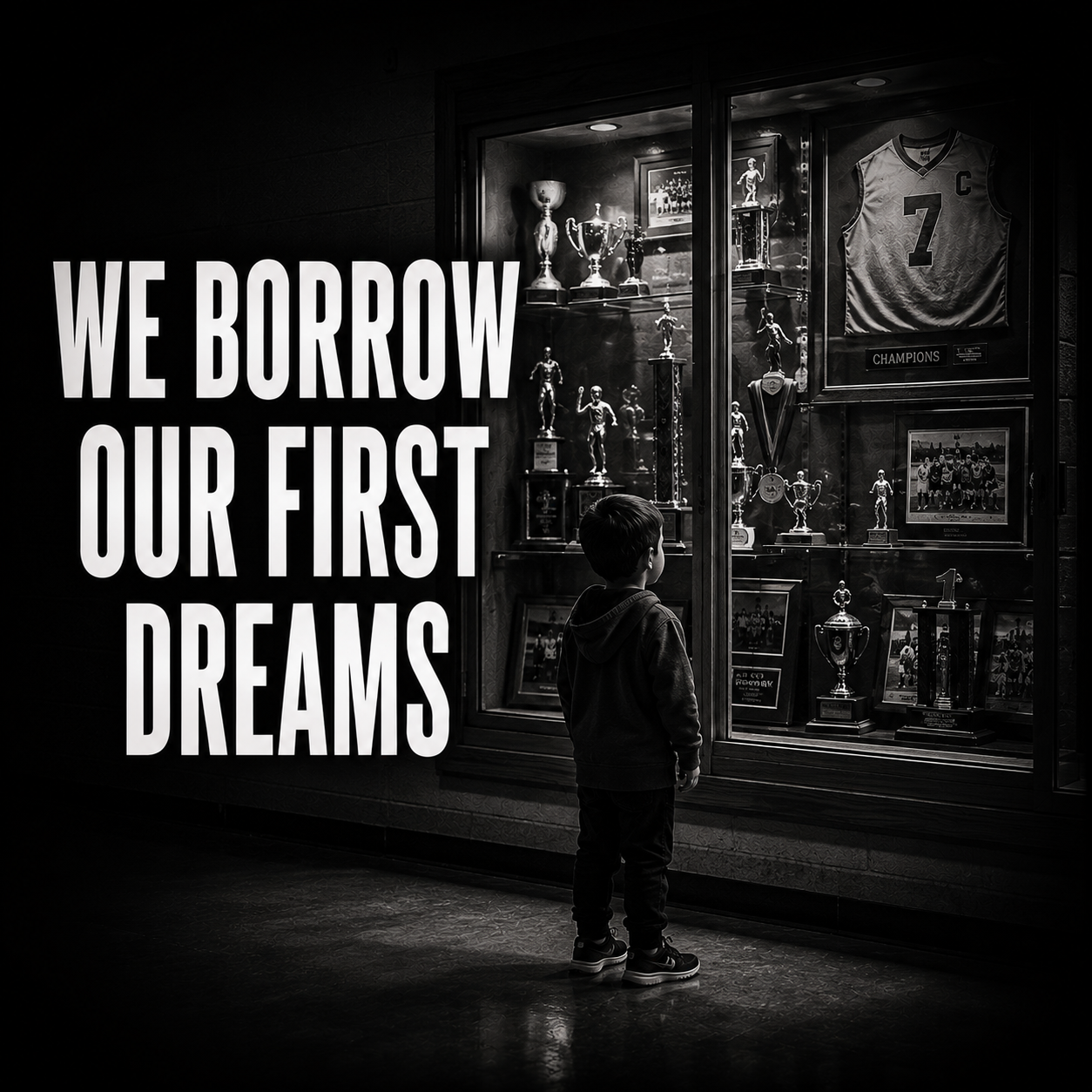
In a previous post we talked about how kids are born delusional—that they dream without limits and are inspired by the people around them.
A child sees a baseball player hit a home run, toss the bat, round the bases, and be greeted by the roar of the crowd, and suddenly they want to be a baseball player.
They watch police officers, firefighters, and members of our military being honored for their service, and they want to follow in their footsteps.
Dreams are born from inspiration, and possibilities are often borrowed from the people children admire.
We also talked about how those dreams slowly become smaller as those children grow up and become us as adults.
We don’t know exactly when it happens.
But we know that limits begin to appear.
Some come from parents and teachers who genuinely want the best for us.
Some come from society.
Some come from failure, discouragement, comparison, and embarrassment.
But what we didn’t talk about is what happens next.
At some point, we begin accepting those limits as our own.
Deep down, we know a belief is being handed to us, yet instead of questioning it, we quietly accept it as truth.
We start saying things like,
“No one in my family has ever done anything like that.”
“I’m not the creative type.”
“I’m too old.”
“I could never.”
The list goes on and on.
The problem isn’t that every limit is false.
The problem is that many of them are never examined.
Maybe someone once said those things because they thought they were protecting us.
Maybe they believed them about themselves first.
But we’re old enough now to decide whether those beliefs still deserve a place in our lives.
We inherit many things that should stay with us forever.
Kindness.
Work ethic.
Honesty.
Faith.
Those are gifts worth carrying forward.
Inherited limitations deserve a different kind of attention.
They deserve to be questioned.
Growing up is learning who we are.
It’s finding the balance between who we dream of becoming, who others think we should be, and what society expects from us.
But it’s also learning to recognize the limits we’ve inherited and deciding which ones actually belong to us.
Because one day we’ll pass our beliefs on to someone else.
The question isn’t whether we’ll leave them an inheritance.
The question is whether we’ll pass along possibility…
…or limitation.
Continue the Journey
If this article resonated with you, here are a few more reflections that continue the conversation:
- Kids Are Born Delusional — Before we inherit limitations, we first inherit possibility. This companion essay explores where our biggest dreams begin.
- Winning the Wrong Argument — The most important arguments we win or lose are often the ones taking place inside our own minds.
- Day One — Questioning an inherited belief is only the beginning. Real change starts the moment we choose to take the first step anyway.
- Every Opportunity Begins With Risk — Leaving behind limiting beliefs almost always requires the courage to risk failure in pursuit of something greater.


