
Borrowed Dreams, Borrowed Limits

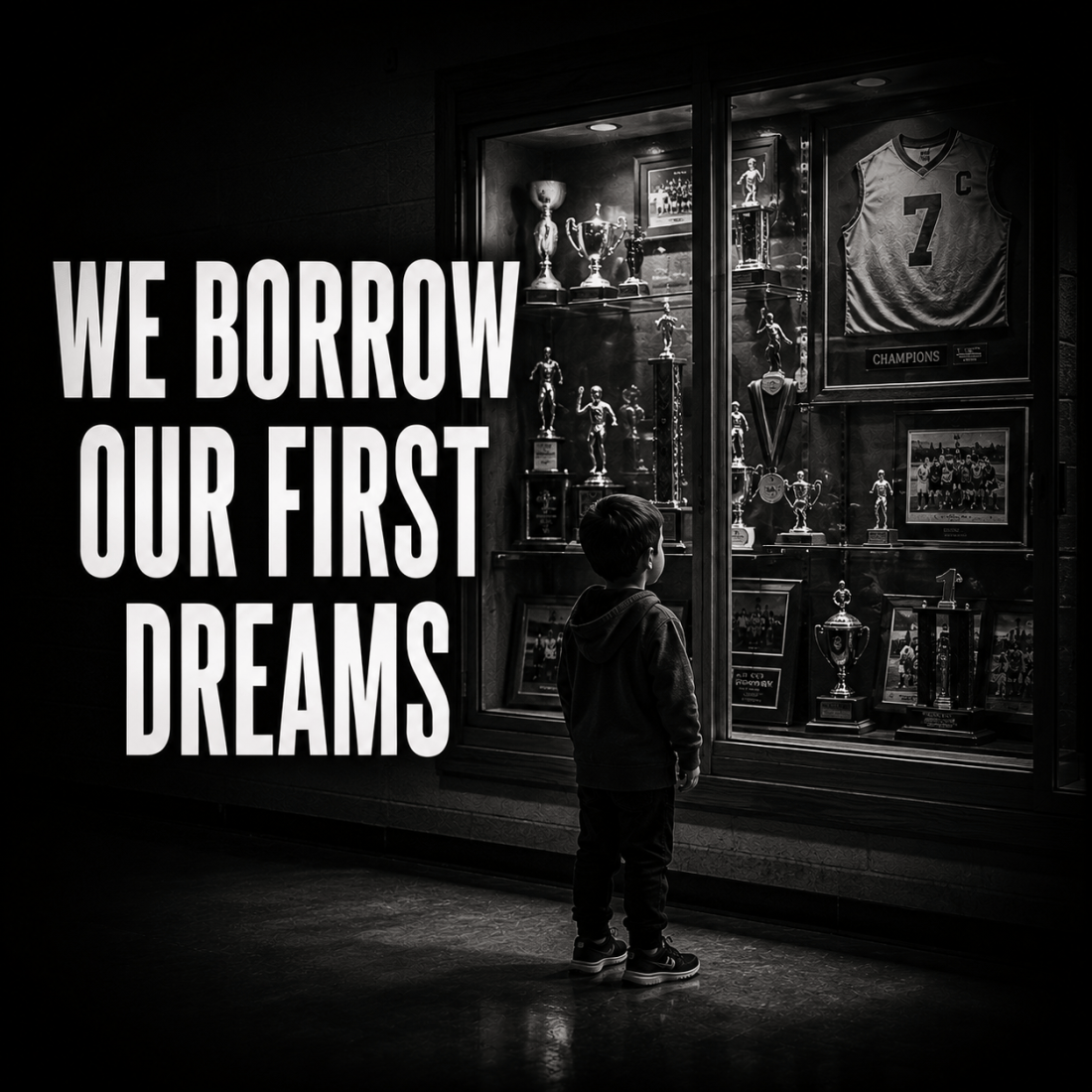
In a previous post we talked about how kids are born delusional—that they dream without limits and are inspired by the people around them.

A child sees a baseball player hit a home run, toss the bat, round the bases, and be greeted by the roar of the crowd, and suddenly they want to be a baseball player.

They watch police officers, firefighters, and members of our military being honored for their service, and they want to follow in their footsteps.

Dreams are born from inspiration, and possibilities are often borrowed from the people children admire.

We also talked about how those dreams slowly become smaller as those children grow up and become us as adults.

We don’t know exactly when it happens.

But we know that limits begin to appear.

Some come from parents and teachers who genuinely want the best for us.

Some come from society.

Some come from failure, discouragement, comparison, and embarrassment.

But what we didn’t talk about is what happens next.

At some point, we begin accepting those limits as our own.

Deep down, we know a belief is being handed to us, yet instead of questioning it, we quietly accept it as truth.

We start saying things like,

“No one in my family has ever done anything like that.”

“I’m not the creative type.”

“I’m too old.”

“I could never.”

The list goes on and on.

The problem isn’t that every limit is false.

The problem is that many of them are never examined.

Maybe someone once said those things because they thought they were protecting us.

Maybe they believed them about themselves first.

But we’re old enough now to decide whether those beliefs still deserve a place in our lives.

We inherit many things that should stay with us forever.

Kindness.

Work ethic.

Honesty.

Faith.

Those are gifts worth carrying forward.

Inherited limitations deserve a different kind of attention.

They deserve to be questioned.

Growing up is learning who we are.

It’s finding the balance between who we dream of becoming, who others think we should be, and what society expects from us.

But it’s also learning to recognize the limits we’ve inherited and deciding which ones actually belong to us.

Because one day we’ll pass our beliefs on to someone else.

The question isn’t whether we’ll leave them an inheritance.

The question is whether we’ll pass along possibility…

…or limitation.

Continue the Journey

If this article resonated with you, here are a few more reflections that continue the conversation:

  • Kids Are Born Delusional — Before we inherit limitations, we first inherit possibility. This companion essay explores where our biggest dreams begin.
  • Winning the Wrong Argument — The most important arguments we win or lose are often the ones taking place inside our own minds.
  • Day One — Questioning an inherited belief is only the beginning. Real change starts the moment we choose to take the first step anyway.
  • Every Opportunity Begins With Risk — Leaving behind limiting beliefs almost always requires the courage to risk failure in pursuit of something greater.

His Words Were Soft And Few

Today would have been my grandfather’s birthday.

Papa Mac passed away 25 years ago when I was 17 years old and a senior in high school. I still remember my dad sitting my sister and me down in the living room to tell us. It might have been the first time I had ever seen him cry.

It doesn’t seem possible that it was that long ago. Twenty-five years is long enough to forget a lot of things, but it’s also long enough to realize which memories never fade.

Memories like going camping, where my dad and Papa Mac would load my sister and me into that old green truck with the camper on the back. We’d drive up to the lake, get our campsite set up, sit around the campfire, fish along the shoreline, and tell stories while we waited for the fish to bite.

Other times we’d be at my grandparents’ house, sitting on the back patio as Papa Mac taught us to play checkers. His famous phrase was always, “Touch man, move man.”

One of my favorite memories is of Papa Mac coming to watch me play baseball. He had emphysema and was on oxygen, so he couldn’t walk over to the fields. Instead, he’d park on the street overlooking them and watch through his binoculars. Standing at second base, I’d turn around between pitches and see him sitting there.

The one thing all of these memories have in common is his presence—but also the quiet.

Papa Mac wasn’t a man of many words. He wore hearing aids, and because they amplified all the sounds around him, he would often turn them off.

Instead of talking, I got to watch him.

I watched him meticulously sort through his fishing gear, explaining what everything was for. I watched him count out the pills he needed each day while letting me put them into his pill organizer. He watched me copy comic strips from the newspaper, helped me assemble school projects, and patiently listened while I babbled on about whatever happened to be on my mind.

He may not be with us anymore, and he never got the chance to meet his great-grandchildren, but the lessons he taught, the stories he told, and the pocket knives he passed down have all become part of the story I now share with my boys—the lore of Papa Mac.

Just a few weeks ago, we were hiking when I came across a plaque explaining that the trails had been built by the California Conservation Corps, a group my grandfather joined after moving to California. It was one of those unexpected reminders that his influence still surrounds me.

His memory lives on through me—and all around me.

We don’t realize it when we’re kids.

We don’t realize our grandparents won’t always be there.

We think of them as eternal. We think they’ll be there for graduations, birthdays, weddings, and holidays. In reality, we’re fortunate if they get to experience even a few of those moments with us. Some people never get to share any of them with their grandparents at all.

Today would have been his birthday.

He would have been 112 years old.

When I was a kid, I was certain he’d live that long.

As an adult, I know what’s really important.

I want Brooks and Joseph to get as much time with my dad as I got with my grandfathers, because one day those ordinary moments will become the stories they tell their own children.

In honor of Papa Mac’s birthday, I wanted to share a song I wrote about him.

Happy Birthday, Papa Mac.

I Still Carry Him With Me

Verse 1

Sitting on the shore, casting into the air
Lines in the water, memories made there
Telling stories as the campfire burned
Passed down that knife, a history learned

Verse 2

Out on the patio, checkers on the board
He watched in silence as my hands moved forward
Before my turn he’d say, “touch man, move man”
Then let me choose and helped me understand

Verse 3

Playing second base, waiting on the next pitch
Turned towards the street cause that’s where he’d sit
In the car, he had his binoculars framed
Watching every inning of my game

Chorus

His words were soft and few
He quietly showed me the way
Learning what I was meant to do
I still carry him with me today

Bridge

Never knew how much I’d miss those moments
The time we spent and the stories we told
I still think of him when I’m sitting alone
And cherish those memories as treasures I hold

Final Chorus

His words were soft and few
He quietly showed me the way
Learning what I was meant to do
I still carry him with me today

Every Season Has Different Dreams

When we were kids, we all had dreams about what we wanted to be when we grew up.

For a while I wanted to be a cowboy. Not the Dallas Cowboys kind—a real cowboy.

Then I wanted to be a lawyer.

A stockbroker.

Eventually I went to school for animation.

Turns out…

I’m none of those things.

Today my dreams look very different.

Now I dream about providing for my family.

Being a good husband.

Being a good father.

Writing books.

Building this project.

Creating a life I’m proud to wake up to every morning.

If you could take a snapshot of my life today and show it to my younger self, I think he’d be excited about a lot of it.

He’d see that we became a husband.

A father.

A homeowner.

That we live in the same neighborhood where we grew up.

That we coach our son’s baseball team.

I think he’d smile.

But I also think he’d have questions.

He’d probably ask,

“What happened to all those other dreams?”

The honest answer is…

Life happened.

Some decisions I made in my late teens and early twenties changed the direction of my life.

Some opportunities came and went.

Some dreams quietly faded.

At one time, I looked at that as failure. After reflecting on it, I realized it wasn’t that I had fallen behind—it was that my dreams had changed. That’s an idea I explored further in The Myth of Falling Behind.

Because while some dreams disappeared…

Others arrived that I never could have imagined.

The younger version of me dreamed about being a husband and father.

But he couldn’t possibly have imagined what it would actually feel like to fall in love.

Or to hold his newborn son for the first time.

Or to hear little feet running through the house on a Saturday morning.

Those weren’t dreams.

Those were experiences waiting for me on the other side of life.

Today Brooks wants to be a baseball player.

A police officer.

Most recently…

A drag racer.

He’s six.

I’m sure next year he’ll have another dream.

And another after that.

I hope he does.

Because I don’t want him to stop dreaming.

Dreams aren’t promises.

They’re possibilities.

They help us imagine a future that’s bigger than today.

As we grow older, though, our dreams begin to change.

While thinking about this, I came across an article in Psychology Today exploring how our lives often gain meaning as we age. One idea that resonated with me was that as we accumulate experiences, relationships, and responsibilities, our sense of purpose naturally evolves. Reading that made me realize my dreams didn’t disappear—they simply matured alongside the life I’ve been fortunate enough to build.

Not because we’ve become less ambitious.

Because we’ve become more experienced.

We’ve loved.

We’ve failed.

We’ve succeeded.

We’ve discovered what actually matters to us.

When I was younger, success looked like becoming someone impressive.

Today, success looks like coaching Brooks’ baseball team.

Writing another blog post.

Finishing my novel.

Reaching my goal weight.

Building a strong marriage.

Being present for my boys.

Those dreams don’t compete with one another anymore. Like I wrote in A Life, Not a Collection of Parts, they’re all pieces of the same life I’m trying to build.

Those dreams aren’t smaller than the ones I had when I was twenty.

They’re deeper.

They’re shaped by the life I’ve lived and the people I’ve loved.

It’s a realization that echoes something I wrote in A Masterpiece and a Work in Progress. Growth doesn’t erase our worth—it simply adds depth to who we’re becoming.

I think that’s true for all of us.

I also came across an article from Tiny Buddha about letting go of expectations that no longer serve us. It made me think about how easy it is to judge ourselves by the dreams we had years ago instead of asking whether those dreams still reflect the people we’ve become. Sometimes growth isn’t about holding on tighter—it’s about giving ourselves permission to dream differently.

We shouldn’t expect to want the same things at forty that we wanted at fifteen.

The world changes.

We change.

Our dreams should change too.

Some dreams should still be wildly ambitious.

The kind that stretch us and pull us forward.

Others should be grounded enough that we can celebrate them as we achieve them.

Maybe that’s what growing up really is.

Not giving up on the dreams we had as children…

But allowing them to grow up with us.

Because every season of life asks something different from us.

Every season gives us something new to hope for.

I’m still chasing my dreams.

They just don’t look the way they used to.

And I think that’s exactly the way it’s supposed to be.

Continue the Journey:

Further Reading:

Psychology Today — “Do Our Lives Gain Meaning as We Age?”

https://www.psychologytoday.com/us/blog/supersurvivors/202103/do-our-lives-gain-meaning-as-we-age

Tiny Buddha — “Letting Go of Expectations and Pursuing What You Really Want”

https://tinybuddha.com/blog/letting-go-of-expectations-and-pursuing-what-you-really-want/