Borrowed Dreams, Borrowed Limits

In a previous post we talked about how kids are born delusional—that they dream without limits and are inspired by the people around them.

A child sees a baseball player hit a home run, toss the bat, round the bases, and be greeted by the roar of the crowd, and suddenly they want to be a baseball player.

They watch police officers, firefighters, and members of our military being honored for their service, and they want to follow in their footsteps.

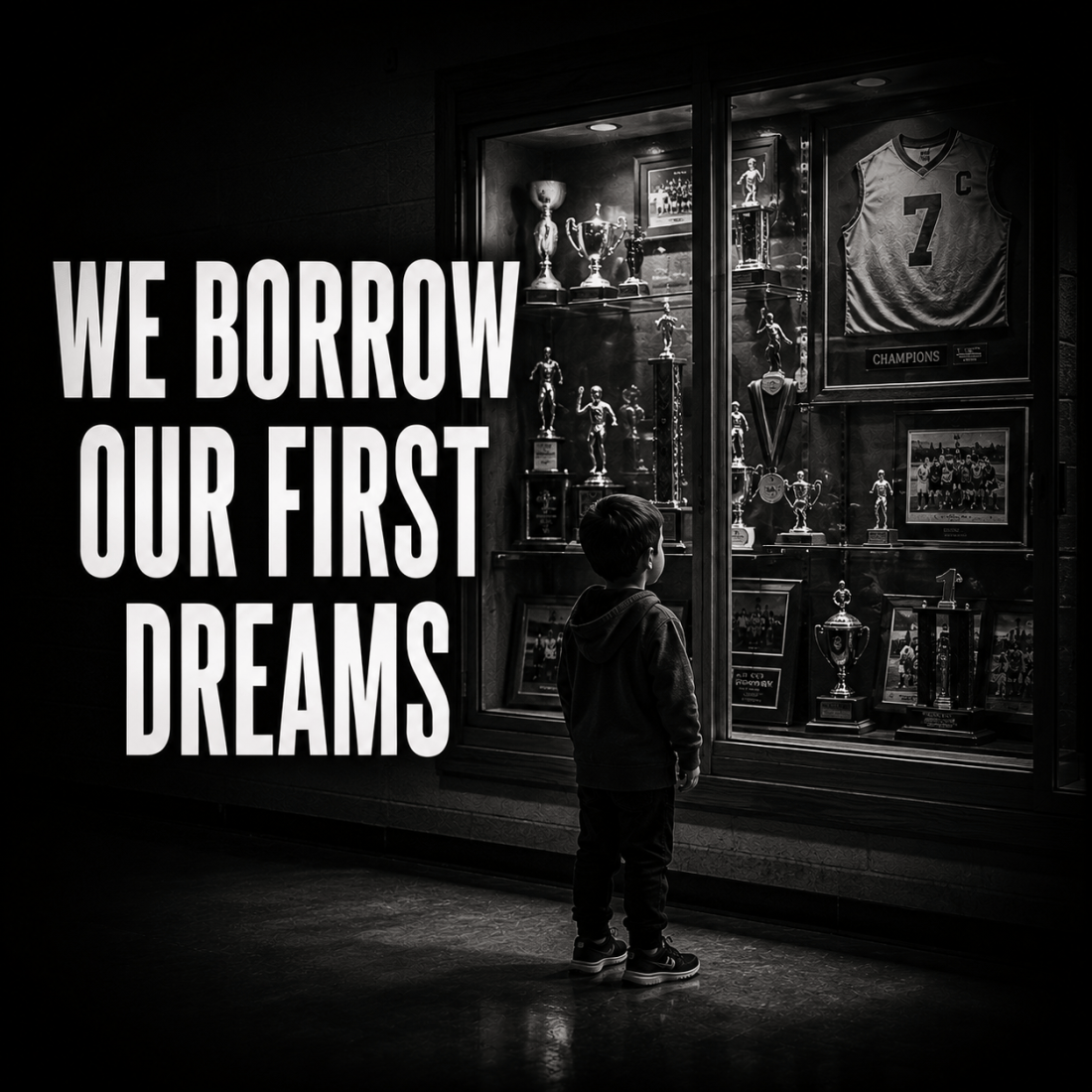
Dreams are born from inspiration, and possibilities are often borrowed from the people children admire.

We also talked about how those dreams slowly become smaller as those children grow up and become us as adults.

We don’t know exactly when it happens.

But we know that limits begin to appear.

Some come from parents and teachers who genuinely want the best for us.

Some come from society.

Some come from failure, discouragement, comparison, and embarrassment.

But what we didn’t talk about is what happens next.

At some point, we begin accepting those limits as our own.

Deep down, we know a belief is being handed to us, yet instead of questioning it, we quietly accept it as truth.

We start saying things like,

“No one in my family has ever done anything like that.”

“I’m not the creative type.”

“I’m too old.”

“I could never.”

The list goes on and on.

The problem isn’t that every limit is false.

The problem is that many of them are never examined.

Maybe someone once said those things because they thought they were protecting us.

Maybe they believed them about themselves first.

But we’re old enough now to decide whether those beliefs still deserve a place in our lives.

We inherit many things that should stay with us forever.

Kindness.

Work ethic.

Honesty.

Faith.

Those are gifts worth carrying forward.

Inherited limitations deserve a different kind of attention.

They deserve to be questioned.

Growing up is learning who we are.

It’s finding the balance between who we dream of becoming, who others think we should be, and what society expects from us.

But it’s also learning to recognize the limits we’ve inherited and deciding which ones actually belong to us.

Because one day we’ll pass our beliefs on to someone else.

The question isn’t whether we’ll leave them an inheritance.

The question is whether we’ll pass along possibility…

…or limitation.

Continue the Journey

If this article resonated with you, here are a few more reflections that continue the conversation:

  • Kids Are Born Delusional — Before we inherit limitations, we first inherit possibility. This companion essay explores where our biggest dreams begin.
  • Winning the Wrong Argument — The most important arguments we win or lose are often the ones taking place inside our own minds.
  • Day One — Questioning an inherited belief is only the beginning. Real change starts the moment we choose to take the first step anyway.
  • Every Opportunity Begins With Risk — Leaving behind limiting beliefs almost always requires the courage to risk failure in pursuit of something greater.
What Is The Difference Between A Hobby And A Calling

What’s the difference between a hobby and a calling?

Maybe it’s money.

Or success.

Maybe it’s talent.

I don’t think it’s any of those things because I think you can have all of them with either a hobby or a calling.

A hobby is something you enjoy.

Something you do in your spare time.

Something you make time for when you feel like it.

That’s a good thing.

We all need hobbies.

I have plenty of them myself.

But when does a hobby become something more?

Maybe it’s when it stops fitting into your life…

…and your life begins making room for it.

A hobby stops being just something you do when it slowly becomes part of who you are.

Being a dad isn’t a hobby because I don’t just do fatherhood.

I am a father.

Being a husband isn’t something I check off a list each day.

It’s part of my identity.

And somewhere along the way, writing has begun to feel less like something I do and more like someone I am becoming.

That doesn’t have anything to do with money.

Or readers.

Or whether anyone notices.

It has everything to do with the fact that when I neglect it, something about the day feels unfinished.

I don’t think a calling arrives with some dramatic moment of clarity.

I think we recognize it in hindsight.

One day we simply look back and realize this thing has quietly become an essential part of our lives.

Without really noticing, we began choosing it over other things.

Making time for it.

Returning to it.

Protecting it.

Not because we had to.

Because it had become part of us.

Maybe writing has become more of a calling than a hobby for me.

But maybe yours isn’t writing.

Maybe it’s teaching.

Pastoring.

Coaching.

Building.

Raising your children.

Serving your community.

Healing people.

Creating beautiful things.

The form your calling takes isn’t what matters.

The relationship you’ve built with it is.

So if you’re wondering what your calling is…

Stop asking,

“What do I love to do?”

Instead ask,

“What keeps calling me back?”

What won’t you let go of?

What keeps finding its way back into your life, even after you’ve failed…

…even after you’ve become discouraged…

…even after life has become too busy?

Because maybe the difference between a hobby and a calling isn’t simply what you enjoy.

Maybe it’s what you refuse to let go of.

And maybe that’s because, somewhere along the way…

…it stopped being something you did.

It became part of who you are.

Continue the Journey

If this article resonated with you, here are a few more reflections that continue the conversation:

  • Day One — Every meaningful calling begins with the decision to begin, even before you know where the journey will lead.
  • Kids Are Born Delusional — Before we can discover what we’re called to do, we have to believe extraordinary things are still possible.
  • The Decision Was Already Made — The pursuits that shape our lives are rarely built through inspiration alone. They are built through repeated commitment.
  • A Life, Not a Collection of Parts — The things that matter most eventually stop being separate parts of our lives and become woven into the person we’re becoming.

Kids Are Born Delusional

You were a kid once.

What did you want to be when you grew up?

Can you even remember?

Over the last couple of years, my son has wanted to be a baseball player, a police officer, a drag racer, and who knows what else.

And every time he tells me what he wants to be, there isn’t a hint of doubt in his voice.

He’s certain.

Until he’s certain about something else.

Kids don’t hedge their bets.

They don’t apologize for dreaming.

They’re all in.

Somewhere, a long time ago, we were those kids too.

We dreamed with certainty.

We had no doubts.

No reservations.

We were going to be cowboys even though we’d never ridden a horse.

We were going to be astronauts with no understanding of outer space.

We were going to be lawyers before we knew what the law even was.

And then something changed.

But when?

It’s not like we can point to one morning and say,

“That was the day I decided to be more realistic.”

“That was the day I lowered my expectations for my own life.”

It happened slowly.

Quietly.

Almost invisibly.

Growing up teaches us many valuable lessons.

We learn how to read.

We learn math.

We learn responsibility.

We learn that we won’t always win.

We learn how to work hard.

We learn that life is full of compromise.

Those lessons matter because they shape the people we’re becoming.

But somewhere along the way, we learn something else.

We learn limits.

Not physical limits.

Imagined ones.

The people who teach us those limits usually aren’t trying to hurt us.

They’re parents trying to protect us.

Teachers trying to prepare us for the real world.

Friends who don’t want to be left behind.

Sometimes those limits come from failure.

Embarrassment.

Humiliation.

Loss.

Comparison.

None of them are usually malicious.

They’re simply born from experience.

But together they begin whispering the same message:

People like you don’t do things like that.

That’s the real tragedy.

It isn’t that children dream too big.

It’s that many adults stop dreaming before they ever discover what they might have been capable of.

Dreams go from certainty…

…to unlikely…

…to impossible.

Maybe growing up shouldn’t mean believing in ourselves less.

Maybe it should simply mean understanding that extraordinary dreams require extraordinary effort.

Children already have the belief.

Adults have the discipline.

Imagine what could happen if we managed to keep both.

We smile when children tell us what they want to be when they grow up.

Not because it’s funny.

But because we quietly doubt it’s possible.

Maybe instead of smiling, we should ask ourselves a harder question.

What did you once believe you were going to become…

…before someone convinced you otherwise?

And maybe the next time a child tells you they’re going to change the world…

Don’t be the first person to teach them their limits.

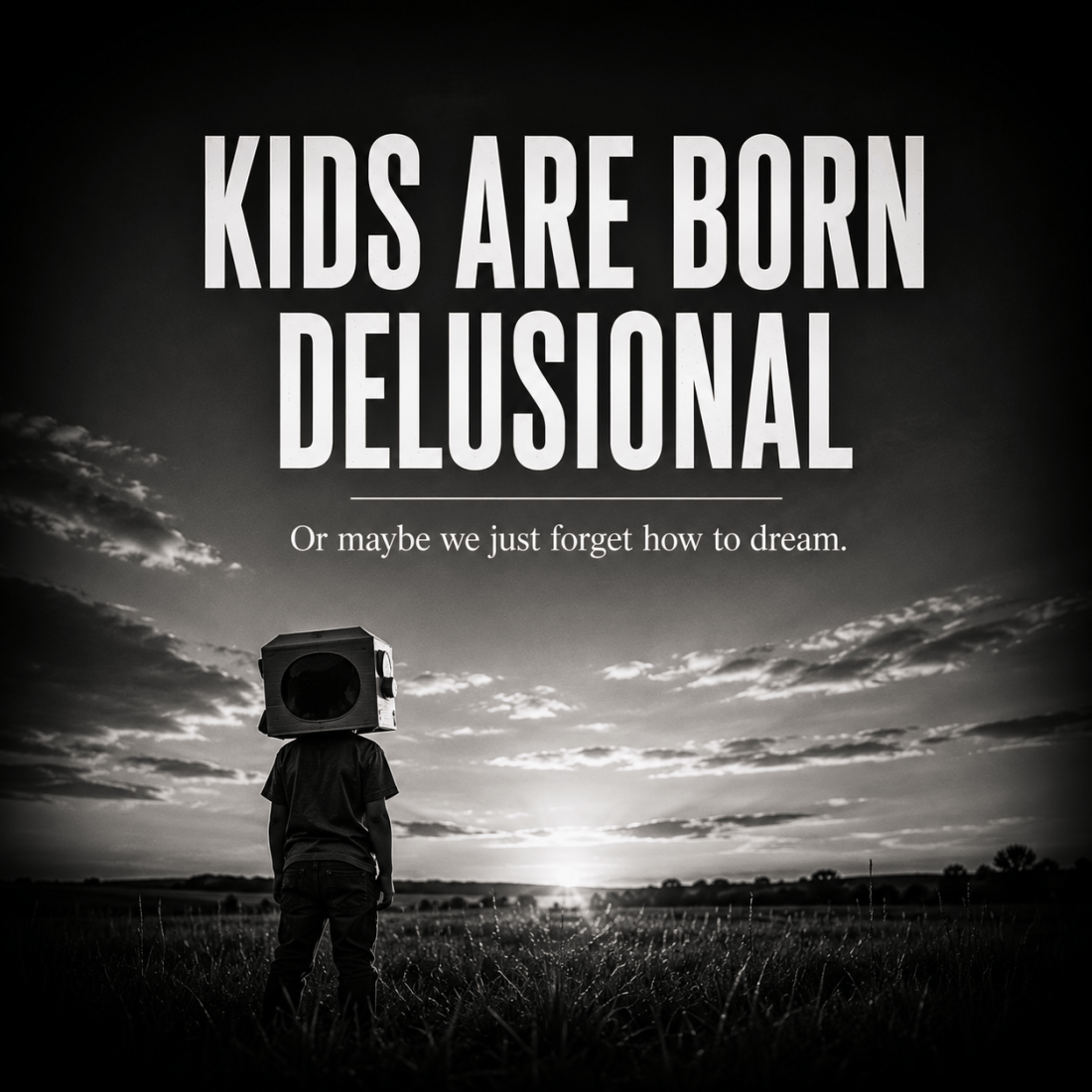
Because maybe kids aren’t born delusional.

Maybe they’re simply the last version of ourselves before the world convinces us to dream smaller.

Continue the Journey

If this article resonated with you, here are a few more reflections that continue the conversation:

Hallways Aren’t Meant To Be Homes

Wherever you’re sitting right now—whether it’s your office at work or your living room at home—stand up and walk to another room. As you do, pay attention to something you probably never notice.

You’re walking through a hallway.

We rarely think about hallways, even though we pass through them every day. At home. At work. In hotels. In doctor’s offices.

We never stop there.

We know the hallway isn’t where we’re going.

It’s simply the path to a door we intend to walk through.

Our lives are a lot like that hallway.

Every one of us is walking from one stage of life to the next. From school to our first real job. From dating to marriage. From renting to home ownership. From raising children to becoming empty nesters. From one dream to the next. And eventually, to that final door waiting at the end of the hall.

Our lives are hallways, and every door we pass is an opportunity or a life event waiting on the other side.

The difficult part is choosing which door to open.

Most doors don’t come with guarantees. We don’t know with absolute certainty what’s waiting for us once we turn the handle. And once we do, all the other doors begin to change. Some quietly close behind us. Others disappear altogether. We know that instinctively.

So we stand in the hallway.

Because until we open the door, we aren’t committed. We haven’t risked failure. We haven’t closed off other possibilities. Every possibility still feels alive.

The hallway gives us the comforting illusion that we’re preserving our freedom.

The problem is that as long as you’re standing in the hallway, you never get to experience the life waiting on the other side of the door.

You may miss opportunities.

You don’t submit the application, and someone else gets the job.

You never tell someone how you feel, and they move on.

You never start, and the opportunity quietly passes you by.

You can’t build a career in the hallway.

You can’t find love in the hallway.

You can’t chase your dreams in the hallway.

Because all of those things happen behind the doors.

Not in the hallway.

The strange thing is that none of us chooses to live there.

We don’t wake up one morning and decide we’ll never take a chance or make another decision. Instead, we tell ourselves we just need a little more time.

I need to think about it.

I need to prepare.

I’m almost ready.

Just a little longer.

The reasons we tell ourselves slowly stop being reasons.

They become habits.

Then they become identities.

Before long, we’re no longer someone waiting for the right moment.

We’re simply someone who never moves.

Some people don’t just stay in the hallway.

They start calling it home.

And to be fair, they’re not completely wrong.

Walking through one door means leaving others behind. It means accepting that some opportunities will never be yours. That’s uncomfortable. It’s anxiety-inducing. It forces you to let go of the lives you could have lived in order to fully embrace the one you’ve chosen.

But that’s also the price of building a meaningful life.

You can’t have a career without saying no to countless other careers.

You can’t build a marriage without choosing one person over every other possibility.

You can’t raise a family without giving up certain freedoms.

Every meaningful yes eventually becomes a hundred quiet no’s.

That’s what commitment has always required.

Hallways were designed to move people from one place to the next.

That is their singular purpose.

They were never meant to become homes.

Our lives are no different.

They were designed to carry us from one season to the next. From one goal to another. From one milestone to the next.

They are meant to be places of transition, not permanent residence.

So if you find yourself standing in the hallway of life, looking from one door to the next, waiting for a welcome sign to appear or hoping another option suddenly presents itself…

Maybe there isn’t another door coming.

Maybe the one you’ve been staring at has been yours all along.

Maybe the life you’ve imagined has been waiting patiently on the other side…

And the only thing left to do…

Is turn the handle.

Continue the Journey

If this article resonated with you, here are a few more reflections that explore the ideas of commitment, transition, and embracing the opportunities in front of us.

The Story Behind Tomorrow

Do you have something that starts tomorrow?

Something you’ve been looking forward to. Something that fills you with the same nervous excitement you used to feel on Christmas Eve, the night before your birthday, or the day before leaving on a family vacation.

Whatever begins tomorrow has the potential to change your life.

Months from now, if you stay committed, people might notice the weight you’ve lost. They might see a stronger physique, a finished book, a thriving business, or a website that didn’t exist before. Maybe those are just the things I hope to see in my own life, but whatever your “tomorrow” is, people may one day look at it and say, “That’s where it all began.”

But they’ll be wrong.

Tomorrow isn’t really the beginning.

When does change actually begin?

It’s not with the first workout or the first pound lost on the scale. It’s not when you finish the first chapter or publish your first article online.

Those might be the first signs of change.

But change starts in the invisible moments.

Think back to the first time you admitted something needed to change. When you wondered whether you really had the strength to commit to something new. When you looked at your schedule, counted the cost, said goodbye to certain habits, quietly hoped this time would be different, or finally found the courage to ask for help.

No one thinks of these as the moments where change began.

But they’re the reason tomorrow exists.

We all make the same mistake.

We celebrate the first visible milestone as the start of something new, when those milestones are really just evidence of work that has already been happening in the shadows. The mental work. The preparation. The research. The internal struggle between the anxiety of trying something new and the comfort of remaining the same.

We celebrate the harvest.

We rarely celebrate the planting.

That’s because people don’t see the author before they see the book. They don’t see the business before the doors open. They don’t see the graduate before the diploma or the marathon runner before mile one. Every visible achievement is the product of invisible work.

So tomorrow you may be starting something new. It may be Day One for you.

People may think that’s where your journey begins.

But they’re only seeing the first visible page…

…of a book you’ve already been writing.

The moments that change our lives are rarely the ones everyone notices. They’re the quiet decisions made in solitude and silence. The commitment you made to yourself while sitting alone. The preparations you made when no one was watching. The choice you made before you even knew whether you could change.

Tomorrow may be the first thing people see.

But it isn’t where your story started.

Continue the Journey

If this idea resonated with you, here are a few more articles that continue the conversation:

  • Day One — Every meaningful journey begins with the decision to start, even when the path ahead is uncertain.
  • The Reset Never Came — Why waiting for the perfect time to begin often becomes the biggest obstacle to making progress.
  • Winning the Wrong Argument — The internal conversations that convince us to delay the very life we’re trying to build.
  • I Finally Stopped Waiting to Feel Motivated — Lasting change doesn’t begin when motivation arrives; it begins when we choose to act anyway.

It Was Just Tuesday

Yesterday I headed home from work, got changed, and spent some time with the boys while Jillian made dinner. We sat around the table together, and afterward I took the boys for a walk around the neighborhood and through the baseball fields. We ran into some friends, stopped to visit for a while, and then headed home to get the kids ready for bed. After they were asleep, Jillian and I laid down together for a while before getting up to finish a few things around the house, watch a show together, and call it a night.

It was Tuesday.

No special occasion.

No big event on the calendar.

Just a normal evening at home with my family.

Today I found myself thinking about the version of me that existed before I got married and had kids.

What did he think life would look like?

What was he chasing?

If I’m honest, I don’t think he could have imagined this.

Back then I probably pictured coming home from work, grabbing something to eat on the way, sitting on the couch watching a Padres game with friends, and calling it a good night. I don’t think I could have imagined being married to a woman I could only have dreamed about, raising two incredible boys, eating dinner around the family table, taking evening walks through the neighborhood I grew up in, building the blog I had always wanted to write, or working every day toward becoming healthier.

If someone had described that life to me back then, I’m not sure I would have believed it was possible.

We spend so much time dreaming about promotions, bigger houses, vacations, accomplishments, and the future that we overlook another kind of dream entirely.

The quiet ones.

The dreams that don’t arrive with some grand announcement.

They simply become normal.

Family dinners.

Bedtime stories.

Evening walks.

A spouse asking how your day was.

One day you wake up and realize those moments have become so routine that you barely notice them anymore.

But years earlier…

They were the life you were hoping to build.

We spend so much of our lives looking ahead, chasing the next goal, the next milestone, the next achievement—things we can celebrate and tell people about.

Meanwhile, the dreams that matter most are sitting across the dinner table telling you about their day.

This blog was always a dream of mine.

For years I imagined writing about adventures, milestones, and extraordinary moments.

I never imagined I’d be writing about an uneventful Tuesday.

But maybe that’s because I finally understand what I was really chasing.

It wasn’t excitement.

It wasn’t recognition.

It wasn’t some picture-perfect future.

It was this.

Dinner around the table.

A walk with my boys.

Talking with neighbors.

Watching a show with my wife before bed.

Years ago I spent a lot of time wondering what my life might look like someday.

Today I know.

It looks a lot like Tuesday.

Continue the Journey:

If you enjoyed this article, you may also like:

The Gift of Being Nearby

Some of the most meaningful moments with the people we love don’t happen because we planned them. They happen because we’re close enough to simply be there when life unfolds.

Why Ordinary Days Matter More Than Big Moments

Life is rarely defined by vacations, birthdays, or major milestones. More often, it’s shaped by the quiet routines and everyday moments that slowly become our most treasured memories.

A Life, Not a Collection of Parts

The most fulfilling life isn’t one where work, family, health, and personal goals compete for attention. It’s one where those parts begin working together to create something greater than any one of them could alone.

They Don’t Have To Understand

Today’s post is built around a quote that I recently came across:

“Protect your peace and your vision because not everyone will understand either.”

This one had me thinking because it resonated with where I am in this project.

Not because I’m receiving criticism or doubt for what I’m trying to accomplish…

But because I’m not hearing anything at all.

This may come as a surprise, but I can count the number of people I know personally who truly know about The Young Napoleon Project on one hand.

I’m intentionally quiet about what I’m doing here.

My wife, my parents, and a few select others know that I’m writing a book and that I have this blog. A few more know about the work I’m putting into getting healthier.

But that’s about it.

No one really knows what The Young Napoleon Project truly is because I’ve been hesitant to actually talk about it.

This project didn’t start last month.

As of writing this, I’m technically on Day (43), but I stopped counting the number of times I’ve launched this project and never made it to Day (43).

I first had the idea for this project well over a decade ago—before I got married, before I bought a house, before I had kids.

People who see this project today are seeing the latest, and hopefully greatest, iteration of it.

What they don’t see are the countless restarts along the way.

The abandoned notebooks.

The unfinished brainstorming sessions.

The ideas that never made it past the first page.

The quiet hope that every restart would finally become the one that lasted.

They see pieces of my story, but I’ve lived the entire tale.

Maybe that’s why this project means so much to me and looks so ordinary to everyone else.

And yet, despite rarely sharing my “why,” I still catch myself expecting people to understand it.

But how could they?

They haven’t been inside my head to experience the defeats and frustrations.

They haven’t felt the anxiety that comes with starting over or the joy that comes with believing this time might be different.

They haven’t carried this dream with them for over a decade while wondering if it would ever become reality.

They haven’t fought the emotional battles I’ve fought over my own shortcomings or experienced the mental fatigue that repeated failure can bring.

It’s unreasonable to expect someone to understand where I’m coming from when I’ve never really shown them where that is.

And that’s not just true for me.

We all carry dreams.

Maybe yours is to lose weight.

Start a business.

Go back to school.

Change careers.

Run a marathon.

Build a family.

When people look at you, they see what you’re doing today.

They don’t see everything that led up to this moment.

They don’t see the struggle.

They haven’t watched you fight.

They only see one chapter of a story you’ve been living for years.

Here’s the thing:

People don’t need to understand your dream or your vision for it to be worth pursuing.

You don’t need their approval.

You don’t need their recognition.

Because your dream is incredibly personal to you.

It doesn’t have to be a secret.

You can tell everyone about it if you want.

But you can’t expect them to spend every day in the trenches of a battle they’re not fighting.

People can support you.

They can encourage you.

They can cheer you on.

And they can do all of that without fully understanding your why.

While thinking about this, I found myself coming back to Simon Sinek’s TED Talk, Start With Why. He argues that our “why” is what gives our actions meaning. We often think our “why” exists so we can explain ourselves to other people, but maybe its more important purpose is reminding us why we started when no one else fully understands what we’re building.

I also came across this essay from A Life of Lovely about why we don’t always need to explain ourselves to everyone else. It made a point that resonated with me: not every dream needs to be defended or fully understood by other people to be worth pursuing. Sometimes the people who matter most can support us without fully understanding what we’re carrying.

You are the only one who has to know your why.

You are the only one who can’t give up on yourself.

For me, this project isn’t just a blog.

It isn’t just a book I’m writing.

It isn’t just losing weight.

It’s my attempt to build my life intentionally. Part of that has meant accepting that I’ll probably never finish this project, something I explored in The Myth Of Falling Behind. 

It’s also my attempt to accomplish something I first set out to do over a decade ago and am still fighting to achieve today. Ironically, the dream itself has changed over those ten years, something I wrote about in Every Season Has Different Dreams. The destination evolved, but the desire to build a meaningful life never did.

No one will ever understand why it matters to me as deeply as I do.

And that’s okay.

Maybe someday people will understand why this mattered so much to me.

Maybe they won’t.

The same goes for your dream.

Either way, we both have to keep going.

We have to wake up tomorrow and take the next step toward our dreams and our vision.

Because that’s what matters to us.

And no one else has to understand that.

Continue the Journey:

Further Reading:

Simon Sinek — Start With Why (TED Talk)

https://youtu.be/u4ZoJKF_VuA?is=O32TQ6Jl0PQmJfpl

A Life of Lovely — Why You Don’t Need to Explain Yourself to Anyone

https://alifeoflovely.com/why-you-dont-need-to-explain-yourself-to-anyone/#google_vignette

Every Season Has Different Dreams

When we were kids, we all had dreams about what we wanted to be when we grew up.

For a while I wanted to be a cowboy. Not the Dallas Cowboys kind—a real cowboy.

Then I wanted to be a lawyer.

A stockbroker.

Eventually I went to school for animation.

Turns out…

I’m none of those things.

Today my dreams look very different.

Now I dream about providing for my family.

Being a good husband.

Being a good father.

Writing books.

Building this project.

Creating a life I’m proud to wake up to every morning.

If you could take a snapshot of my life today and show it to my younger self, I think he’d be excited about a lot of it.

He’d see that we became a husband.

A father.

A homeowner.

That we live in the same neighborhood where we grew up.

That we coach our son’s baseball team.

I think he’d smile.

But I also think he’d have questions.

He’d probably ask,

“What happened to all those other dreams?”

The honest answer is…

Life happened.

Some decisions I made in my late teens and early twenties changed the direction of my life.

Some opportunities came and went.

Some dreams quietly faded.

At one time, I looked at that as failure. After reflecting on it, I realized it wasn’t that I had fallen behind—it was that my dreams had changed. That’s an idea I explored further in The Myth of Falling Behind.

Because while some dreams disappeared…

Others arrived that I never could have imagined.

The younger version of me dreamed about being a husband and father.

But he couldn’t possibly have imagined what it would actually feel like to fall in love.

Or to hold his newborn son for the first time.

Or to hear little feet running through the house on a Saturday morning.

Those weren’t dreams.

Those were experiences waiting for me on the other side of life.

Today Brooks wants to be a baseball player.

A police officer.

Most recently…

A drag racer.

He’s six.

I’m sure next year he’ll have another dream.

And another after that.

I hope he does.

Because I don’t want him to stop dreaming.

Dreams aren’t promises.

They’re possibilities.

They help us imagine a future that’s bigger than today.

As we grow older, though, our dreams begin to change.

While thinking about this, I came across an article in Psychology Today exploring how our lives often gain meaning as we age. One idea that resonated with me was that as we accumulate experiences, relationships, and responsibilities, our sense of purpose naturally evolves. Reading that made me realize my dreams didn’t disappear—they simply matured alongside the life I’ve been fortunate enough to build.

Not because we’ve become less ambitious.

Because we’ve become more experienced.

We’ve loved.

We’ve failed.

We’ve succeeded.

We’ve discovered what actually matters to us.

When I was younger, success looked like becoming someone impressive.

Today, success looks like coaching Brooks’ baseball team.

Writing another blog post.

Finishing my novel.

Reaching my goal weight.

Building a strong marriage.

Being present for my boys.

Those dreams don’t compete with one another anymore. Like I wrote in A Life, Not a Collection of Parts, they’re all pieces of the same life I’m trying to build.

Those dreams aren’t smaller than the ones I had when I was twenty.

They’re deeper.

They’re shaped by the life I’ve lived and the people I’ve loved.

It’s a realization that echoes something I wrote in A Masterpiece and a Work in Progress. Growth doesn’t erase our worth—it simply adds depth to who we’re becoming.

I think that’s true for all of us.

I also came across an article from Tiny Buddha about letting go of expectations that no longer serve us. It made me think about how easy it is to judge ourselves by the dreams we had years ago instead of asking whether those dreams still reflect the people we’ve become. Sometimes growth isn’t about holding on tighter—it’s about giving ourselves permission to dream differently.

We shouldn’t expect to want the same things at forty that we wanted at fifteen.

The world changes.

We change.

Our dreams should change too.

Some dreams should still be wildly ambitious.

The kind that stretch us and pull us forward.

Others should be grounded enough that we can celebrate them as we achieve them.

Maybe that’s what growing up really is.

Not giving up on the dreams we had as children…

But allowing them to grow up with us.

Because every season of life asks something different from us.

Every season gives us something new to hope for.

I’m still chasing my dreams.

They just don’t look the way they used to.

And I think that’s exactly the way it’s supposed to be.

Continue the Journey:

Further Reading:

Psychology Today — “Do Our Lives Gain Meaning as We Age?”

https://www.psychologytoday.com/us/blog/supersurvivors/202103/do-our-lives-gain-meaning-as-we-age

Tiny Buddha — “Letting Go of Expectations and Pursuing What You Really Want”

https://tinybuddha.com/blog/letting-go-of-expectations-and-pursuing-what-you-really-want/