The Story Behind Tomorrow

Do you have something that starts tomorrow?

Something you’ve been looking forward to. Something that fills you with the same nervous excitement you used to feel on Christmas Eve, the night before your birthday, or the day before leaving on a family vacation.

Whatever begins tomorrow has the potential to change your life.

Months from now, if you stay committed, people might notice the weight you’ve lost. They might see a stronger physique, a finished book, a thriving business, or a website that didn’t exist before. Maybe those are just the things I hope to see in my own life, but whatever your “tomorrow” is, people may one day look at it and say, “That’s where it all began.”

But they’ll be wrong.

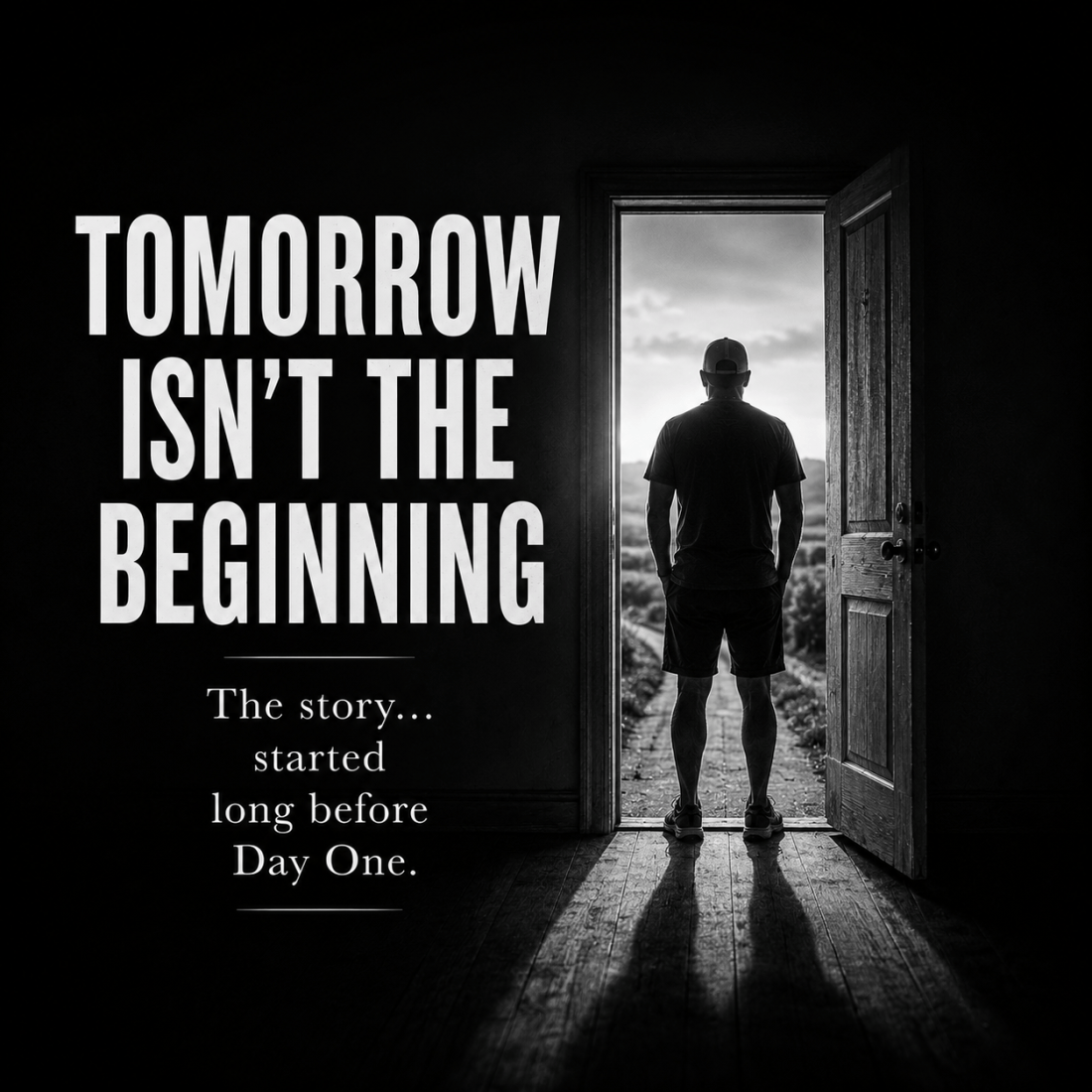
Tomorrow isn’t really the beginning.

When does change actually begin?

It’s not with the first workout or the first pound lost on the scale. It’s not when you finish the first chapter or publish your first article online.

Those might be the first signs of change.

But change starts in the invisible moments.

Think back to the first time you admitted something needed to change. When you wondered whether you really had the strength to commit to something new. When you looked at your schedule, counted the cost, said goodbye to certain habits, quietly hoped this time would be different, or finally found the courage to ask for help.

No one thinks of these as the moments where change began.

But they’re the reason tomorrow exists.

We all make the same mistake.

We celebrate the first visible milestone as the start of something new, when those milestones are really just evidence of work that has already been happening in the shadows. The mental work. The preparation. The research. The internal struggle between the anxiety of trying something new and the comfort of remaining the same.

We celebrate the harvest.

We rarely celebrate the planting.

That’s because people don’t see the author before they see the book. They don’t see the business before the doors open. They don’t see the graduate before the diploma or the marathon runner before mile one. Every visible achievement is the product of invisible work.

So tomorrow you may be starting something new. It may be Day One for you.

People may think that’s where your journey begins.

But they’re only seeing the first visible page…

…of a book you’ve already been writing.

The moments that change our lives are rarely the ones everyone notices. They’re the quiet decisions made in solitude and silence. The commitment you made to yourself while sitting alone. The preparations you made when no one was watching. The choice you made before you even knew whether you could change.

Tomorrow may be the first thing people see.

But it isn’t where your story started.

Continue the Journey

If this idea resonated with you, here are a few more articles that continue the conversation:

  • Day One — Every meaningful journey begins with the decision to start, even when the path ahead is uncertain.
  • The Reset Never Came — Why waiting for the perfect time to begin often becomes the biggest obstacle to making progress.
  • Winning the Wrong Argument — The internal conversations that convince us to delay the very life we’re trying to build.
  • I Finally Stopped Waiting to Feel Motivated — Lasting change doesn’t begin when motivation arrives; it begins when we choose to act anyway.
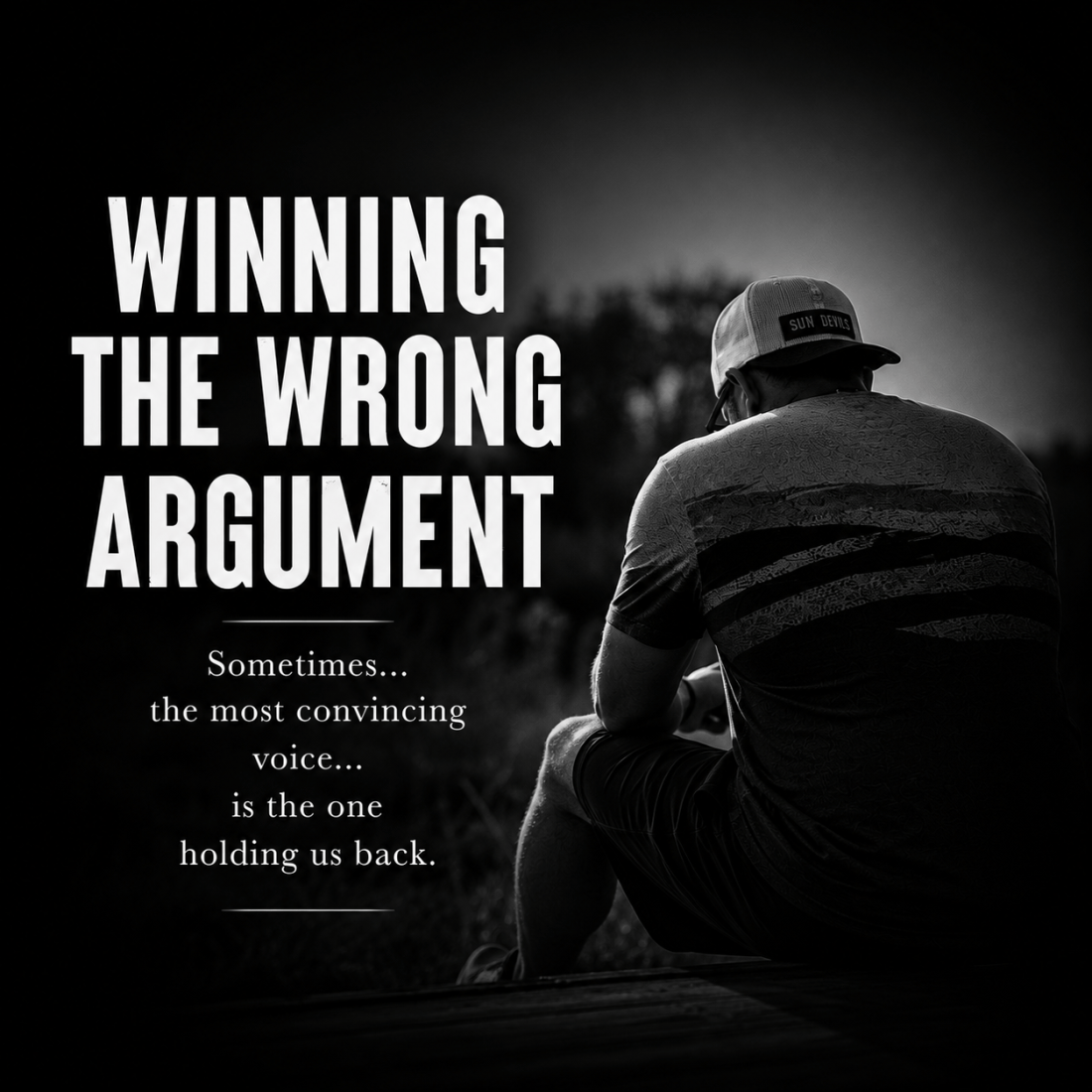
Winning The Wrong Argument

Every time I make a decision that I later wish I hadn’t, there is a conversation first.

It’s never out loud. It’s that everlasting debate that goes on inside my head, like the old cartoons where the devil sits on one shoulder and the angel on the other.

The angel says, “Let’s go work out. Stick to the diet. Work on the book.”

The devil is quick to respond.

“I’m tired.”

“I’ll start tomorrow.”

“Just one more snack.”

“You’ve had a long day.”

“You deserve a break.”

And before long, the devil has won the argument before the angel even saw it coming.

The interesting thing is that the devil never tries to convince me my goals aren’t important. He simply convinces me that today should be the exception. That one workout won’t matter. That one evening without writing won’t make a difference. That tomorrow will somehow be easier than today.

We imagine discipline as something silent. As determination. As strength. As if it never questions itself.

But discipline has a voice too.

Every day, it’s an argument between comfort and growth; an unending debate between two versions of ourselves.

The issue is that the antagonizing argument isn’t wrong.

We are tired.

We are overly stressed.

We are busy.

We’ve had a long day.

With everything going on, we are overwhelmed.

The argument isn’t irrational. It’s real.

And that’s exactly why it’s so convincing.

That’s why the devil is usually the favorite in the debate.

Because the argument makes perfect sense.

But when the argument that makes the most sense in the moment wins—when tiredness and overwhelm overcome extra effort—the win is actually a loss.

You have won the right to sit in your chair and watch television.

To skip the workout.

To leave another chapter unwritten.

To put things off until Monday.

You won the argument.

The problem is that life doesn’t keep score by arguments won.

It keeps score by actions taken.

The workout doesn’t happen because your excuse was convincing.

The book doesn’t gain another chapter because you made a good case for waiting.

The life you want isn’t built by the reasons you had for delaying it.

It’s built by what you actually did.

You won the argument…

But you lost the war.

For years I put the diet off until Monday, watched television instead of writing, searched for perfection instead of progress, and waited for inspiration and motivation to drive my efforts.

And I had an argument for myself every single time.

An explanation that made complete sense.

One that I accepted as good enough.

As truth.

Years later, I was still stuck in that endless loop.

The thing is, the devil on your shoulder never really goes away.

That conversation happens every day, with every decision and every choice.

The difference isn’t that the voice disappears.

The difference is that it no longer gets the final vote.

Because once you recognize the argument for what it is, you have a choice. You can keep winning the same debate you’ve won a hundred times before, or you can finally let the other voice finish speaking.

Because the most dangerous arguments aren’t the ones we lose.

They’re the ones we win while arguing against the life we actually wanted.

So be careful which arguments you win.

Some victories cost far more than they’re worth.

Continue the Journey

If this article resonated with you, you may also enjoy:

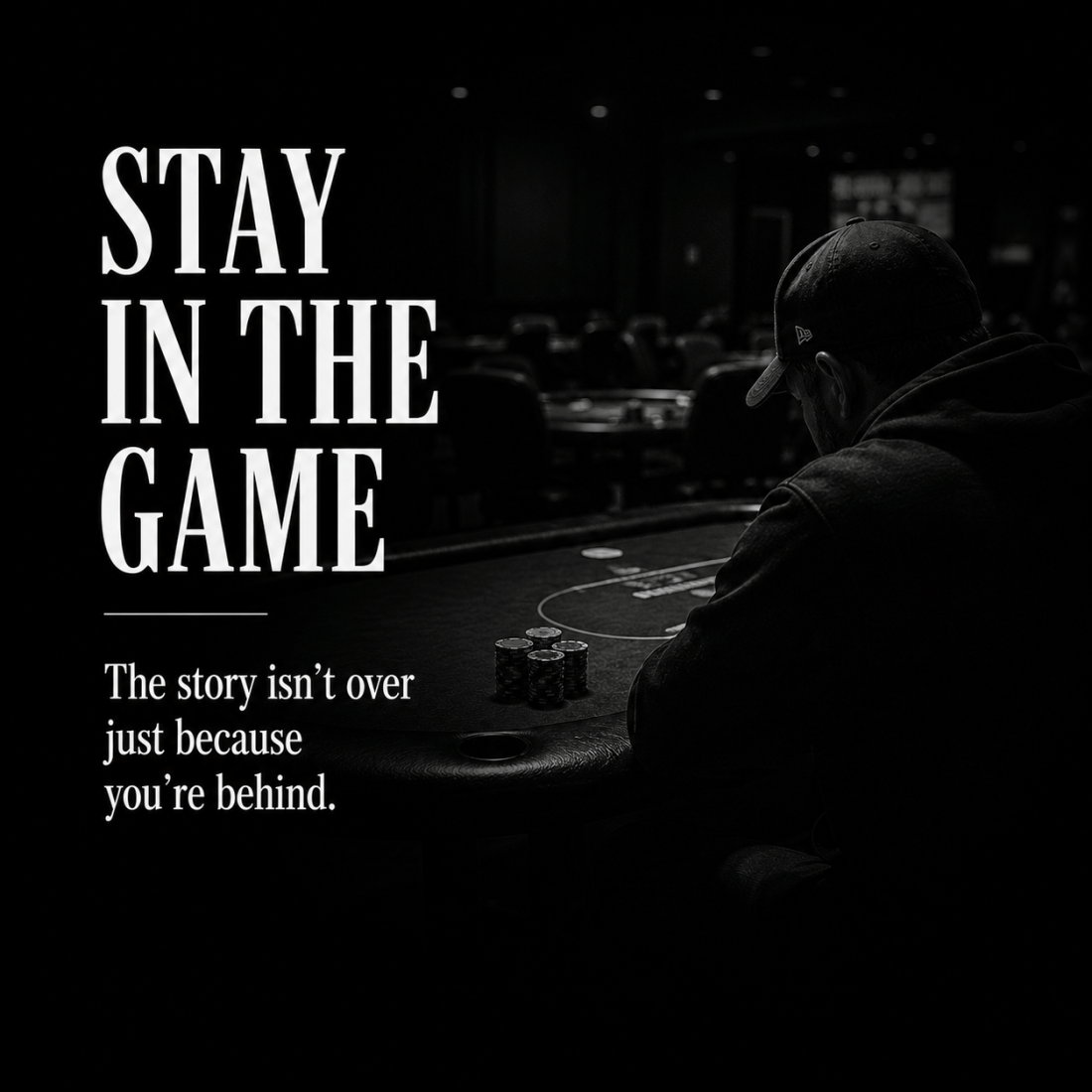
Stay In The Game

Last night was poker night with the Papa Pandas. Ten of us showed up for a Texas Hold ‘Em tournament. On the opening hand I made two pair and won a large pot. Then I didn’t win another hand for a very long time.

Eventually the table had dwindled down to four players, and my dwindling stack was the smallest of them all. If you had taken a poll around the table, I probably wouldn’t have been the favorite to come out on top.

But I stayed patient. I played my game, bet when I thought the odds were in my favor, and took it one hand at a time. I eliminated one player, then another, and eventually it was just me and the chip leader. I won a couple of smaller pots to even things up before catching an outside straight on the river and moving all in. He called with two pair, and I walked away the winner.

I didn’t win because I played every hand perfectly. I folded hands that would have become winners and played a few that I probably shouldn’t have. I won because I stayed patient and stayed in the game. The cards certainly helped, but they couldn’t have helped me if I had already given up.

It made me wonder about all the other things I’ve quit simply because I got behind. How many times have I stopped writing because the words wouldn’t come? Quit exercising because the scale didn’t move? Walked away from a sport because I wasn’t getting playing time? Given up because things simply became too hard? Not because I was destined to fail, but because success didn’t seem likely, and I mistook where I was for where I was going to finish.

Yesterday I wrote that seizing opportunity requires us to accept uncertainty before we can enjoy the reward. Today I’m realizing that’s only half the story.

Sometimes taking the risk isn’t enough. Sometimes the reward only comes because we stay around long enough for it to arrive.

If you quit trying to lose weight every time the scale goes up or refuses to move, you’ll never reach your goal.

If you abandon every project because the results aren’t immediate, you’ll never finish anything meaningful.

If you give up on every dream because reality doesn’t match the picture in your head, you’ll never become the person you hoped to be.

It won’t be because you weren’t talented enough or capable of working hard enough. It’ll be because you didn’t give yourself—or your dream—the time it needed.

Last night I happened to win the poker tournament. But that’s not what I’ll remember.

I’ll remember looking down at the smallest stack at the table and realizing that as long as I still had chips in front of me, the story wasn’t over.

Sometimes the only thing you can do is stay in the game long enough to find out how the story ends.

Continue the Journey:

If you enjoyed this article, you may also like:

Every Opportunity Begins With Risk

This week I took a risk and put myself out there. I saw an opportunity worth pursuing, and despite my nervousness and anxiety, I sent the message. I asked the question, and I was rewarded for taking that chance. It wasn’t luck. It was action in the face of uncertainty.

We’ve all faced uncomfortable moments. Moments where something worth having sat directly across from our own insecurities and doubts. We imagine being ignored, turned down, or told no. We worry that we’re imposing on someone else or putting them in an uncomfortable position. In those moments, the opportunity may exist, but it isn’t real because we haven’t yet made the decision to pursue it.

Then comes the decision. You put yourself out there. You make yourself vulnerable. You expose yourself to rejection or awkwardness. Sometimes you’re rewarded with acceptance, and afterward you wonder why you waited so long. It wasn’t nearly as big of a deal as you had made it out to be. Then another thought creeps in: how many other opportunities have you missed simply because you weren’t willing to accept a few moments of discomfort while waiting to see what might happen?

I think about my kids. They don’t see the risk; they only see the reward. When Brooks walked into his first karate class, he didn’t know if he would like it. He was nervous. He didn’t know anyone. But if he had never walked through those doors, he never would have discovered something he genuinely enjoys. Children are often willing to try first and worry later. As I wrote in Brooks’s First Tae Kwon Do Class, the hardest part wasn’t earning the belt—it was walking through the door for the very first time. As we get older—even by the time we’re Brooks’ age—that begins to change. Doubt slowly creeps in. Our confidence starts giving way to thoughts about what other people might think if we fail or embarrass ourselves. The older we get and the more rejection we experience, the easier it becomes to focus on the opportunities we’ve missed instead of the ones we’ve seized.

As I thought about it, I realized how many of the best parts of my life began with accepting that same risk. Going back to school for my bachelor’s degree, and later my master’s, while working full-time and starting a family. Coaching Brooks’ baseball team. Walking into my first Papa Pandas meeting. Starting this blog one more time after nearly a decade of false starts. None of those moments felt comfortable beforehand. Every one of them was worth it afterward.

Every opportunity asks us to take a risk before we can enjoy the reward. The hardest part isn’t saying yes to the opportunity—it’s saying yes to the uncertainty that comes before it. As I shared in I Finally Stopped Waiting to Feel Motivated, waiting until we feel ready often means waiting forever. Growth rarely begins with confidence; it begins with the decision to act anyway.

Looking back, I’m far more grateful for the opportunities I experienced because I was willing to accept the risk than I am bothered by the times I was rejected. Because you can’t reap the reward without first accepting the risk.

Continue the Journey:

If you enjoyed this article, you may also like:

The Teachers I Still Remember

Last night I had a meeting with my pastors to discuss the upcoming year of Confirmation with our middle school youth.

I have been serving as a guide in the Confirmation ministry for the last twenty-seven years, and for the first time in a long time, I felt like it was time for both the programming around Confirmation—and my role within it—to evolve.

For years, Confirmation has largely followed a classroom model. The students sit around tables, listen to the pastors teach, read a few Bible verses, and answer questions together. As guides, we sit with the students, helping them stay engaged and encouraging discussion where we can.

As we talked about the upcoming year, one question kept coming up.

Is this really the best way to help someone learn?

We talked about how kids learn differently. Some thrive sitting quietly and listening. Others need movement, discussion, and interaction before something truly sticks. I don’t think that’s a new phenomenon. I think we’re simply becoming more aware that people process information in different ways.

After the meeting, I found Sir Ken Robinson’s TED Talk, Do Schools Kill Creativity? One of the ideas that has always stayed with me is that people don’t all learn the same way. If that’s true in school, it seems just as true in church, at home, on a baseball field, or anywhere else we’re trying to help someone grow.

I also came across an article from Safe Search Kids that explored why students often remember experiences more than lectures. It wasn’t really arguing that lectures are bad. Instead, it made the case that when people actively participate in what they’re learning, they’re far more likely to remember it. That felt like exactly the kind of environment we’re hoping to create this year.

As I listened, I found myself thinking back to my own years in school.

I don’t remember my favorite teachers because they had the best PowerPoint presentations or the most organized lesson plans.

I remember them because they were passionate.

They told stories.

They made us laugh.

They asked good questions.

They welcomed discussion.

Most importantly, they made us feel like we were part of what was being taught instead of simply being talked at.

Next year I’ll be transitioning into more of a teaching and administrative role within the Confirmation program, and we’ll begin easing into some of those responsibilities this year. As we discussed what that might look like, I found myself asking a different question.

If I’m going to teach… what kind of teacher do I want to be?

That question extends far beyond a Confirmation classroom.

Parenting isn’t just telling our kids what to do.

It’s helping them discover why it matters.

Marriage isn’t built on lectures.

It’s built on conversations.

Coaching baseball isn’t about giving speeches.

It’s about creating an environment where kids can learn while having fun.

Leadership isn’t about standing in front of people.

It’s about bringing people into the conversation.

And maybe writing isn’t all that different.

I’m not writing this blog because I have life figured out.

I’m writing it because I’m still figuring it out.

I didn’t go to school for philosophy.

I’m not a life coach.

I’m certainly not an expert on fatherhood.

I’m simply someone trying to build a better life while inviting other people into the conversation.

Every article I write is less of a lecture…

…and more of an invitation to sit beside me while I learn.

As I step into this new role in Confirmation, I hope I become the kind of teacher I still remember from my own childhood.

Not because I had all the answers.

But because I helped create an environment where questions were welcome.

Where stories made Scripture come alive.

Where students felt seen.

Where faith became something they experienced instead of something they memorized.

Because twenty years from now, they probably won’t remember every lesson.

They won’t remember every Bible verse we discussed.

But they just might remember how it felt to be invited into the conversation.

And sometimes…

That’s where the real learning begins.

Continue the Journey:

If today’s article resonated with you, you might also enjoy:

  • When Errands Turn Into an Adventure — Some of the most memorable experiences aren’t carefully planned. They’re created by the way we choose to approach ordinary moments.
  • Why Ordinary Days Matter More Than Big Moments — The moments we remember most often aren’t life’s biggest events, but the ordinary days that became unforgettable because of the people we shared them with.
  • Playing Catch — Some of life’s most meaningful lessons aren’t taught through instruction, but through shared experiences that quietly strengthen relationships.

Further Reading:

Sir Ken Robinson — Do Schools Kill Creativity? (TED Talk)
https://www.ted.com/talks/sir_ken_robinson_do_schools_kill_creativity

Safe Search Kids — Why Students Typically Remember Experiences Better Than Lectures

They Don’t Have To Understand

Today’s post is built around a quote that I recently came across:

“Protect your peace and your vision because not everyone will understand either.”

This one had me thinking because it resonated with where I am in this project.

Not because I’m receiving criticism or doubt for what I’m trying to accomplish…

But because I’m not hearing anything at all.

This may come as a surprise, but I can count the number of people I know personally who truly know about The Young Napoleon Project on one hand.

I’m intentionally quiet about what I’m doing here.

My wife, my parents, and a few select others know that I’m writing a book and that I have this blog. A few more know about the work I’m putting into getting healthier.

But that’s about it.

No one really knows what The Young Napoleon Project truly is because I’ve been hesitant to actually talk about it.

This project didn’t start last month.

As of writing this, I’m technically on Day (43), but I stopped counting the number of times I’ve launched this project and never made it to Day (43).

I first had the idea for this project well over a decade ago—before I got married, before I bought a house, before I had kids.

People who see this project today are seeing the latest, and hopefully greatest, iteration of it.

What they don’t see are the countless restarts along the way.

The abandoned notebooks.

The unfinished brainstorming sessions.

The ideas that never made it past the first page.

The quiet hope that every restart would finally become the one that lasted.

They see pieces of my story, but I’ve lived the entire tale.

Maybe that’s why this project means so much to me and looks so ordinary to everyone else.

And yet, despite rarely sharing my “why,” I still catch myself expecting people to understand it.

But how could they?

They haven’t been inside my head to experience the defeats and frustrations.

They haven’t felt the anxiety that comes with starting over or the joy that comes with believing this time might be different.

They haven’t carried this dream with them for over a decade while wondering if it would ever become reality.

They haven’t fought the emotional battles I’ve fought over my own shortcomings or experienced the mental fatigue that repeated failure can bring.

It’s unreasonable to expect someone to understand where I’m coming from when I’ve never really shown them where that is.

And that’s not just true for me.

We all carry dreams.

Maybe yours is to lose weight.

Start a business.

Go back to school.

Change careers.

Run a marathon.

Build a family.

When people look at you, they see what you’re doing today.

They don’t see everything that led up to this moment.

They don’t see the struggle.

They haven’t watched you fight.

They only see one chapter of a story you’ve been living for years.

Here’s the thing:

People don’t need to understand your dream or your vision for it to be worth pursuing.

You don’t need their approval.

You don’t need their recognition.

Because your dream is incredibly personal to you.

It doesn’t have to be a secret.

You can tell everyone about it if you want.

But you can’t expect them to spend every day in the trenches of a battle they’re not fighting.

People can support you.

They can encourage you.

They can cheer you on.

And they can do all of that without fully understanding your why.

While thinking about this, I found myself coming back to Simon Sinek’s TED Talk, Start With Why. He argues that our “why” is what gives our actions meaning. We often think our “why” exists so we can explain ourselves to other people, but maybe its more important purpose is reminding us why we started when no one else fully understands what we’re building.

I also came across this essay from A Life of Lovely about why we don’t always need to explain ourselves to everyone else. It made a point that resonated with me: not every dream needs to be defended or fully understood by other people to be worth pursuing. Sometimes the people who matter most can support us without fully understanding what we’re carrying.

You are the only one who has to know your why.

You are the only one who can’t give up on yourself.

For me, this project isn’t just a blog.

It isn’t just a book I’m writing.

It isn’t just losing weight.

It’s my attempt to build my life intentionally. Part of that has meant accepting that I’ll probably never finish this project, something I explored in The Myth Of Falling Behind

It’s also my attempt to accomplish something I first set out to do over a decade ago and am still fighting to achieve today. Ironically, the dream itself has changed over those ten years, something I wrote about in Every Season Has Different Dreams. The destination evolved, but the desire to build a meaningful life never did.

No one will ever understand why it matters to me as deeply as I do.

And that’s okay.

Maybe someday people will understand why this mattered so much to me.

Maybe they won’t.

The same goes for your dream.

Either way, we both have to keep going.

We have to wake up tomorrow and take the next step toward our dreams and our vision.

Because that’s what matters to us.

And no one else has to understand that.

Continue the Journey:

Further Reading:

Simon Sinek — Start With Why (TED Talk)

https://youtu.be/u4ZoJKF_VuA?is=O32TQ6Jl0PQmJfpl

A Life of Lovely — Why You Don’t Need to Explain Yourself to Anyone

https://alifeoflovely.com/why-you-dont-need-to-explain-yourself-to-anyone/#google_vignette

Overthink The Good Stuff

Guess what?

I overthink things.

I know… you’re shocked.

If you read my post about Why The Young Napoleon Project then you know I share a trait with General George B. McClellan: we were both overthinkers and overplanners.

My anxiety?

Well… that doesn’t exactly help either.

I can get lost overthinking the smallest things.

Did I say the wrong thing?

Should I have sent that text?

Did I make the right decision?

Then I can spend hours thinking about everything that might be waiting for me tomorrow.

I imagine I’m not alone.

Like so many people, I tend to obsess over tiny moments that probably don’t mean nearly as much as I convince myself they do.

You know what’s sad, though?

We rarely overthink the good stuff.

I don’t have Brooks’ and Joseph’s laughter replaying on a loop in my head.

I don’t constantly revisit the quiet moments Jillian and I share together.

I don’t spend hours remembering the funny things Joseph says or the way he says them.

Those moments come into my life…

And then they’re gone.

Meanwhile, anxiety, fear, and worry seem to live in my head rent-free.

Some of that is chemistry.

Some of it is simply the way our brains are wired.

While researching this, I came across an article in Psychology Today explaining why our brains naturally gravitate toward negative thinking. It pointed out that our minds are wired to pay more attention to potential threats than positive experiences—a survival instinct that made a lot of sense thousands of years ago, but one that can easily leave us replaying our worst moments while overlooking our best ones.

Our minds are trying to protect us.

They’re scanning for danger.

Preparing us for tomorrow’s meeting.

The unexpected bill.

The difficult conversation.

Sometimes they’re trying to teach us something.

“Remember that mistake you made yesterday? Think about it for the next three hours so you never make it again.”

And honestly…

There’s some value in that.

We should learn from our mistakes.

We should approach unfamiliar situations with healthy caution.

Sometimes there really is a good reason to worry about something on tomorrow’s calendar.

But left unchecked, our minds can convince us that our worst moments deserve the most attention.

What if we trained our minds a little differently?

What if we intentionally spent time replaying the good moments instead?

Not to ignore our problems.

Not to pretend life is perfect.

But because those moments deserve our attention too.

In my reading, I came across another article from Verywell Mind about learning to savor positive moments. One of the things that stood out to me was the reminder that joy often doesn’t require bigger experiences—it requires paying closer attention to the ones we’re already having. The more intentional we are about noticing and lingering in those moments, the more likely we are to remember them later.

They deserve to be appreciated.

They deserve to be remembered.

What if you spent just five minutes every day thinking about your kids laughing?

The love you share with your spouse.

Good news you recently received.

The ordinary moments when, for just a little while, nothing was wrong.

What would happen?

Would your outlook change?

Would you feel a little lighter?

Would your day be just a little better?

I think it might.

The moments we replay become the stories we tell ourselves about our lives.

If we come home from work and only replay everything that frustrated us, how can we expect the rest of our evening not to be colored by that frustration? It’s also why I wrote Don’t Let Your Storm Get Your Kids Wet. The stories we replay don’t always stay inside our own heads—they often shape how we show up for the people we love.

If we replay only our failures, eventually we’ll begin believing we’re failures.

If we spend all night overthinking tomorrow’s problems, we’ll wake up already convinced it’s going to be a bad day.

And in doing so, we’ll miss the moments that could have made it a good one.

But what if we intentionally replayed moments of joy instead?

What if we celebrated the small wins?

What if we got excited about what still lies ahead?

What if we filled our minds with the memories that remind us life is good, even when it isn’t perfect?

When I look back on this project, I realize I’ve spent a lot of time writing about ordinary moments instead of extraordinary ones. It’s something I’ve explored before in Why Ordinary Days Matter More Than Big Moments. The memories that shape our lives usually aren’t the spectacular ones—they’re the ordinary moments we almost overlook.

Walks around the neighborhood.

Playing catch.

Reading bedtime stories.

Quiet evenings with Jillian.

Those moments are my life.

Some days are harder than others.

Some stories are painful.

But if I only focused on those moments, I’d completely miss the ones that make this life so beautiful.

So yes…

Tomorrow I’ll probably wake up and still be an overthinker.

That isn’t changing overnight.

I’m forty-one years old.

If it were that easy, it probably would have happened by now.

I’ll probably replay some small mistake I made today.

I’ll probably worry about something waiting for me tomorrow.

But I’m also going to try to be more intentional about replaying the good stuff.

The laughter.

The walks with my boys.

The quiet moments with Jillian.

The conversations I’ll someday wish I could have one more time.

Because those moments are the best part of my life.

And if I’m going to overthink anything…

I’d rather it be the good stuff.

Continue the Journey:

Further Reading:

Psychology Today — “3 Reasons Why Your Brain Loves Negative Thinking”

https://www.psychologytoday.com/us/blog/social-instincts/202512/3-reasons-why-your-brain-loves-negative-thinking/amp

Verywell Mind — “How to Savor the Moment”

https://www.verywellmind.com/how-to-savor-the-moment-3144633

Every Season Has Different Dreams

When we were kids, we all had dreams about what we wanted to be when we grew up.

For a while I wanted to be a cowboy. Not the Dallas Cowboys kind—a real cowboy.

Then I wanted to be a lawyer.

A stockbroker.

Eventually I went to school for animation.

Turns out…

I’m none of those things.

Today my dreams look very different.

Now I dream about providing for my family.

Being a good husband.

Being a good father.

Writing books.

Building this project.

Creating a life I’m proud to wake up to every morning.

If you could take a snapshot of my life today and show it to my younger self, I think he’d be excited about a lot of it.

He’d see that we became a husband.

A father.

A homeowner.

That we live in the same neighborhood where we grew up.

That we coach our son’s baseball team.

I think he’d smile.

But I also think he’d have questions.

He’d probably ask,

“What happened to all those other dreams?”

The honest answer is…

Life happened.

Some decisions I made in my late teens and early twenties changed the direction of my life.

Some opportunities came and went.

Some dreams quietly faded.

At one time, I looked at that as failure. After reflecting on it, I realized it wasn’t that I had fallen behind—it was that my dreams had changed. That’s an idea I explored further in The Myth of Falling Behind.

Because while some dreams disappeared…

Others arrived that I never could have imagined.

The younger version of me dreamed about being a husband and father.

But he couldn’t possibly have imagined what it would actually feel like to fall in love.

Or to hold his newborn son for the first time.

Or to hear little feet running through the house on a Saturday morning.

Those weren’t dreams.

Those were experiences waiting for me on the other side of life.

Today Brooks wants to be a baseball player.

A police officer.

Most recently…

A drag racer.

He’s six.

I’m sure next year he’ll have another dream.

And another after that.

I hope he does.

Because I don’t want him to stop dreaming.

Dreams aren’t promises.

They’re possibilities.

They help us imagine a future that’s bigger than today.

As we grow older, though, our dreams begin to change.

While thinking about this, I came across an article in Psychology Today exploring how our lives often gain meaning as we age. One idea that resonated with me was that as we accumulate experiences, relationships, and responsibilities, our sense of purpose naturally evolves. Reading that made me realize my dreams didn’t disappear—they simply matured alongside the life I’ve been fortunate enough to build.

Not because we’ve become less ambitious.

Because we’ve become more experienced.

We’ve loved.

We’ve failed.

We’ve succeeded.

We’ve discovered what actually matters to us.

When I was younger, success looked like becoming someone impressive.

Today, success looks like coaching Brooks’ baseball team.

Writing another blog post.

Finishing my novel.

Reaching my goal weight.

Building a strong marriage.

Being present for my boys.

Those dreams don’t compete with one another anymore. Like I wrote in A Life, Not a Collection of Parts, they’re all pieces of the same life I’m trying to build.

Those dreams aren’t smaller than the ones I had when I was twenty.

They’re deeper.

They’re shaped by the life I’ve lived and the people I’ve loved.

It’s a realization that echoes something I wrote in A Masterpiece and a Work in Progress. Growth doesn’t erase our worth—it simply adds depth to who we’re becoming.

I think that’s true for all of us.

I also came across an article from Tiny Buddha about letting go of expectations that no longer serve us. It made me think about how easy it is to judge ourselves by the dreams we had years ago instead of asking whether those dreams still reflect the people we’ve become. Sometimes growth isn’t about holding on tighter—it’s about giving ourselves permission to dream differently.

We shouldn’t expect to want the same things at forty that we wanted at fifteen.

The world changes.

We change.

Our dreams should change too.

Some dreams should still be wildly ambitious.

The kind that stretch us and pull us forward.

Others should be grounded enough that we can celebrate them as we achieve them.

Maybe that’s what growing up really is.

Not giving up on the dreams we had as children…

But allowing them to grow up with us.

Because every season of life asks something different from us.

Every season gives us something new to hope for.

I’m still chasing my dreams.

They just don’t look the way they used to.

And I think that’s exactly the way it’s supposed to be.

Continue the Journey:

Further Reading:

Psychology Today — “Do Our Lives Gain Meaning as We Age?”

https://www.psychologytoday.com/us/blog/supersurvivors/202103/do-our-lives-gain-meaning-as-we-age

Tiny Buddha — “Letting Go of Expectations and Pursuing What You Really Want”

https://tinybuddha.com/blog/letting-go-of-expectations-and-pursuing-what-you-really-want/

The Myth Of Falling Behind

Lately I’ve been feeling like I’m falling behind.

It’s that voice in the back of my head that whispers I’m not doing enough. The one that tells me if I just hit that all-too-comfortable reset button, I’d somehow find a way to do more.

The thing is…

I’m doing more now than I ever have before.

I’ve published a blog post for thirty-nine consecutive days, taken nearly half a million steps, been reading consistently, and spent meaningful time with my family, all while building this project in a way I’ve never been able to sustain before.

So what exactly am I behind on?

Well, I could make a list pretty easily.

I’m not working out as much as I hoped I would.

While the blog is thriving, the structure behind The Young Napoleon Project still feels unfinished.

I’m not spending as much time writing my book as I imagined.

There are always projects around the house waiting for attention.

And the list keeps growing.

Most nights I feel like I’m scrambling just to catch up before it’s time to go to bed.

So why do I feel so behind?

While researching the idea of falling behind, I came across an article from Verywell Mind about the psychology of feeling behind in life. One idea that resonated with me was that we often compare our present reality to an imagined timeline of where we think we “should” be. That struck me because I realized I wasn’t measuring my progress against where I started—I was measuring it against an ever-expanding vision of where I wanted to go.

Because the further I get into this project…

The bigger the project becomes.

At first, the goals were simple.

Get healthier.

Become more organized.

Be a better husband.

Be a better father.

Launch the blog.

But then the vision expanded.

Now I’m trying to write a novel.

Figure out how to grow the blog.

Build a social media presence.

Coach Little League again.

Volunteer at church.

Follow another San Diego State basketball season.

Every time I accomplish something, I discover something else worth pursuing.

Then I realized…

That’s not a project problem.

That’s a life problem.

There’s always another bill to pay.

Another room to organize.

Another home project.

Another responsibility at work.

Another dream waiting just beyond the one you finally achieved.

It’s something I explored in There Is Always One More Thing. The responsibilities never really disappear—they simply change shape as life moves forward.

The finish line doesn’t get closer.

It keeps moving.

Or maybe…

There was never a finish line at all.

Every night I go to bed carrying two thoughts that seem to contradict each other.

One says:

“I’m proud of what I accomplished today.”

The other whispers:

“You’re falling further behind.”

Maybe the lesson is that both feelings can exist at the same time.

I can be proud of the progress I’ve made while recognizing there is still more I want to do. It’s a realization that builds on A Masterpiece and a Work in Progress. We don’t have to choose between celebrating who we are today and continuing to grow into who we’re becoming.

I can celebrate today’s victories without pretending tomorrow won’t bring new responsibilities.

I’ll never finish everything.

I’ll probably never have an empty to-do list.

But that doesn’t mean I’m behind.

It simply means I’m living a life that’s still growing.

And maybe that’s exactly what The Young Napoleon Project was always supposed to be.

It was never meant to end.

It was never meant to become a completed checklist.

Like I wrote in A Life, Not a Collection of Parts, the project isn’t meant to consume my life. It’s meant to grow alongside it.

It was meant to be a lifelong pursuit of becoming healthier, wiser, more disciplined, more present, and more intentional.

I also came across an article from Big Think discussing the Japanese philosophy of Kaizen, or continuous improvement. One idea that resonated with me was that meaningful growth isn’t about reaching a final destination—it’s about committing to getting a little better over time. That feels much closer to what I want The Young Napoleon Project to become than a checklist I someday get to cross off.

Because if one day I truly became “caught up”…

There would be nothing left to dream about.

Nothing left to learn.

Nothing left to become.

When I really think about it, I still have weight to lose.

Books to write.

Projects to finish.

Habits to build.

Places to explore.

Memories to make with my family.

And I hope that list never disappears.

Because maybe I’m not falling behind at all.

Maybe I’m simply living in the messy middle.

And maybe that’s where all meaningful lives are lived.

Continue the Journey

Further Reading:

Verywell Mind — “How Do I Stop Feeling Like I’m Behind in Life?”

https://www.verywellmind.com/how-do-i-stop-feeling-like-im-behind-in-life-11729611

Big Think — “Kaizen: The Japanese Philosophy of Enduring Growth”

https://bigthink.com/smart-skills/kaizen-enduring-growth/

A Life, Not A Collection Of Parts

Yesterday I got home from work and it was obvious that Brooks was tired. He had spent the day swimming with his cousins and didn’t have much left in the tank. I got changed, we sat down to dinner, and afterward, instead of diving into my usual evening routine, we decided to have a family movie night.

The work was still there.

The dishes.

The writing.

The project.

The chores.

They could all wait for two hours.

Instead, it was Trolls 3 and taking turns with kids in my lap as we watched, danced, and sang along with the movie.

To say that I wasn’t thinking about this project during the movie would be a lie. I’m always thinking about what I could be doing next. But for the first time in a long time, I didn’t feel like I should have been doing something else. I didn’t feel guilty for sitting there. I didn’t feel like I was falling behind.

That’s different than it has been in the past.

During previous attempts to launch this project, every minute I wasn’t moving it forward felt like a minute I had wasted. The project slowly began to consume my life.

This time, I’ve realized something different.

The project needs to be integrated into my life, not consume my life.

In researching the idea of integration, I came across a Forbes article about how work-life integration being different than work-life balance. Rather than trying to divide life into perfectly equal compartments, the article argued for building a life where the different parts support one another. That stuck with me because I am not trying to choose between this project and my family—I am learning that the goal of this project is to make me better for my family. 

A few days ago I wrote There Is Always One More Thing, where I realized that the work is never really finished. Looking back, I think this is the next step in that lesson. If the work is never going to end, then I have to learn how to live while it’s still unfinished.

Because the purpose of this project was never to become someone who only works on the project.

The purpose is to become a healthier, happier, and more present husband, father, writer, and man.

Sometimes that means sitting on the couch with my boys, laughing through Trolls 3.

I’ve always tried to separate my life into categories: Family. Health. Marriage. Career. Writing. And I still think there’s value in that. Work should stay at work. Family time should be protected. You and your spouse need time together. It’s even how I built The Young Napoleon Project, dividing it into different departments that reflect the major areas of my life.

But that doesn’t mean those parts exist in isolation.

They overlap.

They influence one another.

Becoming healthier gives me more energy to be present with my family. Writing helps me think more clearly. A strong marriage makes me a better father. Spending time with my boys reminds me why I’m working so hard in the first place.

They’re not competing priorities.

They’re different pieces of the same life I’m trying to build.

That realization also reminded me of Adventure Is Closer Than You Think. The goal of that day wasn’t simply to visit Cabrillo National Monument. It was to spend meaningful time together as a family. The adventure wasn’t separate from the project—it was part of it all along.

My writing matters.

My health matters.

My marriage matters.

My boys matter.

None of those priorities are competing for my attention.

They’re all reasons I started this project in the first place.

While thinking about that, I also read an article from Becoming Minimalist about living intentionally. One of the ideas that stood out to me was that intentional living isn’t about doing more—it’s about making sure the things that matter most actually receive our attention. That felt like a good reminder that building a better life isn’t about perfectly balancing every responsibility each day. It’s about choosing to invest your time in the people and pursuits that align with the life you’re trying to create.

We only get twenty-four hours in a day, so naturally some days will lean more heavily toward work. Other days might be focused on family, health, or writing. The goal isn’t to give every part of your life equal time every single day. The goal is to make sure none of the parts that matter most are neglected for too long.

That doesn’t mean every day will feel perfectly balanced. As I wrote in I Finally Stopped Waiting to Feel Motivated, some days require discipline simply to keep moving forward. Other days require the discipline to recognize that your family deserves your full attention. Both are important.

Life isn’t lived in perfectly balanced twenty-four-hour blocks.

It’s lived in seasons.

Sometimes those seasons last a day.

Sometimes they last much longer.

When the movie ended, I still got my work done around the house. I put Brooks to bed. While Jillian went for a walk, I got ready for today. Then I sat down and worked on Beneath The Silt before finishing the night watching a show with Jillian.

Everything that mattered got some of my time.

Not equally.

But intentionally.

And that’s enough.

Because sometimes the most important work isn’t sitting at your desk.

Sometimes it’s sitting on the couch with your kids, laughing at Trolls 3 for the twelfth time.

That’s something I hope Brooks and Joseph remember long after they forget which movie we watched, just like I wrote in Why Ordinary Days Matter More Than Big Moments. The ordinary evenings are often the ones that quietly become the memories that last.

The Young Napoleon Project isn’t about building a better project.

It’s about building a better life.

Continue the Journey:

Further Reading:

Forbes — “Work-Life Integration Could Soon Replace Work-Life Balance”


https://www.forbes.com/sites/forbesbooksauthors/2023/11/27/worklife-integration-could-soon-replace-worklife-balance/

Becoming Minimalist — “Living Intentionally”

https://www.becomingminimalist.com/living-intentionally/