Last night I had a meeting with my pastors to discuss the upcoming year of Confirmation with our middle school youth.
I have been serving as a guide in the Confirmation ministry for the last twenty-seven years, and for the first time in a long time, I felt like it was time for both the programming around Confirmation—and my role within it—to evolve.
For years, Confirmation has largely followed a classroom model. The students sit around tables, listen to the pastors teach, read a few Bible verses, and answer questions together. As guides, we sit with the students, helping them stay engaged and encouraging discussion where we can.
As we talked about the upcoming year, one question kept coming up.
Is this really the best way to help someone learn?
We talked about how kids learn differently. Some thrive sitting quietly and listening. Others need movement, discussion, and interaction before something truly sticks. I don’t think that’s a new phenomenon. I think we’re simply becoming more aware that people process information in different ways.
After the meeting, I found Sir Ken Robinson’s TED Talk, Do Schools Kill Creativity? One of the ideas that has always stayed with me is that people don’t all learn the same way. If that’s true in school, it seems just as true in church, at home, on a baseball field, or anywhere else we’re trying to help someone grow.
I also came across an article from Safe Search Kids that explored why students often remember experiences more than lectures. It wasn’t really arguing that lectures are bad. Instead, it made the case that when people actively participate in what they’re learning, they’re far more likely to remember it. That felt like exactly the kind of environment we’re hoping to create this year.
As I listened, I found myself thinking back to my own years in school.
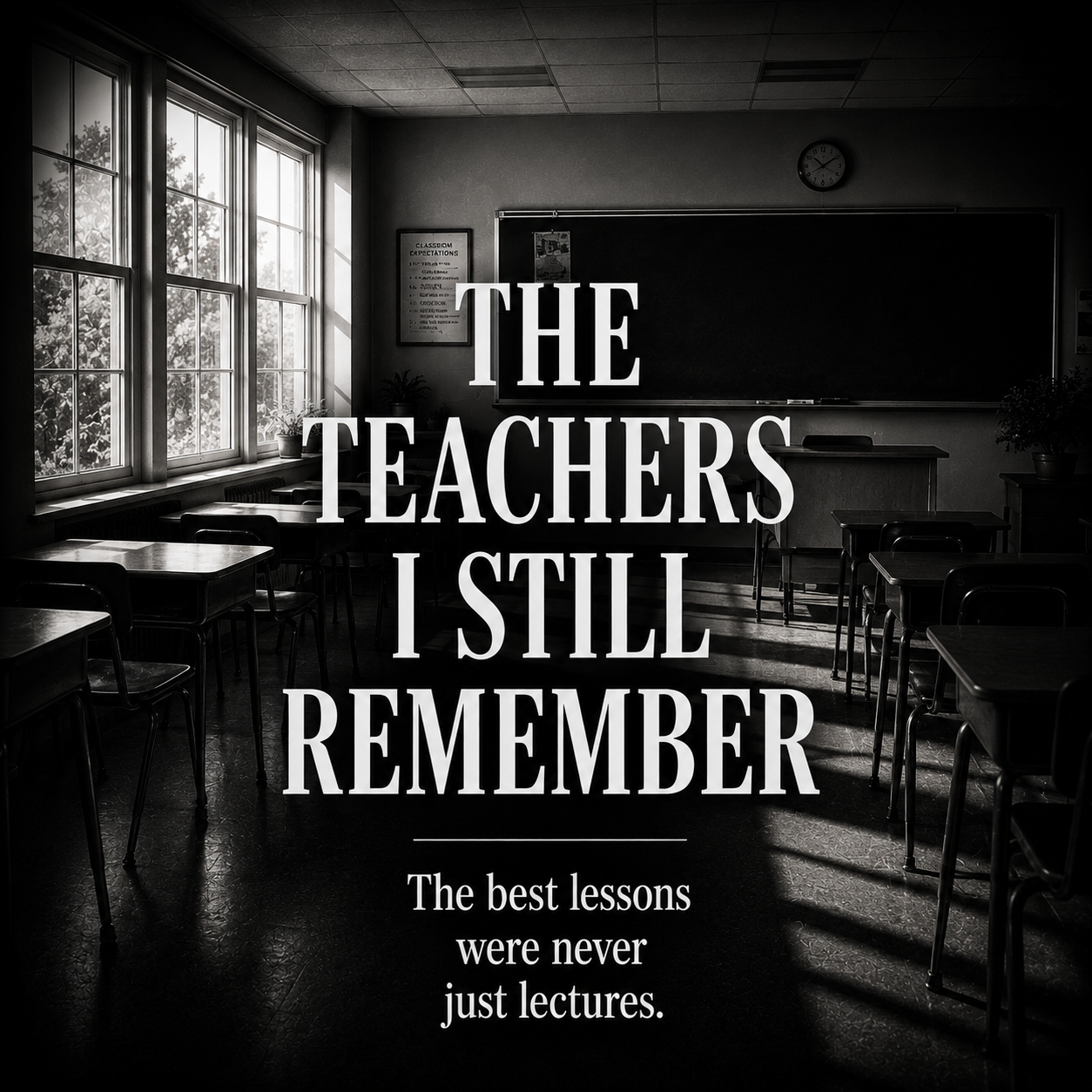
I don’t remember my favorite teachers because they had the best PowerPoint presentations or the most organized lesson plans.
I remember them because they were passionate.
They told stories.
They made us laugh.
They asked good questions.
They welcomed discussion.
Most importantly, they made us feel like we were part of what was being taught instead of simply being talked at.
Next year I’ll be transitioning into more of a teaching and administrative role within the Confirmation program, and we’ll begin easing into some of those responsibilities this year. As we discussed what that might look like, I found myself asking a different question.
If I’m going to teach… what kind of teacher do I want to be?
That question extends far beyond a Confirmation classroom.
Parenting isn’t just telling our kids what to do.
It’s helping them discover why it matters.
Marriage isn’t built on lectures.
It’s built on conversations.
Coaching baseball isn’t about giving speeches.
It’s about creating an environment where kids can learn while having fun.
Leadership isn’t about standing in front of people.
It’s about bringing people into the conversation.
And maybe writing isn’t all that different.
I’m not writing this blog because I have life figured out.
I’m writing it because I’m still figuring it out.
I didn’t go to school for philosophy.
I’m not a life coach.
I’m certainly not an expert on fatherhood.
I’m simply someone trying to build a better life while inviting other people into the conversation.
Every article I write is less of a lecture…
…and more of an invitation to sit beside me while I learn.
As I step into this new role in Confirmation, I hope I become the kind of teacher I still remember from my own childhood.
Not because I had all the answers.
But because I helped create an environment where questions were welcome.
Where stories made Scripture come alive.
Where students felt seen.
Where faith became something they experienced instead of something they memorized.
Because twenty years from now, they probably won’t remember every lesson.
They won’t remember every Bible verse we discussed.
But they just might remember how it felt to be invited into the conversation.
And sometimes…
That’s where the real learning begins.
Continue the Journey:
If today’s article resonated with you, you might also enjoy:
- When Errands Turn Into an Adventure — Some of the most memorable experiences aren’t carefully planned. They’re created by the way we choose to approach ordinary moments.
- Why Ordinary Days Matter More Than Big Moments — The moments we remember most often aren’t life’s biggest events, but the ordinary days that became unforgettable because of the people we shared them with.
- Playing Catch — Some of life’s most meaningful lessons aren’t taught through instruction, but through shared experiences that quietly strengthen relationships.
Further Reading:
Sir Ken Robinson — Do Schools Kill Creativity? (TED Talk)
https://www.ted.com/talks/sir_ken_robinson_do_schools_kill_creativity
Safe Search Kids — Why Students Typically Remember Experiences Better Than Lectures

 The Young Napoleon Project