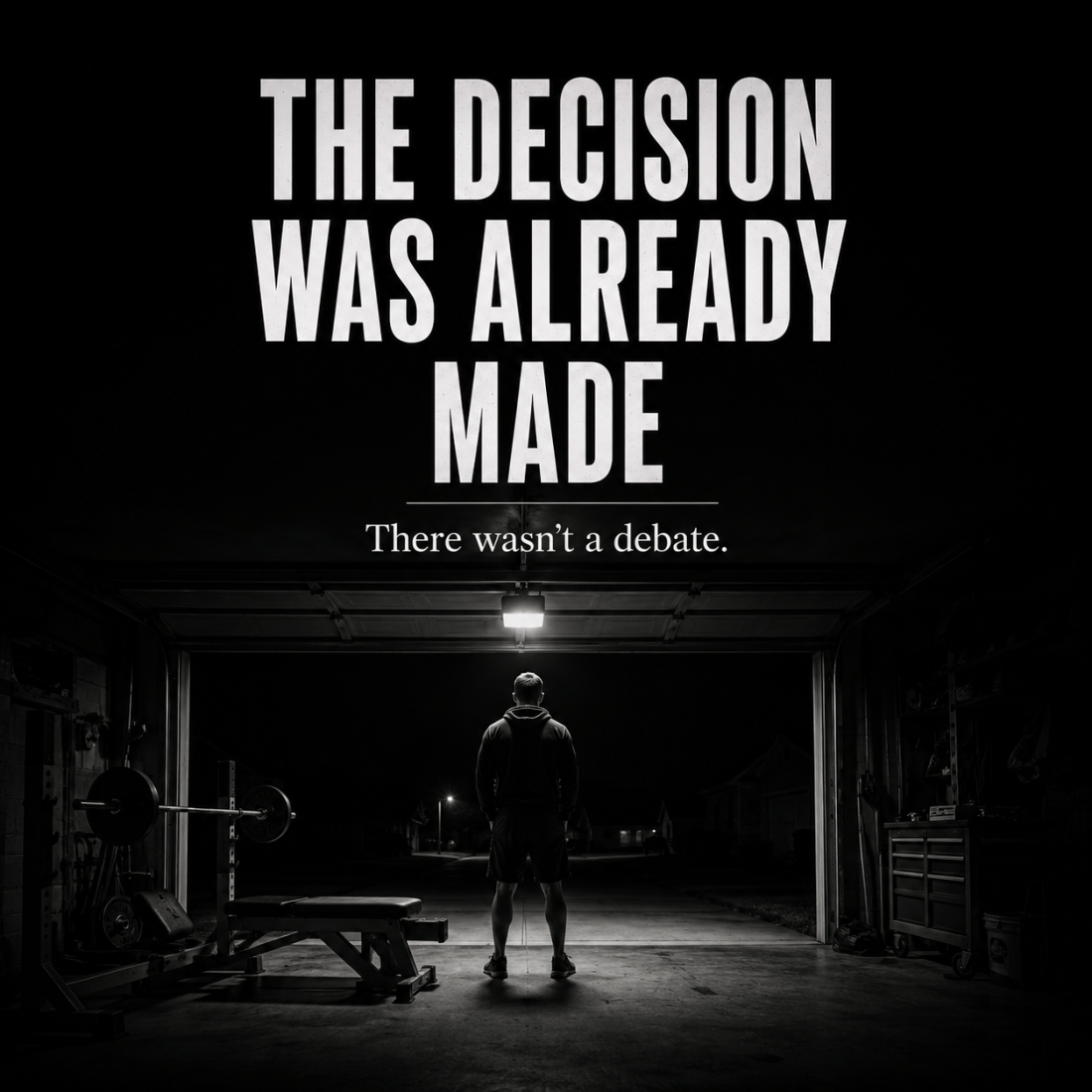
The Decision Was Already Made

Yesterday was a long day.

I’m on vacation next week, and I have a mountain of work to get through before I leave the office on Friday. I was tired by the time I got home, and even more so after we all went to the baseball fields to play before walking back home to get the kids to bed.

But then I got changed, I grabbed my headphones, I walked out to the garage, and I started my workout.

And I realized something.

I didn’t even have to think about it.

I just did it.

I have spent the last couple of months trying to convince myself every night that I should go work out. I have spent the last couple of months telling myself that the casual walk around the neighborhood with the boys or taking them to the fields so they could run around counted as a workout and that I didn’t need to go lift weights.

But then a few nights ago, I made the choice to go out there. I had some outside motivation because I am now working with a personal trainer, but I still had to walk out the door and lift the weights for the first time in months. I was sore. It was so much harder than I remembered. But I did it.

Then I did it again the next night.

And the next.

And then last night, I didn’t have to convince myself. There wasn’t a negotiation with my recliner or a debate with the television.

The decision had already been made.

I was heading out to the garage to work out.

I’d like to say the decision was easy.

I’d like to say that weeks or months ago I decided I needed to get in better shape and simply started.

But that’s not what happened.

I’ve known for a long time that I needed to invest in myself physically, and yet I didn’t.

I chose to watch television after the kids went to bed.

I chose to go back for seconds at dinner.

I chose to have snacks when I wasn’t hungry.

And I made a thousand excuses for those choices.

I’m tired.

I’m stressed.

I’ll do it tomorrow.

Then I would regret the decision after it was already too late to change it.

So what changed?

For me, it was committing to a personal training program.

I committed to someone else that I would put in the work.

That person wasn’t my wife.

It wasn’t my kids.

It was a stranger I met on the internet.

I don’t know why that was the thing that finally mattered.

But I do know this:

I went from struggling to make the right choice when it came to food and exercise…

…to having a few days in a row where I didn’t even see a choice.

The decision had already been made.

I don’t know how to turn that into a lesson everyone else can apply because I think we all have different triggers—different non-negotiable reasons for finally doing something we couldn’t bring ourselves to do before.

Mine happened to be accountability to someone I had just met.

Yours will probably be something completely different.

What I do know is that I never stopped believing there had to be something that would eventually make it click.

Even while I was breaking promises to myself almost every day, I never stopped hoping that one day I wouldn’t.

Does that mean I have changed forever?

I don’t know.

I’ve lost the weight before.

I’ve put it all back on before.

History says that’s possible.

I can’t promise that I won’t fall back into old habits because I don’t have the track record to make that promise believable.

What I can promise is that I won’t stop remaining open to whatever helps me become the person I want to be.

Because sometimes the breakthrough isn’t something you can force.

Sometimes it arrives because you kept trying long enough to recognize it when it did.

My hope for you is that you don’t stop looking for—or remaining open to—that catalyst in your own life.

Whether it’s exercise.

Writing.

Repairing a relationship.

Battling addiction.

Or finally beginning the thing you’ve been putting off.

I hope you find the thing that finally makes keeping the promise feel more natural than breaking it.

The point isn’t to become someone who never struggles.

It’s to slowly become someone who no longer has to negotiate with themselves every time.

Because eventually, the decision isn’t about who you could be.

It’s about who you are.

Continue the Journey

If this article resonated with you, here are a few more reflections that continue the conversation:

Every Day Is Made Of Small Rooms

Let’s start off with a question.

I want you to go back to yesterday and think about what you did. Not what you accomplished. Not what happened to you. Not who you talked to.

No, I want you to think about how many rooms you walked in and out of.

How many doors did you open and close?

The bedroom. The bathroom. The living room. The kitchen. The garage. Your car. The office. A conference room. Your kid’s classroom. The gym.

You were in a lot of rooms yesterday.

You probably had to stop and really think about them to remember them all.

We move through countless rooms every day and rarely notice them.

When you look back on your life, you probably think of the places where everything changed. The wedding altar. The graduation stage. The hospital room where your children were born. Those places matter because life-changing events happened there.

But you’ve only visited those places a handful of times—sometimes only once.

Most of our lives happen somewhere much less remarkable.

They happen in the ordinary rooms we enter every day.

The dining room isn’t just where you eat. It’s where your family gathers to talk about the day.

The office isn’t just where you work. It’s where you serve so you can provide for the people you love.

The classroom isn’t just where you learn. It’s where curiosity grows.

The gym isn’t just where the weights are kept. It’s where you keep promises to yourself and stay healthy for the people counting on you.

Every room we enter has a purpose.

But every room also asks something of us.

We talked before about how hallways aren’t meant to be homes—that eventually you have to turn the doorknob and step into the room if you want to experience life.

But before you cross that threshold, something else happens.

The room quietly asks a question.

Who are you while you’re in here?

Who are you when you’re sitting at the dining room table with your kids?

Who are you when you’re coaching their baseball team or taking them to the doctor?

Who are you when your boss needs something from you and you already have a mountain of paperwork sitting on your desk?

Who are you when you finally sit down next to your spouse after a long day?

It’s still you in every one of those rooms.

But each room asks for a different part of you.

Here’s where we run into trouble.

Sometimes we leave one room without ever really leaving it.

We bring work home with us—not physically, but emotionally.

We bring the frustration from work to the dinner table.

We bring the exhaustion from parenting into the office.

We bring the regret from binge eating into the gym and wonder why we can’t give our best effort.

The room changed.

We didn’t.

We failed to become the version of ourselves that the new room needed.

And because of that, we become unbalanced. Frustrated. Disconnected.

Our identity—and the way other people experience us—isn’t defined by life’s biggest decisions.

It’s defined by how we show up in the room.

How we walk into the office.

How we walk through the front door after work.

How we speak to our spouse.

How we listen to our children.

How we train when nobody is watching.

Every room becomes another opportunity to decide who we’re going to be.

Tomorrow you’ll probably walk through many of the same doors you walked through today.

The bedroom.

The kitchen.

The office.

The garage.

The living room.

The gym.

The rooms won’t be different.

But you can be.

Because a meaningful life isn’t built only in extraordinary places or extraordinary moments.

It’s built one ordinary room at a time.

Continue the Journey

If this article resonated with you, here are a few more reflections that explore the same ideas from different perspectives:

The Story Behind Tomorrow

Do you have something that starts tomorrow?

Something you’ve been looking forward to. Something that fills you with the same nervous excitement you used to feel on Christmas Eve, the night before your birthday, or the day before leaving on a family vacation.

Whatever begins tomorrow has the potential to change your life.

Months from now, if you stay committed, people might notice the weight you’ve lost. They might see a stronger physique, a finished book, a thriving business, or a website that didn’t exist before. Maybe those are just the things I hope to see in my own life, but whatever your “tomorrow” is, people may one day look at it and say, “That’s where it all began.”

But they’ll be wrong.

Tomorrow isn’t really the beginning.

When does change actually begin?

It’s not with the first workout or the first pound lost on the scale. It’s not when you finish the first chapter or publish your first article online.

Those might be the first signs of change.

But change starts in the invisible moments.

Think back to the first time you admitted something needed to change. When you wondered whether you really had the strength to commit to something new. When you looked at your schedule, counted the cost, said goodbye to certain habits, quietly hoped this time would be different, or finally found the courage to ask for help.

No one thinks of these as the moments where change began.

But they’re the reason tomorrow exists.

We all make the same mistake.

We celebrate the first visible milestone as the start of something new, when those milestones are really just evidence of work that has already been happening in the shadows. The mental work. The preparation. The research. The internal struggle between the anxiety of trying something new and the comfort of remaining the same.

We celebrate the harvest.

We rarely celebrate the planting.

That’s because people don’t see the author before they see the book. They don’t see the business before the doors open. They don’t see the graduate before the diploma or the marathon runner before mile one. Every visible achievement is the product of invisible work.

So tomorrow you may be starting something new. It may be Day One for you.

People may think that’s where your journey begins.

But they’re only seeing the first visible page…

…of a book you’ve already been writing.

The moments that change our lives are rarely the ones everyone notices. They’re the quiet decisions made in solitude and silence. The commitment you made to yourself while sitting alone. The preparations you made when no one was watching. The choice you made before you even knew whether you could change.

Tomorrow may be the first thing people see.

But it isn’t where your story started.

Continue the Journey

If this idea resonated with you, here are a few more articles that continue the conversation:

  • Day One — Every meaningful journey begins with the decision to start, even when the path ahead is uncertain.
  • The Reset Never Came — Why waiting for the perfect time to begin often becomes the biggest obstacle to making progress.
  • Winning the Wrong Argument — The internal conversations that convince us to delay the very life we’re trying to build.
  • I Finally Stopped Waiting to Feel Motivated — Lasting change doesn’t begin when motivation arrives; it begins when we choose to act anyway.

Winning The Wrong Argument

Every time I make a decision that I later wish I hadn’t, there is a conversation first.

It’s never out loud. It’s that everlasting debate that goes on inside my head, like the old cartoons where the devil sits on one shoulder and the angel on the other.

The angel says, “Let’s go work out. Stick to the diet. Work on the book.”

The devil is quick to respond.

“I’m tired.”

“I’ll start tomorrow.”

“Just one more snack.”

“You’ve had a long day.”

“You deserve a break.”

And before long, the devil has won the argument before the angel even saw it coming.

The interesting thing is that the devil never tries to convince me my goals aren’t important. He simply convinces me that today should be the exception. That one workout won’t matter. That one evening without writing won’t make a difference. That tomorrow will somehow be easier than today.

We imagine discipline as something silent. As determination. As strength. As if it never questions itself.

But discipline has a voice too.

Every day, it’s an argument between comfort and growth; an unending debate between two versions of ourselves.

The issue is that the antagonizing argument isn’t wrong.

We are tired.

We are overly stressed.

We are busy.

We’ve had a long day.

With everything going on, we are overwhelmed.

The argument isn’t irrational. It’s real.

And that’s exactly why it’s so convincing.

That’s why the devil is usually the favorite in the debate.

Because the argument makes perfect sense.

But when the argument that makes the most sense in the moment wins—when tiredness and overwhelm overcome extra effort—the win is actually a loss.

You have won the right to sit in your chair and watch television.

To skip the workout.

To leave another chapter unwritten.

To put things off until Monday.

You won the argument.

The problem is that life doesn’t keep score by arguments won.

It keeps score by actions taken.

The workout doesn’t happen because your excuse was convincing.

The book doesn’t gain another chapter because you made a good case for waiting.

The life you want isn’t built by the reasons you had for delaying it.

It’s built by what you actually did.

You won the argument…

But you lost the war.

For years I put the diet off until Monday, watched television instead of writing, searched for perfection instead of progress, and waited for inspiration and motivation to drive my efforts.

And I had an argument for myself every single time.

An explanation that made complete sense.

One that I accepted as good enough.

As truth.

Years later, I was still stuck in that endless loop.

The thing is, the devil on your shoulder never really goes away.

That conversation happens every day, with every decision and every choice.

The difference isn’t that the voice disappears.

The difference is that it no longer gets the final vote.

Because once you recognize the argument for what it is, you have a choice. You can keep winning the same debate you’ve won a hundred times before, or you can finally let the other voice finish speaking.

Because the most dangerous arguments aren’t the ones we lose.

They’re the ones we win while arguing against the life we actually wanted.

So be careful which arguments you win.

Some victories cost far more than they’re worth.

Continue the Journey

If this article resonated with you, you may also enjoy:

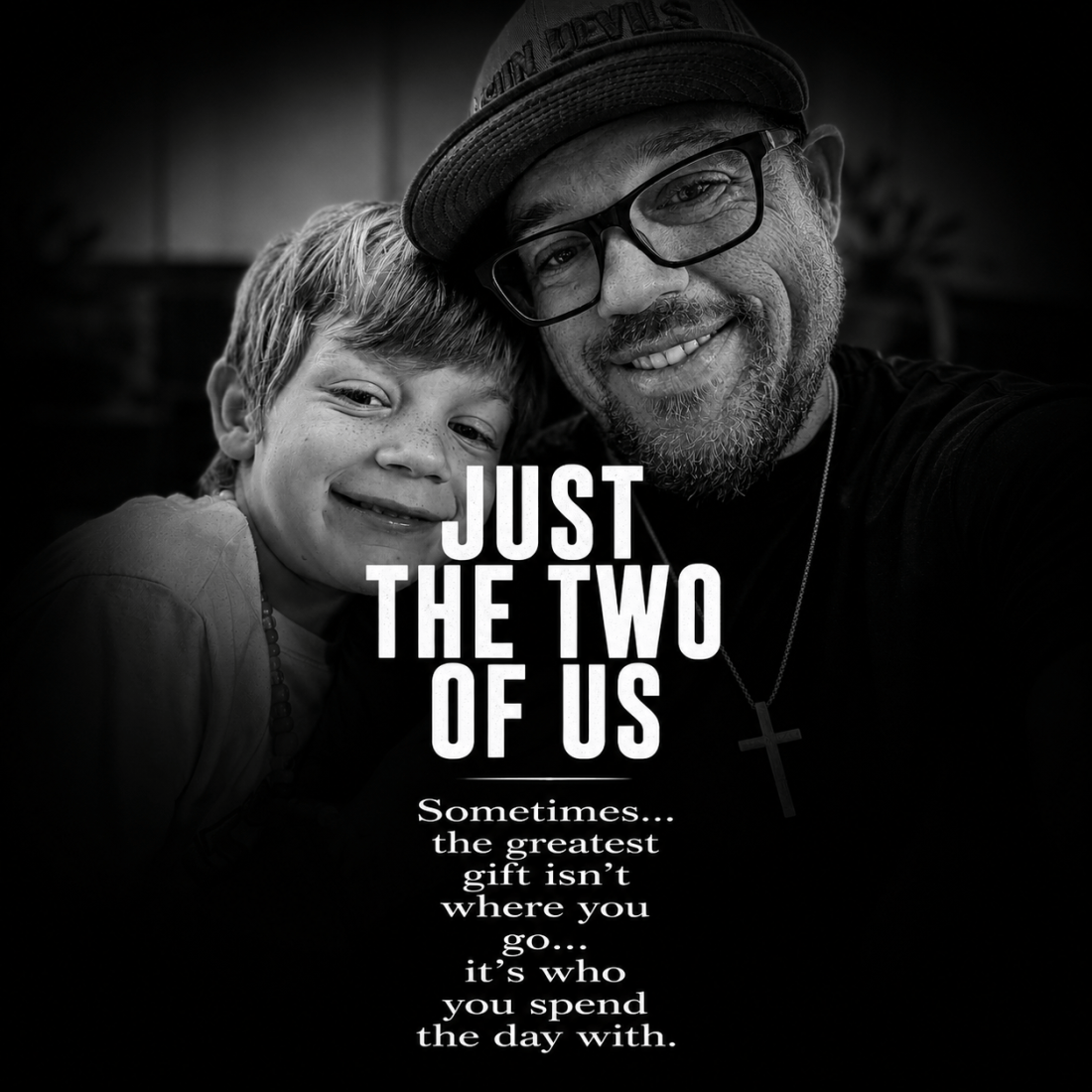
Just The Two Of Us

I recently had an unexpected day where it was just Brooks and me.

Those days are becoming rare. Usually our days involve both boys, or we’re all doing something together as a family. But not this time.

Brooks is six and trying to figure out who he is while soaking up influences from television, his cousins, and his friends. Listening can be a challenge. So can attitude sometimes. Before we started our day together, we talked about that. I didn’t want this opportunity for one-on-one time to become another day of correcting behavior. I wanted us to simply enjoy being together.

We started by taking Joseph to school, and then it was just the two of us.

We grabbed breakfast at our favorite coffee shop where Brooks enjoyed a muffin and a smoothie while we talked. We took pictures together and, at his request, had AI turn us into different characters. Then we headed to the store to pick out a birthday present for one of his friends. Of course Brooks left with something too—a World Cup stuffed animal. I’m still a bit of a pushover when it comes to things like that.

The rest of the day looked pretty ordinary.

We stopped for gas.

Went to the bank.

Grabbed lunch.

Delivered an envelope full of Pokémon cards that Brooks had addressed himself to his cousins.

Stopped at the grocery store.

Finished the afternoon at the library where his kindergarten class met up to watch a presentation about the science of bubbles.

From the outside, it probably looked like I was just running errands.

And maybe I was.

But it was also something else.

It wasn’t a grand adventure.

We didn’t do anything extraordinary.

We didn’t turn every stop into a game or every errand into a treasure hunt.

We simply spent the day together.

That opportunity doesn’t come around nearly as often as it used to.

Sure, Brooks and I still watch soccer together, play in the backyard, go to baseball practice, and take family walks around the neighborhood. But those moments usually include Jillian, Joseph, teammates, or friends.

This day was different.

It was just the two of us.

I honestly couldn’t tell you everything we talked about.

What I remember is that we never stopped talking.

There were ridiculous sing-alongs in the car while Brooks tried to decide what his next walk-up song should be.

We wrestled.

We laughed.

We joked.

And somewhere between the coffee shop, the grocery store, and the library, I realized something.

The older Brooks gets, the more I realize that being a father is constantly changing.

Some days he needs comfort.

Some days he needs correction.

Some days he needs someone to laugh with.

Some days he needs someone willing to say no.

The difficult part is figuring out which father he needs today.

Part of me wants him to stay my little buddy forever.

But I know that’s never been my job.

My job isn’t to keep him six years old.

My job is to help him become the man he’s meant to be.

We don’t get to decide who our children become.

We get the once-in-a-lifetime opportunity to walk beside them while they figure that out for themselves.

We don’t get to make their mistakes.

But we can help them pick up the pieces afterward.

We don’t get to make their decisions.

But we can prepare them to make good ones.

We don’t get to walk every road for them.

But for a little while…

We get to walk beside them.

Brooks is six today.

One day he’ll be sixteen.

Then twenty-six.

There will come a time when an entire day with Dad isn’t something that simply happens because schedules lined up.

Those days become fewer.

That’s why this day mattered.

Not because of the errands.

Not because of the grocery store.

Not because of the bubble show.

Because for one ordinary day…

It was…

Just the two of us.

Continue the Journey:

If this story resonated with you, here are a few more reflections on fatherhood, growing up, and the moments that quietly shape the relationships we have with our children.

While They Still Ask

There will come a day when your children stop asking you to play one more game, read one more story, or come outside with them. Until then, those simple invitations are some of the greatest gifts a parent can receive.

A Son and a Father

The relationship between a father and his son is never static. As our children grow, our role shifts from protector, to teacher, to coach, to mentor—all while learning to let them become who they were meant to be.

When Errands Turn Into an Adventure

Sometimes the most memorable days aren’t vacations or elaborate plans. They’re ordinary trips to the coffee shop, the grocery store, or the bank that become unforgettable because of the person standing beside us.

The System Isn’t Sacred

Yesterday I had to admit something I didn’t want to.

The Young Napoleon Project wasn’t going to become the project I had spent the last ten years imagining.

That was surprisingly hard to accept.

Not because the project was failing.

But because the picture I had carried in my head for a decade wasn’t real anymore.

For years I had envisioned every detail of this project. I had planned the action tracking, the scoreboards, the data collection, the documentation, and even redundancies for the redundancies because I wanted to capture everything. I wanted complete control over the process.

Then I finally launched the project.

And after six weeks of actually living it, I realized something I never could have learned while planning it.

It was too much.

Not because I wasn’t willing to work hard.

Because I had built a system that demanded so much attention that it was beginning to compete with the very life it was supposed to support.

Somewhere along the way, I realized I was spending so much time documenting the project…

that I wasn’t actually living it.

So I started removing things.

I eliminated redundant tracking.

I simplified my systems.

I stopped documenting the same information in multiple places.

Not because those things were bad ideas.

Because they were getting in the way of the things that mattered most.

They were taking time away from my writing.

They were taking time away from the fitness goals I had allowed to slip.

They were taking time away from being present with my family.

Making those changes should have been easy.

Instead, it felt like I was giving something up.

The strange thing about plans is that after we’ve lived with them long enough, they stop feeling like plans.

They start feeling like promises.

We convince ourselves that success isn’t simply reaching the destination.

Success becomes following the exact route we imagined.

That’s where we get ourselves into trouble.

We become so committed to the process that we forget why we created it in the first place.

Businesses can’t cling to outdated processes simply because they’re familiar.

Parents constantly adjust routines as their children grow.

Travel plans change.

Careers change.

Life changes.

The people who continue moving forward aren’t the ones who never change their plans.

They’re the ones willing to change them when reality demands it.

For a while, I thought abandoning parts of my original plan meant admitting I had been wrong.

Now I think the opposite.

Those ten years weren’t wasted.

They gave me the vision.

But once the project became real, reality became a better teacher than imagination.

The system was never the project.

The scoreboards weren’t the project.

The trackers weren’t the project.

The spreadsheets weren’t the project.

Those things were simply tools meant to help me become the person I wanted to become.

And when the tools stopped serving that purpose…

They needed to change.

Six weeks ago I started this project with what I believed was the perfect blueprint.

Less than two months later, much of that blueprint no longer exists.

The dream does.

I chose the project over the systems.

I chose writing over documenting.

I chose to make room for my health instead of protecting routines that were no longer helping me.

For ten years I thought protecting the blueprint meant protecting the dream.

I finally realized they aren’t the same thing.

The blueprint can change.

The dream doesn’t have to.

Continue the Journey:

If you enjoyed this article, you may also like:

A Life, Not a Collection of Parts

It’s easy to divide life into separate categories—work, family, health, hobbies—but the most fulfilling life isn’t built by keeping those pieces apart. It’s built by learning how they fit together.

I Finally Stopped Waiting to Feel Motivated

Waiting for motivation kept me standing still for years. Progress finally began when I stopped chasing the perfect feeling and simply started doing the work.

The Coach Can’t Do the Work

The right tools, the right systems, and the right coach can all help you move forward. But in the end, no one else can do the work that only you can do.

The Coach Can’t Do The Work

I am going to be starting a personal training program in the next week or so, and yesterday I had my first call with my trainer. Being honest, I was nervous. I had never worked with a personal trainer before, but the conversation was great and also a little unexpected. Instead of just talking about exercises and nutrition, we talked about my goals, the habits I want to build, the mental aspect of getting healthier, my history with weight, and what I hope to achieve in the future.

As exciting as the call was, and as motivated as I am to work with this trainer, I’m still the one who has to put in the work. That’s something I’ve struggled with my whole life when it comes to my health.

The trainer can write my workouts, answer my questions, help keep me accountable, and encourage me when I’m frustrated. But he can’t lift the weights for me. He can’t choose what I eat every day. He can’t walk the steps I need to walk. He can’t say no to the junk food or turn off the TV so I can go work out. He can be a guide, but I still have to choose to follow.

I’ve done it before. In what feels like a past life, I lost 170 pounds. I was determined. I was resilient. Then I wasn’t. Some of the weight came back, and with it came frustration and disappointment.

Since then, I’ve read books about motivation and discipline. I’ve listened to podcasts. I’ve watched countless videos. I know what it takes to get back to where I want to be.

Information has never been the problem.

Turning that information into action has.

Often we think success comes from the tools we use along the way. The right pen or computer will help us write more. The right planner will keep us organized. The right app will keep us on task. Maybe the right coach will finally help us reach our goals.

Those things absolutely help.

They make the path clearer.

But they can’t walk it for us.

This project has never been about finally discovering the secret that erased years of failure. There isn’t one.

The progress I’ve made has come from doing the work day after day. From refusing to quit when things got hard. From not accepting defeat when I fell behind. From allowing the process to evolve instead of abandoning it because I was too stubborn to change.

The tools I’ve chosen have helped me get this far, but they aren’t the reason I’m here.

This trainer will be no different.

He gets to be on my team. He gets to challenge me, encourage me, and help me decide what I need to do to reach my goals.

But I still have to do the work.

The tools you use can help you write. They can help you stay organized. They can help you stay on task.

But if you don’t do the work, the tools can’t do it for you.

A coach, a trainer, or an accountability partner can all cheer you on. They can believe in you, even on the days you don’t believe in yourself.

But when it’s time to do the work…

You’re the one who has to do it.

And when you do, you’ll have something no one can ever take away from you:

The satisfaction of knowing you earned it.

Continue the Journey:

If you enjoyed this article, you may also like:

  • I Finally Stopped Waiting to Feel Motivated
    Motivation may get you started, but lasting change comes from taking action even when you don’t feel like it.
  • Stay in the Game
    Progress belongs to those who refuse to quit. Once you’ve committed to the journey, the work still has to be done one day at a time.
  • Every Opportunity Begins With Risk
    Hiring a coach, starting a new program, or chasing a goal all begin with uncertainty. The next step is doing the work that turns opportunity into progress.

Every Opportunity Begins With Risk

This week I took a risk and put myself out there. I saw an opportunity worth pursuing, and despite my nervousness and anxiety, I sent the message. I asked the question, and I was rewarded for taking that chance. It wasn’t luck. It was action in the face of uncertainty.

We’ve all faced uncomfortable moments. Moments where something worth having sat directly across from our own insecurities and doubts. We imagine being ignored, turned down, or told no. We worry that we’re imposing on someone else or putting them in an uncomfortable position. In those moments, the opportunity may exist, but it isn’t real because we haven’t yet made the decision to pursue it.

Then comes the decision. You put yourself out there. You make yourself vulnerable. You expose yourself to rejection or awkwardness. Sometimes you’re rewarded with acceptance, and afterward you wonder why you waited so long. It wasn’t nearly as big of a deal as you had made it out to be. Then another thought creeps in: how many other opportunities have you missed simply because you weren’t willing to accept a few moments of discomfort while waiting to see what might happen?

I think about my kids. They don’t see the risk; they only see the reward. When Brooks walked into his first karate class, he didn’t know if he would like it. He was nervous. He didn’t know anyone. But if he had never walked through those doors, he never would have discovered something he genuinely enjoys. Children are often willing to try first and worry later. As I wrote in Brooks’s First Tae Kwon Do Class, the hardest part wasn’t earning the belt—it was walking through the door for the very first time. As we get older—even by the time we’re Brooks’ age—that begins to change. Doubt slowly creeps in. Our confidence starts giving way to thoughts about what other people might think if we fail or embarrass ourselves. The older we get and the more rejection we experience, the easier it becomes to focus on the opportunities we’ve missed instead of the ones we’ve seized.

As I thought about it, I realized how many of the best parts of my life began with accepting that same risk. Going back to school for my bachelor’s degree, and later my master’s, while working full-time and starting a family. Coaching Brooks’ baseball team. Walking into my first Papa Pandas meeting. Starting this blog one more time after nearly a decade of false starts. None of those moments felt comfortable beforehand. Every one of them was worth it afterward.

Every opportunity asks us to take a risk before we can enjoy the reward. The hardest part isn’t saying yes to the opportunity—it’s saying yes to the uncertainty that comes before it. As I shared in I Finally Stopped Waiting to Feel Motivated, waiting until we feel ready often means waiting forever. Growth rarely begins with confidence; it begins with the decision to act anyway.

Looking back, I’m far more grateful for the opportunities I experienced because I was willing to accept the risk than I am bothered by the times I was rejected. Because you can’t reap the reward without first accepting the risk.

Continue the Journey:

If you enjoyed this article, you may also like:

Overthink The Good Stuff

Guess what?

I overthink things.

I know… you’re shocked.

If you read my post about Why The Young Napoleon Project then you know I share a trait with General George B. McClellan: we were both overthinkers and overplanners.

My anxiety?

Well… that doesn’t exactly help either.

I can get lost overthinking the smallest things.

Did I say the wrong thing?

Should I have sent that text?

Did I make the right decision?

Then I can spend hours thinking about everything that might be waiting for me tomorrow.

I imagine I’m not alone.

Like so many people, I tend to obsess over tiny moments that probably don’t mean nearly as much as I convince myself they do.

You know what’s sad, though?

We rarely overthink the good stuff.

I don’t have Brooks’ and Joseph’s laughter replaying on a loop in my head.

I don’t constantly revisit the quiet moments Jillian and I share together.

I don’t spend hours remembering the funny things Joseph says or the way he says them.

Those moments come into my life…

And then they’re gone.

Meanwhile, anxiety, fear, and worry seem to live in my head rent-free.

Some of that is chemistry.

Some of it is simply the way our brains are wired.

While researching this, I came across an article in Psychology Today explaining why our brains naturally gravitate toward negative thinking. It pointed out that our minds are wired to pay more attention to potential threats than positive experiences—a survival instinct that made a lot of sense thousands of years ago, but one that can easily leave us replaying our worst moments while overlooking our best ones.

Our minds are trying to protect us.

They’re scanning for danger.

Preparing us for tomorrow’s meeting.

The unexpected bill.

The difficult conversation.

Sometimes they’re trying to teach us something.

“Remember that mistake you made yesterday? Think about it for the next three hours so you never make it again.”

And honestly…

There’s some value in that.

We should learn from our mistakes.

We should approach unfamiliar situations with healthy caution.

Sometimes there really is a good reason to worry about something on tomorrow’s calendar.

But left unchecked, our minds can convince us that our worst moments deserve the most attention.

What if we trained our minds a little differently?

What if we intentionally spent time replaying the good moments instead?

Not to ignore our problems.

Not to pretend life is perfect.

But because those moments deserve our attention too.

In my reading, I came across another article from Verywell Mind about learning to savor positive moments. One of the things that stood out to me was the reminder that joy often doesn’t require bigger experiences—it requires paying closer attention to the ones we’re already having. The more intentional we are about noticing and lingering in those moments, the more likely we are to remember them later.

They deserve to be appreciated.

They deserve to be remembered.

What if you spent just five minutes every day thinking about your kids laughing?

The love you share with your spouse.

Good news you recently received.

The ordinary moments when, for just a little while, nothing was wrong.

What would happen?

Would your outlook change?

Would you feel a little lighter?

Would your day be just a little better?

I think it might.

The moments we replay become the stories we tell ourselves about our lives.

If we come home from work and only replay everything that frustrated us, how can we expect the rest of our evening not to be colored by that frustration? It’s also why I wrote Don’t Let Your Storm Get Your Kids Wet. The stories we replay don’t always stay inside our own heads—they often shape how we show up for the people we love.

If we replay only our failures, eventually we’ll begin believing we’re failures.

If we spend all night overthinking tomorrow’s problems, we’ll wake up already convinced it’s going to be a bad day.

And in doing so, we’ll miss the moments that could have made it a good one.

But what if we intentionally replayed moments of joy instead?

What if we celebrated the small wins?

What if we got excited about what still lies ahead?

What if we filled our minds with the memories that remind us life is good, even when it isn’t perfect?

When I look back on this project, I realize I’ve spent a lot of time writing about ordinary moments instead of extraordinary ones. It’s something I’ve explored before in Why Ordinary Days Matter More Than Big Moments. The memories that shape our lives usually aren’t the spectacular ones—they’re the ordinary moments we almost overlook.

Walks around the neighborhood.

Playing catch.

Reading bedtime stories.

Quiet evenings with Jillian.

Those moments are my life.

Some days are harder than others.

Some stories are painful.

But if I only focused on those moments, I’d completely miss the ones that make this life so beautiful.

So yes…

Tomorrow I’ll probably wake up and still be an overthinker.

That isn’t changing overnight.

I’m forty-one years old.

If it were that easy, it probably would have happened by now.

I’ll probably replay some small mistake I made today.

I’ll probably worry about something waiting for me tomorrow.

But I’m also going to try to be more intentional about replaying the good stuff.

The laughter.

The walks with my boys.

The quiet moments with Jillian.

The conversations I’ll someday wish I could have one more time.

Because those moments are the best part of my life.

And if I’m going to overthink anything…

I’d rather it be the good stuff.

Continue the Journey:

Further Reading:

Psychology Today — “3 Reasons Why Your Brain Loves Negative Thinking”

https://www.psychologytoday.com/us/blog/social-instincts/202512/3-reasons-why-your-brain-loves-negative-thinking/amp

Verywell Mind — “How to Savor the Moment”

https://www.verywellmind.com/how-to-savor-the-moment-3144633

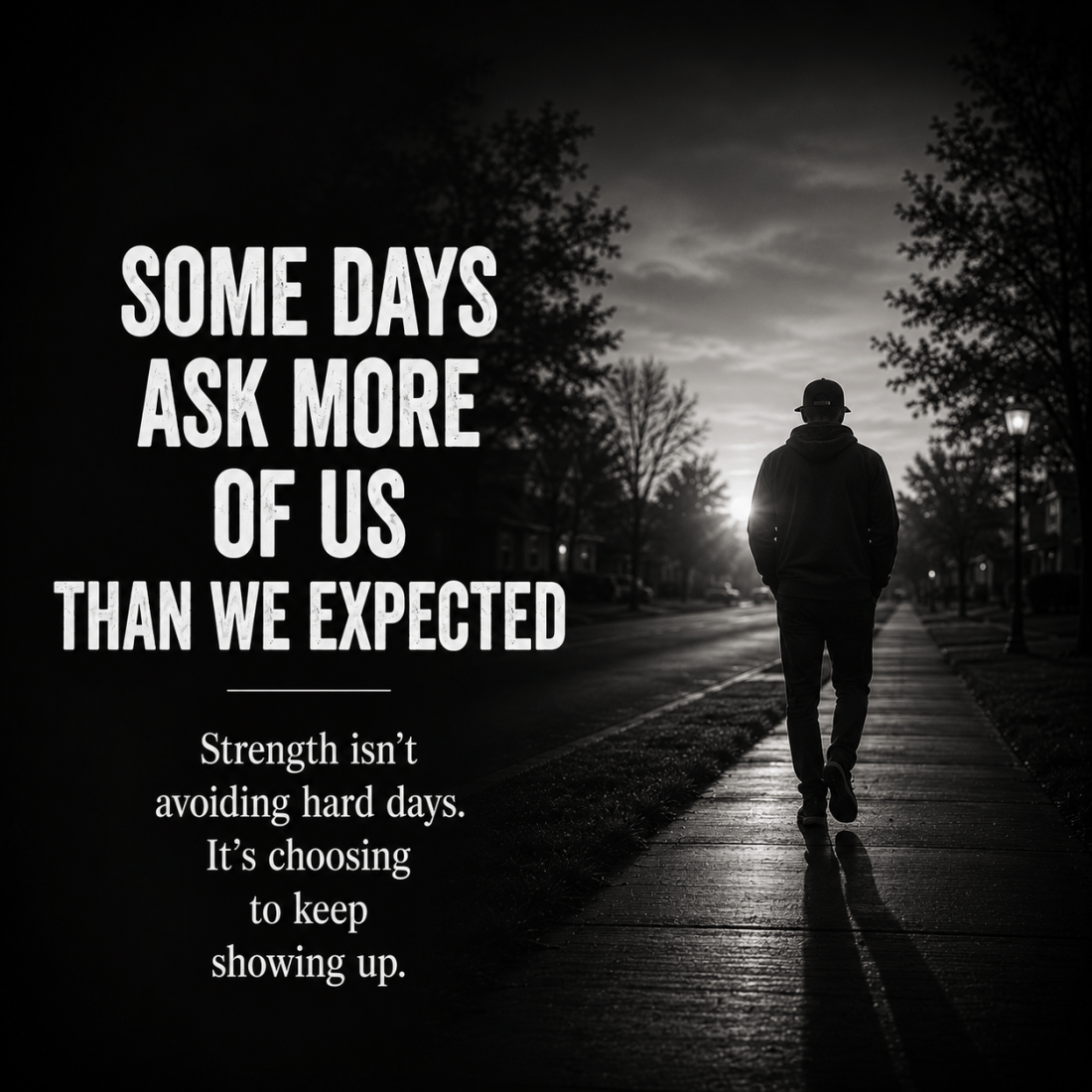
Some Days Ask More Of Us Than Expected

Yesterday started like almost every other day.

I didn’t want to get out of bed, but eventually I pulled myself up. I stepped on the scale, did my stretches, push-ups, sit-ups, and squats, got ready for work, dropped Brooks off at my sister-in-law’s house, and headed to the office for my usual protein shake and matcha.

There was nothing to suggest the day would be any different.

But when I got to work something just felt off.

I didn’t feel like myself.

I was anxious and restless. I tried to convince myself it was just nerves about USA’s World Cup match later that evening, so I walked down to the cafeteria for some scrambled eggs in an effort to get my mind off things.

That didn’t work.

Throughout the morning, even while walking during my breaks, I couldn’t shake the feeling.

I know this feeling well. I’ve dealt with anxiety since I was a kid. Over the years I’ve gone to therapy and I take medication to help manage it, and thankfully it’s something I’ve had under control for quite a while.

After my lunchtime walk I came back inside, ate my yogurt and string cheese, and cleaned up my desk.

Then I felt it coming.

A panic attack.

My chest tightened.

My arms tingled.

It felt like a fog had settled over my brain.

This wasn’t my first panic attack. I had several in succession a couple of years ago, but I hadn’t experienced one in over a year.

My mind immediately raced to thoughts of going to the emergency room.

Instead, I stayed where I was.

I kept breathing.

I picked one spot on the wall and focused on it.

Slowly the symptoms began to fade, but when they did I was left feeling anything but normal.

When I woke up yesterday morning, I thought I knew exactly what kind of day I was going to have.

Work.

Family dinner.

Watch the soccer game.

Get ready for tomorrow.

Work on things here while watching television with Jillian before bed.

We make plans.

Sometimes life has other ideas.

We wake up assuming we know what’s waiting for us.

More often than not, we’re wrong.

Some days bring unexpected celebrations.

Others bring heartbreaking news.

Some become stories we’ll tell for years, while others become days we simply try to survive. Earlier this month I wrote Some Days You Just Survive, and yesterday reminded me that those days don’t disappear just because we wish they would.

Yesterday I had my first panic attack in over a year.

But the day wasn’t over.

I still had work to finish.

I still had to meet with the contractor working on our bathroom.

I still had to celebrate my nephew’s birthday.

I still wanted to cheer on the United States during the World Cup match.

I still had two little boys who needed to get ready for bed.

Life rarely pauses while we’re trying to catch our breath.

As much as the panic attack disrupted my day, it couldn’t stop the rest of life from happening around it.

And maybe that’s the lesson.

We don’t get to dictate what happens to us throughout the day. Unexpected phone calls, bad news, injuries, panic attacks—life has a way of reminding us that we’re not in control of every chapter.

As much as we may start the day feeling fearless, motivated, strong, and confident, there’s no guarantee we’ll end the day feeling that way.

And that’s okay.

We should expect that life will occasionally ask more of us than we planned to give.

What we should expect from ourselves is that we keep showing up.

Not because we feel okay.

Not because we don’t need time to process what happened—because we absolutely should take that time when we need it.

But because there are people depending on us.

Our kids need us.

Our partners need us.

And ultimately, we need ourselves to keep showing up so we can work through whatever life has placed in front of us.

While writing this article, I came across a piece from Her View From Home titled “Here’s to the Dads Who Show Up.” It celebrates the who quietly continue showing up for their families day after day, often without recognition. Reading it reminded me that fatherhood isn’t about having perfect days. It’s about continuing to be present, especially when the day has been anything but perfect.

I also found an article from Mindful called “How to Be a Resilient Parent.” One of the things I appreciated most was that it wasn’t about pretending difficult emotions don’t exist. It was about acknowledging them, taking care of yourself, and continuing to move forward with intention. That’s a philosophy I hope to keep learning throughout this project.

Yesterday I wrote Why Ordinary Days Matter More Than Big Moments, and I still believe that.

Yesterday was an ordinary day.

It just happened to go sideways.

I wasn’t the best version of myself for the rest of that day.

But I was the best version of myself that I could be given the circumstances.

Sometimes that’s enough.

Earlier in this project I wrote The Scale Isn’t the Scoreboard, reminding myself that one number doesn’t define success. Before that, I wrote The Reset Never Came, a promise that one difficult day wouldn’t erase all the progress that came before it.

Yesterday tested both of those lessons.

Ordinary days matter.

That doesn’t mean they’re always easy.

Today I woke up again.

Jillian laid with me for a few minutes before I got up.

I stepped on the scale.

Did my stretches.

My push-ups.

My sit-ups.

Ate breakfast.

Dropped Brooks off at my mom’s house.

And headed back to work for another ordinary day.

Not because yesterday was easy.

Not because I wasn’t nervous another panic attack could happen.

But because every day is worth the effort, even when you don’t know what’s coming.

Every day has the potential to ask something unexpected of you.

Yesterday certainly did.

Tomorrow will have the chance to as well.

So take a moment to dust yourself off.

Ask for help if you need it.

Take care of yourself.

Then get up and show up again.

Because some days ask more of us than we expected.

And tomorrow might ask again.

Continue the Journey

If this story resonated with you, you might also enjoy:

Further Reading