The First Time Doesn’t Count

Everyone remembers their firsts.

Most people take time to celebrate those occasions.

Maybe it’s the first workout, after telling yourself so many times that you were finally going to make it to the gym.

The first blog post, after dreaming about launching a blog for years.

The first kiss of a budding romance.

The first day at a new job you had always hoped to get.

The first time your child sleeps through the night… and so do you.

We love our firsts, and rightfully so.

They are memorable.

They are exciting.

They feel important.

And they are.

But maybe not for the reasons we think.

Those firsts deserve to be celebrated because they take courage, effort, and determination.

But the first workout doesn’t make you healthy.

The first page doesn’t make you a writer.

The first trip to the coffee shop with my boys didn’t make it a family tradition.

What firsts do is introduce you to possibility.

They show you what could happen.

Who you could become.

So if our firsts don’t change us…

…what does?

The second time.

The tenth.

The hundredth.

Because repetition turns singular events into habits.

Habits into patterns.

And patterns eventually become identity.

You stop saying, “I worked out last night,” and become someone who works out.

You stop saying, “I wrote a blog post,” and become a writer.

Your identity isn’t built by dramatic firsts.

It’s built by ordinary repetitions.

My first post didn’t become The Young Napoleon Project.

But dozens of posts later, I’m beginning to build something.

My first workout didn’t change my body.

But weeks of showing up are beginning to.

One walk with my boys…

One trip to the baseball fields…

One bedtime story…

One Band-Aid on a skinned knee…

None of those things made me a father.

Showing up every day for my boys and being present in their lives did.

First comes the individual event.

Then a pattern begins to emerge.

And finally…

…an identity is born.

Maybe you’ve been waiting for a first.

Waiting for some dramatic moment that changes everything.

But the first isn’t what changes you.

So do the workout.

Write the blog post.

Have the conversation.

Take the walk.

Then do it again.

And again.

And again.

See what happens.

See who you become.

Because while the first may not change everything…

It matters.

Every meaningful life begins with a first.

But meaningful lives are built by refusing to let the first become the last.

Continue the Journey

If this article resonated with you, here are a few more reflections that continue the conversation:

  • Day One — Every meaningful journey begins with the courage to take the very first step.
  • The Decision Was Already Made — The choices that shape our identity are rarely dramatic. They’re the ones we quietly make over and over again.
  • The Difference Between a Hobby and a Calling — The pursuits that matter most become part of who we are through years of faithful repetition.
  • Kids Are Born Delusional — Before repetition can transform your life, you have to believe that transformation is possible in the first place.

Kids Are Born Delusional

You were a kid once.

What did you want to be when you grew up?

Can you even remember?

Over the last couple of years, my son has wanted to be a baseball player, a police officer, a drag racer, and who knows what else.

And every time he tells me what he wants to be, there isn’t a hint of doubt in his voice.

He’s certain.

Until he’s certain about something else.

Kids don’t hedge their bets.

They don’t apologize for dreaming.

They’re all in.

Somewhere, a long time ago, we were those kids too.

We dreamed with certainty.

We had no doubts.

No reservations.

We were going to be cowboys even though we’d never ridden a horse.

We were going to be astronauts with no understanding of outer space.

We were going to be lawyers before we knew what the law even was.

And then something changed.

But when?

It’s not like we can point to one morning and say,

“That was the day I decided to be more realistic.”

“That was the day I lowered my expectations for my own life.”

It happened slowly.

Quietly.

Almost invisibly.

Growing up teaches us many valuable lessons.

We learn how to read.

We learn math.

We learn responsibility.

We learn that we won’t always win.

We learn how to work hard.

We learn that life is full of compromise.

Those lessons matter because they shape the people we’re becoming.

But somewhere along the way, we learn something else.

We learn limits.

Not physical limits.

Imagined ones.

The people who teach us those limits usually aren’t trying to hurt us.

They’re parents trying to protect us.

Teachers trying to prepare us for the real world.

Friends who don’t want to be left behind.

Sometimes those limits come from failure.

Embarrassment.

Humiliation.

Loss.

Comparison.

None of them are usually malicious.

They’re simply born from experience.

But together they begin whispering the same message:

People like you don’t do things like that.

That’s the real tragedy.

It isn’t that children dream too big.

It’s that many adults stop dreaming before they ever discover what they might have been capable of.

Dreams go from certainty…

…to unlikely…

…to impossible.

Maybe growing up shouldn’t mean believing in ourselves less.

Maybe it should simply mean understanding that extraordinary dreams require extraordinary effort.

Children already have the belief.

Adults have the discipline.

Imagine what could happen if we managed to keep both.

We smile when children tell us what they want to be when they grow up.

Not because it’s funny.

But because we quietly doubt it’s possible.

Maybe instead of smiling, we should ask ourselves a harder question.

What did you once believe you were going to become…

…before someone convinced you otherwise?

And maybe the next time a child tells you they’re going to change the world…

Don’t be the first person to teach them their limits.

Because maybe kids aren’t born delusional.

Maybe they’re simply the last version of ourselves before the world convinces us to dream smaller.

Continue the Journey

If this article resonated with you, here are a few more reflections that continue the conversation:

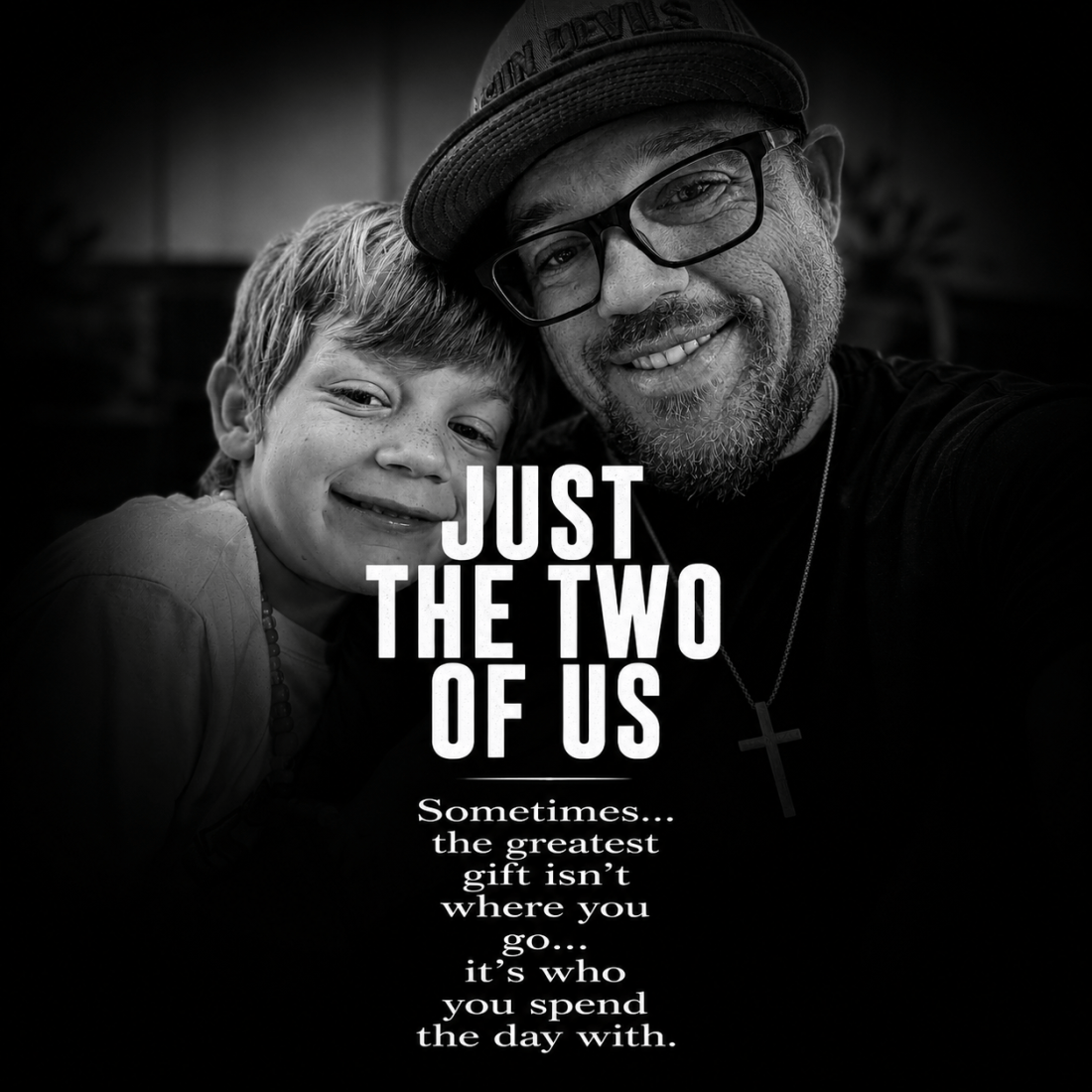
Just The Two Of Us

I recently had an unexpected day where it was just Brooks and me.

Those days are becoming rare. Usually our days involve both boys, or we’re all doing something together as a family. But not this time.

Brooks is six and trying to figure out who he is while soaking up influences from television, his cousins, and his friends. Listening can be a challenge. So can attitude sometimes. Before we started our day together, we talked about that. I didn’t want this opportunity for one-on-one time to become another day of correcting behavior. I wanted us to simply enjoy being together.

We started by taking Joseph to school, and then it was just the two of us.

We grabbed breakfast at our favorite coffee shop where Brooks enjoyed a muffin and a smoothie while we talked. We took pictures together and, at his request, had AI turn us into different characters. Then we headed to the store to pick out a birthday present for one of his friends. Of course Brooks left with something too—a World Cup stuffed animal. I’m still a bit of a pushover when it comes to things like that.

The rest of the day looked pretty ordinary.

We stopped for gas.

Went to the bank.

Grabbed lunch.

Delivered an envelope full of Pokémon cards that Brooks had addressed himself to his cousins.

Stopped at the grocery store.

Finished the afternoon at the library where his kindergarten class met up to watch a presentation about the science of bubbles.

From the outside, it probably looked like I was just running errands.

And maybe I was.

But it was also something else.

It wasn’t a grand adventure.

We didn’t do anything extraordinary.

We didn’t turn every stop into a game or every errand into a treasure hunt.

We simply spent the day together.

That opportunity doesn’t come around nearly as often as it used to.

Sure, Brooks and I still watch soccer together, play in the backyard, go to baseball practice, and take family walks around the neighborhood. But those moments usually include Jillian, Joseph, teammates, or friends.

This day was different.

It was just the two of us.

I honestly couldn’t tell you everything we talked about.

What I remember is that we never stopped talking.

There were ridiculous sing-alongs in the car while Brooks tried to decide what his next walk-up song should be.

We wrestled.

We laughed.

We joked.

And somewhere between the coffee shop, the grocery store, and the library, I realized something.

The older Brooks gets, the more I realize that being a father is constantly changing.

Some days he needs comfort.

Some days he needs correction.

Some days he needs someone to laugh with.

Some days he needs someone willing to say no.

The difficult part is figuring out which father he needs today.

Part of me wants him to stay my little buddy forever.

But I know that’s never been my job.

My job isn’t to keep him six years old.

My job is to help him become the man he’s meant to be.

We don’t get to decide who our children become.

We get the once-in-a-lifetime opportunity to walk beside them while they figure that out for themselves.

We don’t get to make their mistakes.

But we can help them pick up the pieces afterward.

We don’t get to make their decisions.

But we can prepare them to make good ones.

We don’t get to walk every road for them.

But for a little while…

We get to walk beside them.

Brooks is six today.

One day he’ll be sixteen.

Then twenty-six.

There will come a time when an entire day with Dad isn’t something that simply happens because schedules lined up.

Those days become fewer.

That’s why this day mattered.

Not because of the errands.

Not because of the grocery store.

Not because of the bubble show.

Because for one ordinary day…

It was…

Just the two of us.

Continue the Journey:

If this story resonated with you, here are a few more reflections on fatherhood, growing up, and the moments that quietly shape the relationships we have with our children.

While They Still Ask

There will come a day when your children stop asking you to play one more game, read one more story, or come outside with them. Until then, those simple invitations are some of the greatest gifts a parent can receive.

A Son and a Father

The relationship between a father and his son is never static. As our children grow, our role shifts from protector, to teacher, to coach, to mentor—all while learning to let them become who they were meant to be.

When Errands Turn Into an Adventure

Sometimes the most memorable days aren’t vacations or elaborate plans. They’re ordinary trips to the coffee shop, the grocery store, or the bank that become unforgettable because of the person standing beside us.

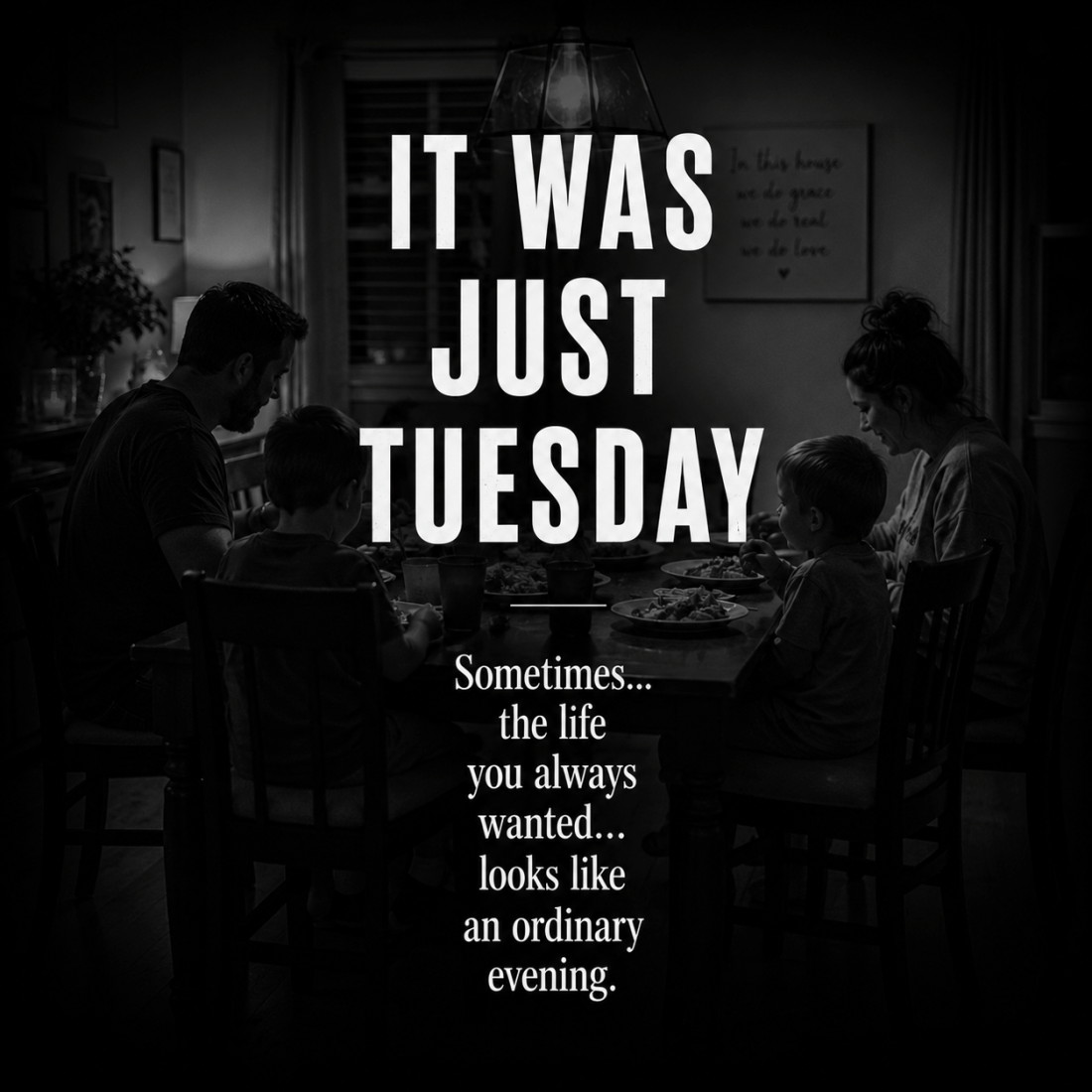
It Was Just Tuesday

Yesterday I headed home from work, got changed, and spent some time with the boys while Jillian made dinner. We sat around the table together, and afterward I took the boys for a walk around the neighborhood and through the baseball fields. We ran into some friends, stopped to visit for a while, and then headed home to get the kids ready for bed. After they were asleep, Jillian and I laid down together for a while before getting up to finish a few things around the house, watch a show together, and call it a night.

It was Tuesday.

No special occasion.

No big event on the calendar.

Just a normal evening at home with my family.

Today I found myself thinking about the version of me that existed before I got married and had kids.

What did he think life would look like?

What was he chasing?

If I’m honest, I don’t think he could have imagined this.

Back then I probably pictured coming home from work, grabbing something to eat on the way, sitting on the couch watching a Padres game with friends, and calling it a good night. I don’t think I could have imagined being married to a woman I could only have dreamed about, raising two incredible boys, eating dinner around the family table, taking evening walks through the neighborhood I grew up in, building the blog I had always wanted to write, or working every day toward becoming healthier.

If someone had described that life to me back then, I’m not sure I would have believed it was possible.

We spend so much time dreaming about promotions, bigger houses, vacations, accomplishments, and the future that we overlook another kind of dream entirely.

The quiet ones.

The dreams that don’t arrive with some grand announcement.

They simply become normal.

Family dinners.

Bedtime stories.

Evening walks.

A spouse asking how your day was.

One day you wake up and realize those moments have become so routine that you barely notice them anymore.

But years earlier…

They were the life you were hoping to build.

We spend so much of our lives looking ahead, chasing the next goal, the next milestone, the next achievement—things we can celebrate and tell people about.

Meanwhile, the dreams that matter most are sitting across the dinner table telling you about their day.

This blog was always a dream of mine.

For years I imagined writing about adventures, milestones, and extraordinary moments.

I never imagined I’d be writing about an uneventful Tuesday.

But maybe that’s because I finally understand what I was really chasing.

It wasn’t excitement.

It wasn’t recognition.

It wasn’t some picture-perfect future.

It was this.

Dinner around the table.

A walk with my boys.

Talking with neighbors.

Watching a show with my wife before bed.

Years ago I spent a lot of time wondering what my life might look like someday.

Today I know.

It looks a lot like Tuesday.

Continue the Journey:

If you enjoyed this article, you may also like:

The Gift of Being Nearby

Some of the most meaningful moments with the people we love don’t happen because we planned them. They happen because we’re close enough to simply be there when life unfolds.

Why Ordinary Days Matter More Than Big Moments

Life is rarely defined by vacations, birthdays, or major milestones. More often, it’s shaped by the quiet routines and everyday moments that slowly become our most treasured memories.

A Life, Not a Collection of Parts

The most fulfilling life isn’t one where work, family, health, and personal goals compete for attention. It’s one where those parts begin working together to create something greater than any one of them could alone.

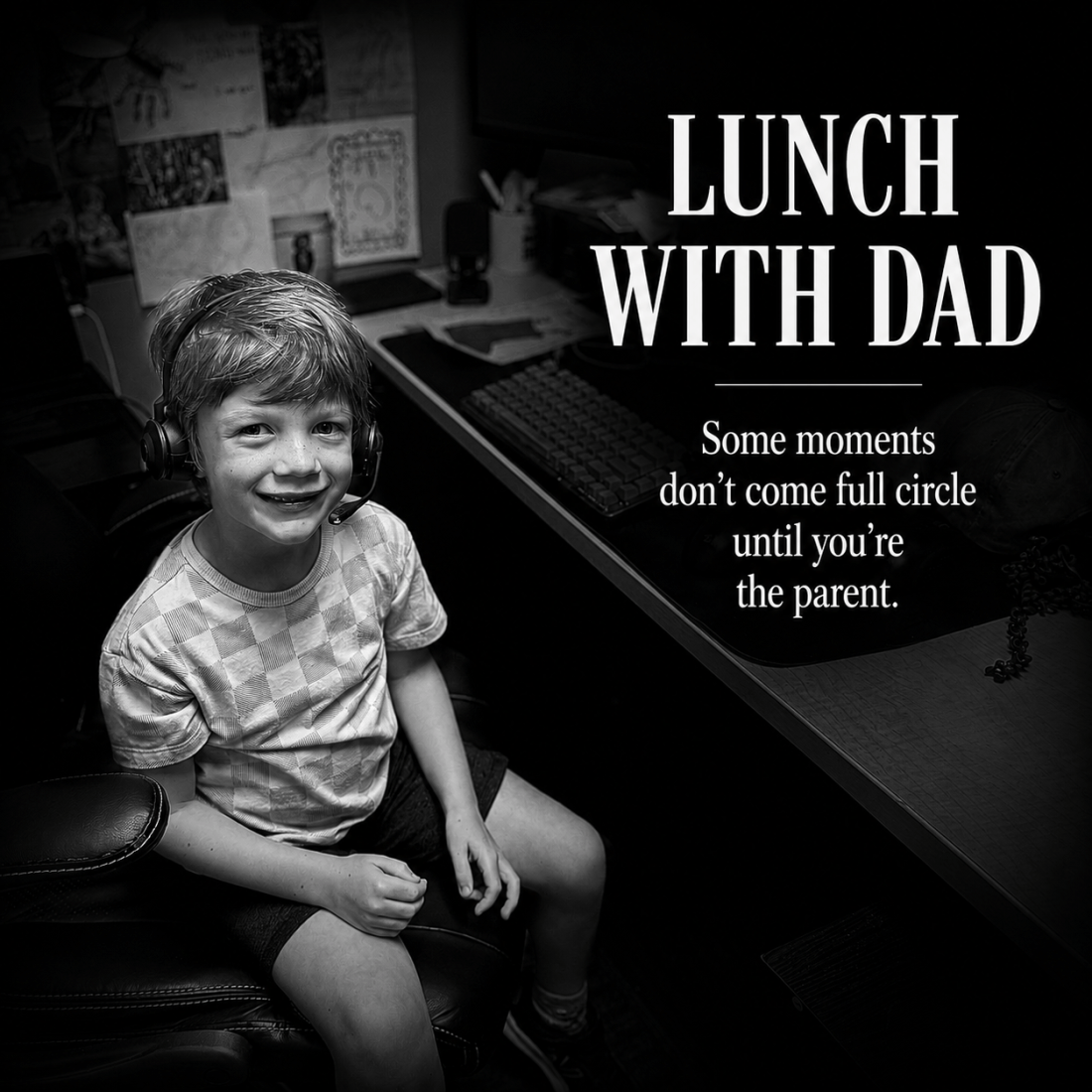
Lunch With Dad

Earlier this week my mom asked if there was a day she could bring Brooks to have lunch with me at work. It’s something we’ve done every once in a while over the last couple of years, and yesterday happened to be that day.

They picked up sandwiches from our favorite deli and headed down to the cafeteria before letting me know they were there. I went down to meet them, and when I walked in Brooks got so excited and motioned me to the empty seat next to him. He was already devouring his sandwich, knowing he had fruit snacks waiting for him at the end.

The three of us finished our sandwiches before heading back upstairs to my office. Brooks admired his and Joseph’s artwork hanging on my wall, spun around in my office chair, put on my headset for a picture, and asked if he could visit the treasure box we keep for our pediatric patients. We walked over there, and he picked out a little toy for himself, one for his brother, and grabbed a couple of stickers before we headed back toward the front of the building. I gave them both a hug, watched them walk back to the car, and then headed inside to get back to work.

Watching Brooks at the office reminded me of when I was his age.

Occasionally my mom would bring me to work with her. She worked in the personnel office, and I would sit at the front desk drawing pictures. Whenever someone came in, I got to buzz them into the back office. When lunchtime rolled around, we would head to the very same cafeteria Brooks ate in yesterday and order hamburgers from the grill.

I felt so important sitting at the front desk. So popular walking around the office with everyone knowing my name. I got to see where my mom worked and be a part of her world.

Going to work with my dad was a very different experience.

He was a flooring installer, and for ten dollars an hour, a package of gas station donuts for breakfast, and McDonald’s for lunch, I got a firsthand lesson in what hard physical work really looked like. With Dad, I came home sore and exhausted with a new appreciation for hard work. With Mom, I came home feeling like I had spent the day on an adventure into the grown-up world.

Looking back, I’m grateful I got to experience both. My dad showed me what hard work looked like. My mom invited me into the world she stepped into every day. Those experiences were different, but they both helped shape the person I became.

It’s funny how life comes full circle.

My mom gave me a glimpse into her world away from home, and now I get to do the same for Brooks. As kids, we’re lucky enough to have experiences like these given to us. As parents, we get the opportunity to create them for our own children.

Yesterday I watched Brooks walk the same halls, sit in the same cafeteria, and light up with the same excitement I felt when I was his age.

Maybe Brooks will remember eating sandwiches in the cafeteria. I remember the hamburgers.

And maybe one day he’ll bring one of his own children to work.

If he does, I think he’ll understand exactly why yesterday mattered.

Continue the Journey:

  • Donuts With Dad — Sometimes the smallest traditions become the memories our children carry the longest.
  • The Zoo With Dad — Ordinary afternoons often become the stories we remember years later.
  • Copying Pokémon Cards — Watching Brooks enjoy something I once loved reminded me how childhood has a way of coming full circle.

The Teachers I Still Remember

Last night I had a meeting with my pastors to discuss the upcoming year of Confirmation with our middle school youth.

I have been serving as a guide in the Confirmation ministry for the last twenty-seven years, and for the first time in a long time, I felt like it was time for both the programming around Confirmation—and my role within it—to evolve.

For years, Confirmation has largely followed a classroom model. The students sit around tables, listen to the pastors teach, read a few Bible verses, and answer questions together. As guides, we sit with the students, helping them stay engaged and encouraging discussion where we can.

As we talked about the upcoming year, one question kept coming up.

Is this really the best way to help someone learn?

We talked about how kids learn differently. Some thrive sitting quietly and listening. Others need movement, discussion, and interaction before something truly sticks. I don’t think that’s a new phenomenon. I think we’re simply becoming more aware that people process information in different ways.

After the meeting, I found Sir Ken Robinson’s TED Talk, Do Schools Kill Creativity? One of the ideas that has always stayed with me is that people don’t all learn the same way. If that’s true in school, it seems just as true in church, at home, on a baseball field, or anywhere else we’re trying to help someone grow.

I also came across an article from Safe Search Kids that explored why students often remember experiences more than lectures. It wasn’t really arguing that lectures are bad. Instead, it made the case that when people actively participate in what they’re learning, they’re far more likely to remember it. That felt like exactly the kind of environment we’re hoping to create this year.

As I listened, I found myself thinking back to my own years in school.

I don’t remember my favorite teachers because they had the best PowerPoint presentations or the most organized lesson plans.

I remember them because they were passionate.

They told stories.

They made us laugh.

They asked good questions.

They welcomed discussion.

Most importantly, they made us feel like we were part of what was being taught instead of simply being talked at.

Next year I’ll be transitioning into more of a teaching and administrative role within the Confirmation program, and we’ll begin easing into some of those responsibilities this year. As we discussed what that might look like, I found myself asking a different question.

If I’m going to teach… what kind of teacher do I want to be?

That question extends far beyond a Confirmation classroom.

Parenting isn’t just telling our kids what to do.

It’s helping them discover why it matters.

Marriage isn’t built on lectures.

It’s built on conversations.

Coaching baseball isn’t about giving speeches.

It’s about creating an environment where kids can learn while having fun.

Leadership isn’t about standing in front of people.

It’s about bringing people into the conversation.

And maybe writing isn’t all that different.

I’m not writing this blog because I have life figured out.

I’m writing it because I’m still figuring it out.

I didn’t go to school for philosophy.

I’m not a life coach.

I’m certainly not an expert on fatherhood.

I’m simply someone trying to build a better life while inviting other people into the conversation.

Every article I write is less of a lecture…

…and more of an invitation to sit beside me while I learn.

As I step into this new role in Confirmation, I hope I become the kind of teacher I still remember from my own childhood.

Not because I had all the answers.

But because I helped create an environment where questions were welcome.

Where stories made Scripture come alive.

Where students felt seen.

Where faith became something they experienced instead of something they memorized.

Because twenty years from now, they probably won’t remember every lesson.

They won’t remember every Bible verse we discussed.

But they just might remember how it felt to be invited into the conversation.

And sometimes…

That’s where the real learning begins.

Continue the Journey:

If today’s article resonated with you, you might also enjoy:

  • When Errands Turn Into an Adventure — Some of the most memorable experiences aren’t carefully planned. They’re created by the way we choose to approach ordinary moments.
  • Why Ordinary Days Matter More Than Big Moments — The moments we remember most often aren’t life’s biggest events, but the ordinary days that became unforgettable because of the people we shared them with.
  • Playing Catch — Some of life’s most meaningful lessons aren’t taught through instruction, but through shared experiences that quietly strengthen relationships.

Further Reading:

Sir Ken Robinson — Do Schools Kill Creativity? (TED Talk)
https://www.ted.com/talks/sir_ken_robinson_do_schools_kill_creativity

Safe Search Kids — Why Students Typically Remember Experiences Better Than Lectures

A Masterpiece And A Work In Progress

It feels like just yesterday that we brought Brooks home from the hospital. It was the beginning of the pandemic, and for weeks it was just Jillian, me, and this tiny little boy sitting in our living room trying to figure out how to be parents. We had no idea what we were doing.

That was more than six years ago.

Today I took Brooks up to the fields for hitting practice as he prepares for his first season of Rookies in Little League. At the same time, Joseph took his first swimming lesson in the next level class. Somewhere along the way, those tiny babies became little boys.

It’s amazing how quickly children change.

One day you’re celebrating their first steps.

Before long they’re running laps around the house.

One day you’re reading bedtime stories.

Before long they’re reading them back to you.

Somehow, the things that once felt impossible quietly become ordinary.

And now, when I look at my boys, I don’t just see who they once were or who they are today. I also see who they are becoming.

I picture Brooks growing up on the baseball field, becoming more confident, making lifelong friends, and discovering the man he’ll one day become.

I picture Joseph graduating from preschool, walking into elementary school, trying new sports, and slowly finding his own interests and personality.

But we’re not there yet.

Right now, I’m trying to enjoy the season we’re in and let the future wait until we get there.

The other day I came across a quote that hasn’t left my mind:

“You can be a masterpiece and a work in progress simultaneously.”

If I had to guess, I’d say that most people read that quote and immediately think about themselves. They think about who they are today while striving to become someone even better.

That isn’t where my mind went.

I immediately thought about Brooks and Joseph.

They make mistakes.

They get frustrated.

They fall down.

They learn.

They grow.

They test boundaries.

They surprise me.

They’re works in progress.

But when I look at them, I don’t see unfinished people.

I see masterpieces.

There are hard days and wonderful days. There are moments that require correction and moments that deserve celebration. There are times when they test every ounce of my patience and other times when they remind me exactly what matters most.

None of those moments change how I see them.

They are, and always will be, my masterpieces.

But if that’s true about my kids…

Why can’t it also be true about me?

Why am I so much harder on myself than I am on them?

Why do I extend grace so freely to my children but withhold it from myself?

Why can’t I believe that I can be both a masterpiece and a work in progress at the same time?

For me, that’s where The Young Napoleon Project comes in.

This project isn’t about fixing a broken life.

It’s about continuing to shape a life that’s already worth living.

It’s an opportunity to become healthier, pursue my writing, become a better husband, and become a better father—not because I’m incomplete without those things, but because growth is part of living.

I’m still becoming.

That doesn’t mean I’m broken.

It simply means the painting isn’t finished yet.

Brooks and Joseph are growing up right before my eyes.

Before I know it, they’ll be teenagers.

Then adults.

They’ll continue changing long after they’ve left home.

But I have a feeling that whenever I look at them, I’ll see every version of them all at once.

The baby we brought home from the hospital.

The little boys running through the living room.

The young men they’ll someday become.

They’ll always be works in progress.

And they’ll always be masterpieces.

Maybe that’s what love really is.

Looking at someone who still has so much growing left to do…

…and seeing the masterpiece anyway.

And maybe we’ve been masterpieces all along too.

Don’t Let Your Storm Get Your Kids Wet

I was scrolling through social media the other night when I came across a quote that stopped me in my tracks:

“Don’t let your storm get your kids wet.”

I found that to be profound because it’s something I struggle with more often than I’d like to admit. After reading it, I sat with it for a while and decided that I needed to be more intentional about who I was showing up as in front of my boys.

Yesterday put that to the test.

I don’t talk about work much here because it’s not really relevant to what I’m trying to build, but yesterday was a frustrating day. Without going into detail, I just felt like I was destined for something more, and that feeling weighed on me heavily as the day went on. I ended up leaving work late and getting to Brooks’s karate class just in time.

He did great.

He has been practicing all week, and it showed. He was more confident, more focused, and had clearly improved.

But with where I was mentally, I found myself focusing on the things he could still be doing better instead of celebrating how far he’d already come.

On the drive home, I started talking about those things before I caught myself.

I was letting my storm get him wet.

I made the conscious decision to stop and instead praise the improvement, because that’s what he needed to hear.

When doing research for this post, I came across an article from Lead You First about praising effort instead of innate ability. It argued that recognizing persistence, improvement, and hard work encourages people to keep growing rather than fearing mistakes. That is what Brooks needed from me in that moment. He didn’t need another list of things to do better just because that what I had chosen to focus on. He needed to know that the work he’d already put in mattered. It reminded me of something I wrote in The Belt Isn’t Earned on Test Day. Progress isn’t measured by perfection—it’s measured by growth.

After dinner, my mind immediately shifted back to everything that still needed to be done. I was behind on my work for this project. I had skipped my daily reading during my breaks because of how frustrated I’d been at work. I hadn’t taken enough steps. The dishes still needed to be done. The trash cans needed to go out. I still had to get ready for tomorrow.

I could feel the storm clouds gathering.

The boys were in the living room, so I walked out and sat on the couch. Brooks climbed up beside me. I could tell he wasn’t there to cuddle.

He was there to create chaos.

And in that moment I had a decision to make.

Do I brush him off and leave him standing out in the rain, letting him get soaked too?

Or do I open an umbrella and keep us both dry for a little while?

For the next thirty minutes we wrestled across the couch as he tried to escape through fits of breathless laughter. Joseph eventually joined the fray until Jillian whisked him away for his bath.

The work was still waiting for me.

But so were my boys.

That moment reminded me of A Life, Not a Collection of Parts. Spending time with my boys wasn’t taking me away from the project—it was part of the life this project is supposed to help me build.

Later that evening, after the kids were in bed and the chores around the house were finished, I sat down to work on things here and came back to that quote.

“Don’t let your storm get your kids wet.”

My kids shouldn’t become collateral damage because I had a rough day.

That’s not fair to them.

I’m not saying that as dads—or moms—we should bottle up our emotions, because that isn’t healthy either. Our children should know that adults have hard days. They should see that it’s okay to be honest about how we’re feeling.

In doing some further reading I found an article from ReachLink about what it calls “dad rage.” One point that stood out to me was that anger is often a secondary emotion, masking things like stress, exhaustion, disappointment, or feeling overwhelmed. That resonated with me because, if I’m honest, the frustration I carry home usually isn’t about my kids at all. It’s about everything that happened before I walked through the front door. Recognizing that doesn’t excuse my reactions, but it does help me understand them—and gives me the opportunity to respond differently.

Our emotional responses to things outside our homes aren’t burdens our children should have to carry.

If I’m being honest, this isn’t something I’m naturally good at.

I wear frustration on my face.

When I’ve had a bad day, people can usually tell.

Whether it’s stress from work, my back hurting, frustration while coaching, or simply running out of patience as a dad, my storms have a way of becoming everyone else’s weather.

And that’s something I want to change.

We all have storms in our lives.

The question is…

Who are we allowing to get soaked by them?

It also made me think back to There Is Always One More Thing. The work is always waiting. The responsibilities never disappear. But that’s exactly why we have to be intentional about the people standing in front of us instead of carrying the weight of everything still left to do.

My boys are going to grow up, and one day they’ll understand just how difficult life can be. They’ll experience disappointment, stress, heartbreak, and frustration for themselves.

I want them to know it’s okay to be emotional.

I want them to know it’s okay to be honest.

I want them to know it’s okay to cry, to struggle, and to have hard days.

But I also want them to know that we can choose how much of those storms we allow to fall on the people we love.

I know I’ll get frustrated again.

I know there will be more difficult days.

That’s life.

But I hope I become better at recognizing the storm clouds over my own head and opening the umbrella before the rain reaches my boys.

Because my bad day doesn’t have to become theirs.

And maybe one day, when they’re fathers themselves, they’ll remember not that I never had difficult days, but that I tried my best not to let those days define our time together. In many ways, that’s the same lesson I hoped to pass along in Little Eyes Are Always Watching—our children are learning from far more than the words we say.

Continue the Journey:

Further Reading:

Lead You First — “How to Praise Your Kids and Team to Increase Effort, Persistence and Motivation”

https://leadyoufirst.com/how-to-praise-your-kids-and-team-to-increase-effort-persistence-and-motivation/

ReachLink — “Dad Rage: Understanding and Managing Anger as a Father”

https://www.reachlink.com/advice/anger/dad-rage/

A Life, Not A Collection Of Parts

Yesterday I got home from work and it was obvious that Brooks was tired. He had spent the day swimming with his cousins and didn’t have much left in the tank. I got changed, we sat down to dinner, and afterward, instead of diving into my usual evening routine, we decided to have a family movie night.

The work was still there.

The dishes.

The writing.

The project.

The chores.

They could all wait for two hours.

Instead, it was Trolls 3 and taking turns with kids in my lap as we watched, danced, and sang along with the movie.

To say that I wasn’t thinking about this project during the movie would be a lie. I’m always thinking about what I could be doing next. But for the first time in a long time, I didn’t feel like I should have been doing something else. I didn’t feel guilty for sitting there. I didn’t feel like I was falling behind.

That’s different than it has been in the past.

During previous attempts to launch this project, every minute I wasn’t moving it forward felt like a minute I had wasted. The project slowly began to consume my life.

This time, I’ve realized something different.

The project needs to be integrated into my life, not consume my life.

In researching the idea of integration, I came across a Forbes article about how work-life integration being different than work-life balance. Rather than trying to divide life into perfectly equal compartments, the article argued for building a life where the different parts support one another. That stuck with me because I am not trying to choose between this project and my family—I am learning that the goal of this project is to make me better for my family. 

A few days ago I wrote There Is Always One More Thing, where I realized that the work is never really finished. Looking back, I think this is the next step in that lesson. If the work is never going to end, then I have to learn how to live while it’s still unfinished.

Because the purpose of this project was never to become someone who only works on the project.

The purpose is to become a healthier, happier, and more present husband, father, writer, and man.

Sometimes that means sitting on the couch with my boys, laughing through Trolls 3.

I’ve always tried to separate my life into categories: Family. Health. Marriage. Career. Writing. And I still think there’s value in that. Work should stay at work. Family time should be protected. You and your spouse need time together. It’s even how I built The Young Napoleon Project, dividing it into different departments that reflect the major areas of my life.

But that doesn’t mean those parts exist in isolation.

They overlap.

They influence one another.

Becoming healthier gives me more energy to be present with my family. Writing helps me think more clearly. A strong marriage makes me a better father. Spending time with my boys reminds me why I’m working so hard in the first place.

They’re not competing priorities.

They’re different pieces of the same life I’m trying to build.

That realization also reminded me of Adventure Is Closer Than You Think. The goal of that day wasn’t simply to visit Cabrillo National Monument. It was to spend meaningful time together as a family. The adventure wasn’t separate from the project—it was part of it all along.

My writing matters.

My health matters.

My marriage matters.

My boys matter.

None of those priorities are competing for my attention.

They’re all reasons I started this project in the first place.

While thinking about that, I also read an article from Becoming Minimalist about living intentionally. One of the ideas that stood out to me was that intentional living isn’t about doing more—it’s about making sure the things that matter most actually receive our attention. That felt like a good reminder that building a better life isn’t about perfectly balancing every responsibility each day. It’s about choosing to invest your time in the people and pursuits that align with the life you’re trying to create.

We only get twenty-four hours in a day, so naturally some days will lean more heavily toward work. Other days might be focused on family, health, or writing. The goal isn’t to give every part of your life equal time every single day. The goal is to make sure none of the parts that matter most are neglected for too long.

That doesn’t mean every day will feel perfectly balanced. As I wrote in I Finally Stopped Waiting to Feel Motivated, some days require discipline simply to keep moving forward. Other days require the discipline to recognize that your family deserves your full attention. Both are important.

Life isn’t lived in perfectly balanced twenty-four-hour blocks.

It’s lived in seasons.

Sometimes those seasons last a day.

Sometimes they last much longer.

When the movie ended, I still got my work done around the house. I put Brooks to bed. While Jillian went for a walk, I got ready for today. Then I sat down and worked on Beneath The Silt before finishing the night watching a show with Jillian.

Everything that mattered got some of my time.

Not equally.

But intentionally.

And that’s enough.

Because sometimes the most important work isn’t sitting at your desk.

Sometimes it’s sitting on the couch with your kids, laughing at Trolls 3 for the twelfth time.

That’s something I hope Brooks and Joseph remember long after they forget which movie we watched, just like I wrote in Why Ordinary Days Matter More Than Big Moments. The ordinary evenings are often the ones that quietly become the memories that last.

The Young Napoleon Project isn’t about building a better project.

It’s about building a better life.

Continue the Journey:

Further Reading:

Forbes — “Work-Life Integration Could Soon Replace Work-Life Balance”


https://www.forbes.com/sites/forbesbooksauthors/2023/11/27/worklife-integration-could-soon-replace-worklife-balance/

Becoming Minimalist — “Living Intentionally”

https://www.becomingminimalist.com/living-intentionally/

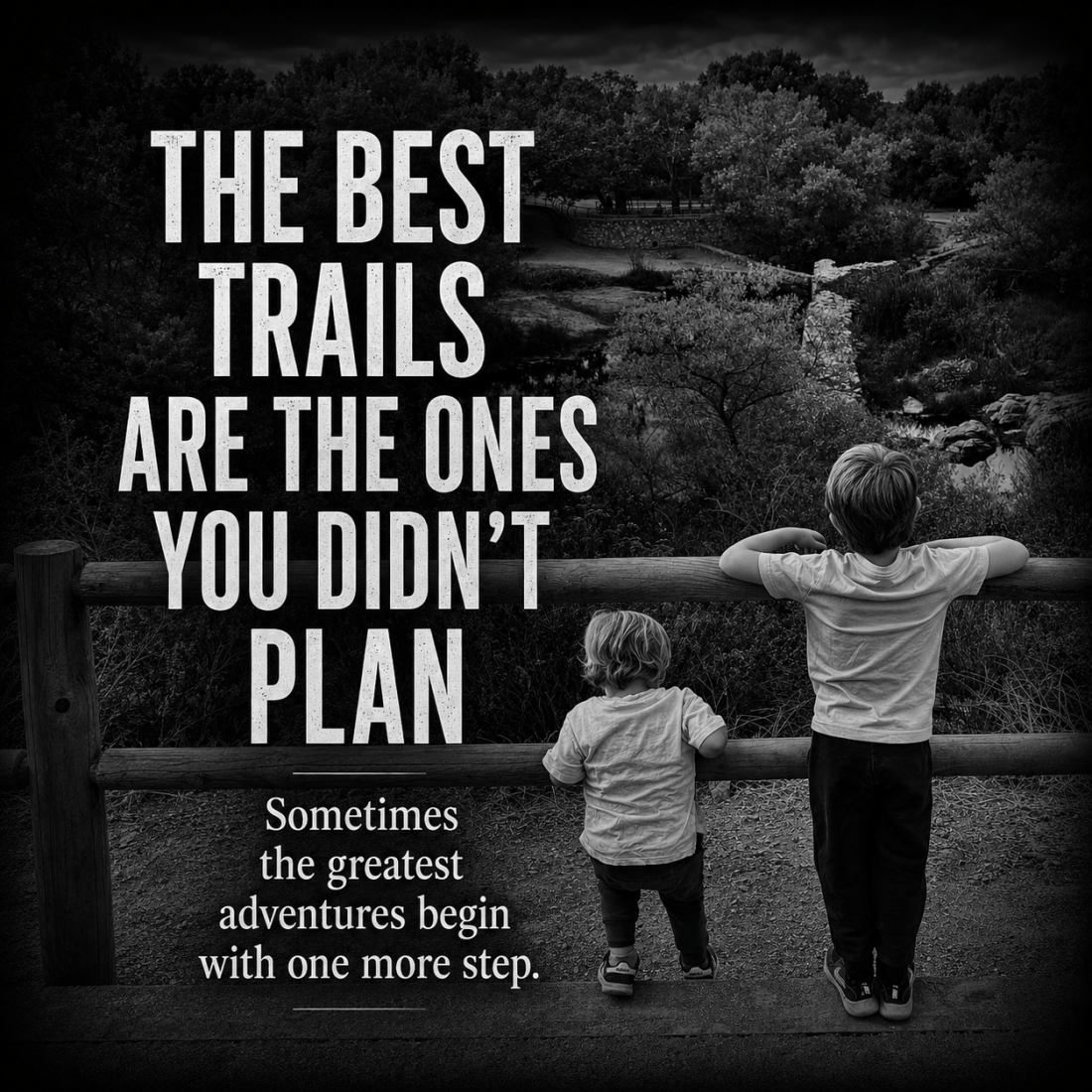
The Best Trails Are The Ones You Didn’t Plan

Yesterday we went for a family hike at Mission Trails, choosing a trail we had never explored before.

Standing in one particular rocky section of the trail, I suddenly wasn’t a forty-one-year-old dad anymore.

I was a little kid again.

I was back at Lake Jennings and Lake Cuyamaca, camping with my dad and grandpa. My sister and I would wander along the shoreline, climb over giant rocks, cut through the brush, and explore whatever happened to be around the next bend. We rarely knew exactly where we were going, and that was part of the adventure.

Yesterday, hiking with Brooks and Joseph, I had that feeling again.

We had planned to hike the Grasslands Trail. Starting from the dam, we were supposed to climb the stairs, complete the one-mile loop, and head back.

Instead…

We missed the turn.

Or maybe we ignored it.

Either way, we just kept walking.

The trail led us across wooden bridges, through clusters of trees, and eventually to a section where the path disappeared beneath the rocks. Brooks hopped from rock to rock while Joseph tackled them as if each one were Mount Everest. Before long we found ourselves looking down at the dam from the Grasslands Trail before making our way back toward the main path and eventually to the car.

It wasn’t the hike we planned.

It was better.

What struck me most wasn’t the scenery.

It was the difference between how the boys approached the trail and how Jillian and I did.

Brooks and Joseph were perfectly content to keep walking.

Sometimes they ran ahead.

Sometimes they stopped to examine a stick, a rock, or a patch of dirt.

Sometimes they wandered off the trail because something looked interesting.

Not once did they ask where we were going.

Meanwhile, Jillian and I had our phones out studying the trail map, trying to figure out where the path led. We even stopped to ask other hikers if they knew what was ahead.

Somewhere along the way, adults become uncomfortable with not knowing.

Maybe that’s just my anxiety talking.

Or maybe it’s something many of us slowly learn.

Before trying a new restaurant, we read reviews.

Before leaving the house, we check the weather.

Before taking a road trip, we map out gas stations and rest stops.

Before buying something, we compare prices.

We spend so much time trying to eliminate uncertainty that we sometimes remove the mystery from the experience itself.

Children don’t do that.

They see a trail.

And they start walking.

While writing this article, I came across an essay by Tim Mathis titled “Why Do People Go on Adventures? It’s So Simple That Even a Child Could Understand.” One idea especially resonated with me: children don’t need elaborate reasons to explore—they’re naturally curious. Somewhere along the way many of us trade that curiosity for certainty. Yesterday reminded me that maybe we’ve got it backwards.

That unfamiliar trail gave us something no map ever could.

Wonder.

Every turn raised another question.

Would there be another bridge?

Another climb?

Another overlook?

Where does this trail actually go?

The adventure wasn’t waiting at the destination.

It was living in the unanswered questions.

While thinking about that, I also came across a wonderful article from Local Passport Family about raising curious and creative kids. One of their ideas was that curiosity grows when children are given opportunities to explore, imagine, and discover things for themselves. Watching Brooks and Joseph yesterday reminded me that they weren’t looking for the destination—they were completely captivated by the journey.

As I thought about it later that evening, I realized I approach much more than hiking this way.

I want to know how the book ends before I write the first chapter.

I want to know exactly how much weight I’m going to lose before I commit to healthier habits.

I want to know whether an idea will succeed before I invest my time in it.

I want certainty before I begin.

But life rarely works that way.

A few days ago I wrote The Belt Isn’t Earned on Test Day, about trusting the process instead of focusing only on the outcome. Yesterday I wrote Adventure Is Closer Than You Think, reminding myself that meaningful adventures don’t require traveling across the country. This hike added another lesson to that list.

Sometimes you have to start walking before you can see where the trail leads.

That’s how writing works.

That’s how marriage works.

That’s how raising children works.

That’s how building a healthier life works.

That’s how building a better life works.

You don’t get the whole map.

You get the next step.

Yesterday I was hiking with my boys.

Thirty years ago I was hiking on camping trips with my Dad.

Maybe thirty years from now Brooks and Joseph will be out on a trail with children of their own.

I hope they leave room for a little uncertainty.

I hope they don’t always feel the need to know what’s around the next bend.

Because sometimes the best memories begin with a simple decision to keep walking.

And sometimes…

The best trails are the ones you never planned to take.


Continue the Journey

If today’s story resonated with you, you might also enjoy:


Further Reading:

Tim Mathis – “Why Do People Go on Adventures? It’s So Simple That Even a Child Could Understand.”

https://www.timmathiswrites.com/post/why-do-people-go-on-adventures-it-s-so-simple-that-even-a-child-could-understand


Local Passport Family – “Inspiring Imagination: 5 Tips for Raising Creative, Curious Kids”

https://www.localpassportfamily.com/2019/05/inspiring-imagination-5-tips-for-raising-creative-curious-kids.html