Winning The Wrong Argument

Every time I make a decision that I later wish I hadn’t, there is a conversation first.

It’s never out loud. It’s that everlasting debate that goes on inside my head, like the old cartoons where the devil sits on one shoulder and the angel on the other.

The angel says, “Let’s go work out. Stick to the diet. Work on the book.”

The devil is quick to respond.

“I’m tired.”

“I’ll start tomorrow.”

“Just one more snack.”

“You’ve had a long day.”

“You deserve a break.”

And before long, the devil has won the argument before the angel even saw it coming.

The interesting thing is that the devil never tries to convince me my goals aren’t important. He simply convinces me that today should be the exception. That one workout won’t matter. That one evening without writing won’t make a difference. That tomorrow will somehow be easier than today.

We imagine discipline as something silent. As determination. As strength. As if it never questions itself.

But discipline has a voice too.

Every day, it’s an argument between comfort and growth; an unending debate between two versions of ourselves.

The issue is that the antagonizing argument isn’t wrong.

We are tired.

We are overly stressed.

We are busy.

We’ve had a long day.

With everything going on, we are overwhelmed.

The argument isn’t irrational. It’s real.

And that’s exactly why it’s so convincing.

That’s why the devil is usually the favorite in the debate.

Because the argument makes perfect sense.

But when the argument that makes the most sense in the moment wins—when tiredness and overwhelm overcome extra effort—the win is actually a loss.

You have won the right to sit in your chair and watch television.

To skip the workout.

To leave another chapter unwritten.

To put things off until Monday.

You won the argument.

The problem is that life doesn’t keep score by arguments won.

It keeps score by actions taken.

The workout doesn’t happen because your excuse was convincing.

The book doesn’t gain another chapter because you made a good case for waiting.

The life you want isn’t built by the reasons you had for delaying it.

It’s built by what you actually did.

You won the argument…

But you lost the war.

For years I put the diet off until Monday, watched television instead of writing, searched for perfection instead of progress, and waited for inspiration and motivation to drive my efforts.

And I had an argument for myself every single time.

An explanation that made complete sense.

One that I accepted as good enough.

As truth.

Years later, I was still stuck in that endless loop.

The thing is, the devil on your shoulder never really goes away.

That conversation happens every day, with every decision and every choice.

The difference isn’t that the voice disappears.

The difference is that it no longer gets the final vote.

Because once you recognize the argument for what it is, you have a choice. You can keep winning the same debate you’ve won a hundred times before, or you can finally let the other voice finish speaking.

Because the most dangerous arguments aren’t the ones we lose.

They’re the ones we win while arguing against the life we actually wanted.

So be careful which arguments you win.

Some victories cost far more than they’re worth.

Continue the Journey

If this article resonated with you, you may also enjoy:

Just The Two Of Us

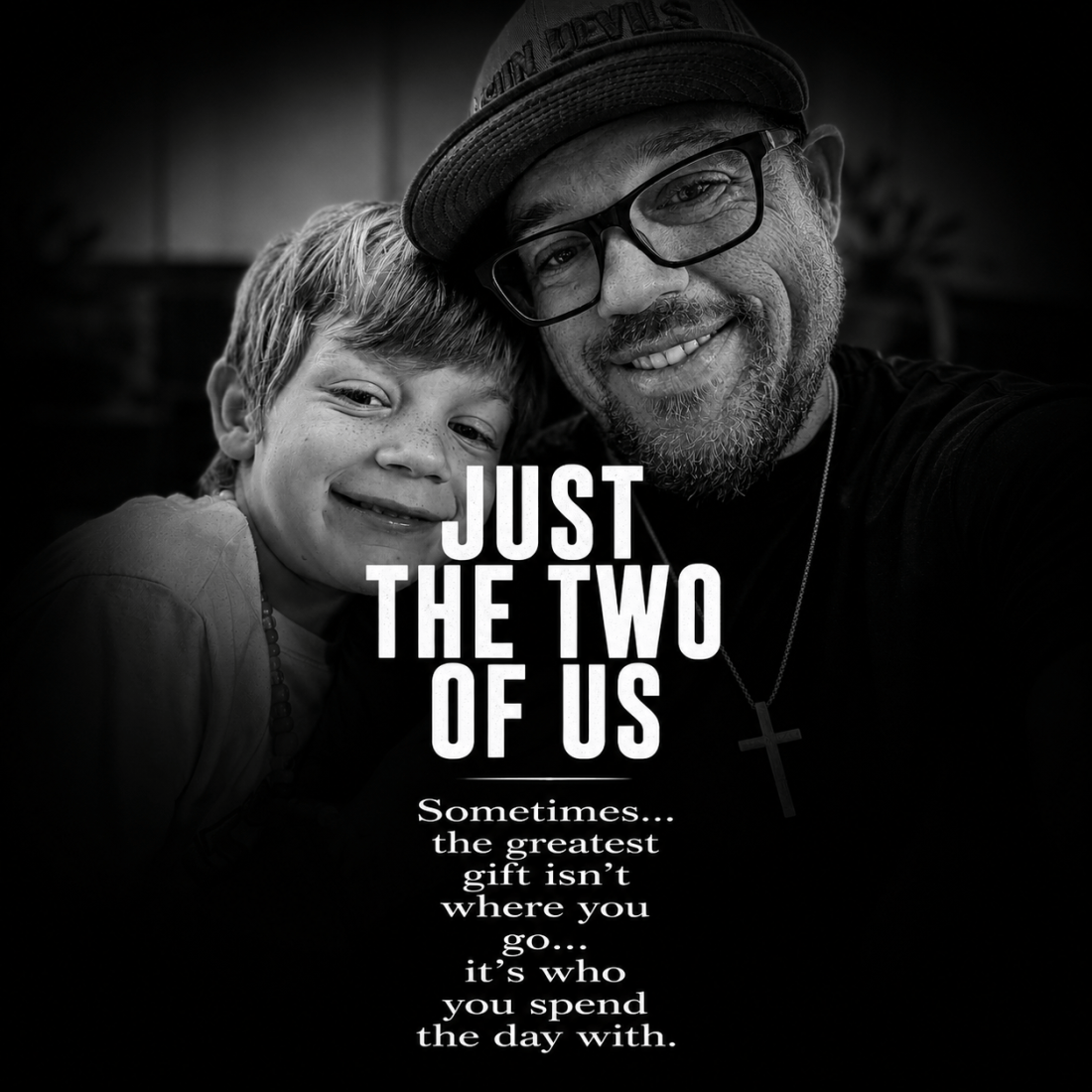
I recently had an unexpected day where it was just Brooks and me.

Those days are becoming rare. Usually our days involve both boys, or we’re all doing something together as a family. But not this time.

Brooks is six and trying to figure out who he is while soaking up influences from television, his cousins, and his friends. Listening can be a challenge. So can attitude sometimes. Before we started our day together, we talked about that. I didn’t want this opportunity for one-on-one time to become another day of correcting behavior. I wanted us to simply enjoy being together.

We started by taking Joseph to school, and then it was just the two of us.

We grabbed breakfast at our favorite coffee shop where Brooks enjoyed a muffin and a smoothie while we talked. We took pictures together and, at his request, had AI turn us into different characters. Then we headed to the store to pick out a birthday present for one of his friends. Of course Brooks left with something too—a World Cup stuffed animal. I’m still a bit of a pushover when it comes to things like that.

The rest of the day looked pretty ordinary.

We stopped for gas.

Went to the bank.

Grabbed lunch.

Delivered an envelope full of Pokémon cards that Brooks had addressed himself to his cousins.

Stopped at the grocery store.

Finished the afternoon at the library where his kindergarten class met up to watch a presentation about the science of bubbles.

From the outside, it probably looked like I was just running errands.

And maybe I was.

But it was also something else.

It wasn’t a grand adventure.

We didn’t do anything extraordinary.

We didn’t turn every stop into a game or every errand into a treasure hunt.

We simply spent the day together.

That opportunity doesn’t come around nearly as often as it used to.

Sure, Brooks and I still watch soccer together, play in the backyard, go to baseball practice, and take family walks around the neighborhood. But those moments usually include Jillian, Joseph, teammates, or friends.

This day was different.

It was just the two of us.

I honestly couldn’t tell you everything we talked about.

What I remember is that we never stopped talking.

There were ridiculous sing-alongs in the car while Brooks tried to decide what his next walk-up song should be.

We wrestled.

We laughed.

We joked.

And somewhere between the coffee shop, the grocery store, and the library, I realized something.

The older Brooks gets, the more I realize that being a father is constantly changing.

Some days he needs comfort.

Some days he needs correction.

Some days he needs someone to laugh with.

Some days he needs someone willing to say no.

The difficult part is figuring out which father he needs today.

Part of me wants him to stay my little buddy forever.

But I know that’s never been my job.

My job isn’t to keep him six years old.

My job is to help him become the man he’s meant to be.

We don’t get to decide who our children become.

We get the once-in-a-lifetime opportunity to walk beside them while they figure that out for themselves.

We don’t get to make their mistakes.

But we can help them pick up the pieces afterward.

We don’t get to make their decisions.

But we can prepare them to make good ones.

We don’t get to walk every road for them.

But for a little while…

We get to walk beside them.

Brooks is six today.

One day he’ll be sixteen.

Then twenty-six.

There will come a time when an entire day with Dad isn’t something that simply happens because schedules lined up.

Those days become fewer.

That’s why this day mattered.

Not because of the errands.

Not because of the grocery store.

Not because of the bubble show.

Because for one ordinary day…

It was…

Just the two of us.

Continue the Journey:

If this story resonated with you, here are a few more reflections on fatherhood, growing up, and the moments that quietly shape the relationships we have with our children.

While They Still Ask

There will come a day when your children stop asking you to play one more game, read one more story, or come outside with them. Until then, those simple invitations are some of the greatest gifts a parent can receive.

A Son and a Father

The relationship between a father and his son is never static. As our children grow, our role shifts from protector, to teacher, to coach, to mentor—all while learning to let them become who they were meant to be.

When Errands Turn Into an Adventure

Sometimes the most memorable days aren’t vacations or elaborate plans. They’re ordinary trips to the coffee shop, the grocery store, or the bank that become unforgettable because of the person standing beside us.

The System Isn’t Sacred

Yesterday I had to admit something I didn’t want to.

The Young Napoleon Project wasn’t going to become the project I had spent the last ten years imagining.

That was surprisingly hard to accept.

Not because the project was failing.

But because the picture I had carried in my head for a decade wasn’t real anymore.

For years I had envisioned every detail of this project. I had planned the action tracking, the scoreboards, the data collection, the documentation, and even redundancies for the redundancies because I wanted to capture everything. I wanted complete control over the process.

Then I finally launched the project.

And after six weeks of actually living it, I realized something I never could have learned while planning it.

It was too much.

Not because I wasn’t willing to work hard.

Because I had built a system that demanded so much attention that it was beginning to compete with the very life it was supposed to support.

Somewhere along the way, I realized I was spending so much time documenting the project…

that I wasn’t actually living it.

So I started removing things.

I eliminated redundant tracking.

I simplified my systems.

I stopped documenting the same information in multiple places.

Not because those things were bad ideas.

Because they were getting in the way of the things that mattered most.

They were taking time away from my writing.

They were taking time away from the fitness goals I had allowed to slip.

They were taking time away from being present with my family.

Making those changes should have been easy.

Instead, it felt like I was giving something up.

The strange thing about plans is that after we’ve lived with them long enough, they stop feeling like plans.

They start feeling like promises.

We convince ourselves that success isn’t simply reaching the destination.

Success becomes following the exact route we imagined.

That’s where we get ourselves into trouble.

We become so committed to the process that we forget why we created it in the first place.

Businesses can’t cling to outdated processes simply because they’re familiar.

Parents constantly adjust routines as their children grow.

Travel plans change.

Careers change.

Life changes.

The people who continue moving forward aren’t the ones who never change their plans.

They’re the ones willing to change them when reality demands it.

For a while, I thought abandoning parts of my original plan meant admitting I had been wrong.

Now I think the opposite.

Those ten years weren’t wasted.

They gave me the vision.

But once the project became real, reality became a better teacher than imagination.

The system was never the project.

The scoreboards weren’t the project.

The trackers weren’t the project.

The spreadsheets weren’t the project.

Those things were simply tools meant to help me become the person I wanted to become.

And when the tools stopped serving that purpose…

They needed to change.

Six weeks ago I started this project with what I believed was the perfect blueprint.

Less than two months later, much of that blueprint no longer exists.

The dream does.

I chose the project over the systems.

I chose writing over documenting.

I chose to make room for my health instead of protecting routines that were no longer helping me.

For ten years I thought protecting the blueprint meant protecting the dream.

I finally realized they aren’t the same thing.

The blueprint can change.

The dream doesn’t have to.

Continue the Journey:

If you enjoyed this article, you may also like:

A Life, Not a Collection of Parts

It’s easy to divide life into separate categories—work, family, health, hobbies—but the most fulfilling life isn’t built by keeping those pieces apart. It’s built by learning how they fit together.

I Finally Stopped Waiting to Feel Motivated

Waiting for motivation kept me standing still for years. Progress finally began when I stopped chasing the perfect feeling and simply started doing the work.

The Coach Can’t Do the Work

The right tools, the right systems, and the right coach can all help you move forward. But in the end, no one else can do the work that only you can do.

The Coach Can’t Do The Work

I am going to be starting a personal training program in the next week or so, and yesterday I had my first call with my trainer. Being honest, I was nervous. I had never worked with a personal trainer before, but the conversation was great and also a little unexpected. Instead of just talking about exercises and nutrition, we talked about my goals, the habits I want to build, the mental aspect of getting healthier, my history with weight, and what I hope to achieve in the future.

As exciting as the call was, and as motivated as I am to work with this trainer, I’m still the one who has to put in the work. That’s something I’ve struggled with my whole life when it comes to my health.

The trainer can write my workouts, answer my questions, help keep me accountable, and encourage me when I’m frustrated. But he can’t lift the weights for me. He can’t choose what I eat every day. He can’t walk the steps I need to walk. He can’t say no to the junk food or turn off the TV so I can go work out. He can be a guide, but I still have to choose to follow.

I’ve done it before. In what feels like a past life, I lost 170 pounds. I was determined. I was resilient. Then I wasn’t. Some of the weight came back, and with it came frustration and disappointment.

Since then, I’ve read books about motivation and discipline. I’ve listened to podcasts. I’ve watched countless videos. I know what it takes to get back to where I want to be.

Information has never been the problem.

Turning that information into action has.

Often we think success comes from the tools we use along the way. The right pen or computer will help us write more. The right planner will keep us organized. The right app will keep us on task. Maybe the right coach will finally help us reach our goals.

Those things absolutely help.

They make the path clearer.

But they can’t walk it for us.

This project has never been about finally discovering the secret that erased years of failure. There isn’t one.

The progress I’ve made has come from doing the work day after day. From refusing to quit when things got hard. From not accepting defeat when I fell behind. From allowing the process to evolve instead of abandoning it because I was too stubborn to change.

The tools I’ve chosen have helped me get this far, but they aren’t the reason I’m here.

This trainer will be no different.

He gets to be on my team. He gets to challenge me, encourage me, and help me decide what I need to do to reach my goals.

But I still have to do the work.

The tools you use can help you write. They can help you stay organized. They can help you stay on task.

But if you don’t do the work, the tools can’t do it for you.

A coach, a trainer, or an accountability partner can all cheer you on. They can believe in you, even on the days you don’t believe in yourself.

But when it’s time to do the work…

You’re the one who has to do it.

And when you do, you’ll have something no one can ever take away from you:

The satisfaction of knowing you earned it.

Continue the Journey:

If you enjoyed this article, you may also like:

  • I Finally Stopped Waiting to Feel Motivated
    Motivation may get you started, but lasting change comes from taking action even when you don’t feel like it.
  • Stay in the Game
    Progress belongs to those who refuse to quit. Once you’ve committed to the journey, the work still has to be done one day at a time.
  • Every Opportunity Begins With Risk
    Hiring a coach, starting a new program, or chasing a goal all begin with uncertainty. The next step is doing the work that turns opportunity into progress.

Stay In The Game

Last night was poker night with the Papa Pandas. Ten of us showed up for a Texas Hold ‘Em tournament. On the opening hand I made two pair and won a large pot. Then I didn’t win another hand for a very long time.

Eventually the table had dwindled down to four players, and my dwindling stack was the smallest of them all. If you had taken a poll around the table, I probably wouldn’t have been the favorite to come out on top.

But I stayed patient. I played my game, bet when I thought the odds were in my favor, and took it one hand at a time. I eliminated one player, then another, and eventually it was just me and the chip leader. I won a couple of smaller pots to even things up before catching an outside straight on the river and moving all in. He called with two pair, and I walked away the winner.

I didn’t win because I played every hand perfectly. I folded hands that would have become winners and played a few that I probably shouldn’t have. I won because I stayed patient and stayed in the game. The cards certainly helped, but they couldn’t have helped me if I had already given up.

It made me wonder about all the other things I’ve quit simply because I got behind. How many times have I stopped writing because the words wouldn’t come? Quit exercising because the scale didn’t move? Walked away from a sport because I wasn’t getting playing time? Given up because things simply became too hard? Not because I was destined to fail, but because success didn’t seem likely, and I mistook where I was for where I was going to finish.

Yesterday I wrote that seizing opportunity requires us to accept uncertainty before we can enjoy the reward. Today I’m realizing that’s only half the story.

Sometimes taking the risk isn’t enough. Sometimes the reward only comes because we stay around long enough for it to arrive.

If you quit trying to lose weight every time the scale goes up or refuses to move, you’ll never reach your goal.

If you abandon every project because the results aren’t immediate, you’ll never finish anything meaningful.

If you give up on every dream because reality doesn’t match the picture in your head, you’ll never become the person you hoped to be.

It won’t be because you weren’t talented enough or capable of working hard enough. It’ll be because you didn’t give yourself—or your dream—the time it needed.

Last night I happened to win the poker tournament. But that’s not what I’ll remember.

I’ll remember looking down at the smallest stack at the table and realizing that as long as I still had chips in front of me, the story wasn’t over.

Sometimes the only thing you can do is stay in the game long enough to find out how the story ends.

Continue the Journey:

If you enjoyed this article, you may also like:

Every Opportunity Begins With Risk

This week I took a risk and put myself out there. I saw an opportunity worth pursuing, and despite my nervousness and anxiety, I sent the message. I asked the question, and I was rewarded for taking that chance. It wasn’t luck. It was action in the face of uncertainty.

We’ve all faced uncomfortable moments. Moments where something worth having sat directly across from our own insecurities and doubts. We imagine being ignored, turned down, or told no. We worry that we’re imposing on someone else or putting them in an uncomfortable position. In those moments, the opportunity may exist, but it isn’t real because we haven’t yet made the decision to pursue it.

Then comes the decision. You put yourself out there. You make yourself vulnerable. You expose yourself to rejection or awkwardness. Sometimes you’re rewarded with acceptance, and afterward you wonder why you waited so long. It wasn’t nearly as big of a deal as you had made it out to be. Then another thought creeps in: how many other opportunities have you missed simply because you weren’t willing to accept a few moments of discomfort while waiting to see what might happen?

I think about my kids. They don’t see the risk; they only see the reward. When Brooks walked into his first karate class, he didn’t know if he would like it. He was nervous. He didn’t know anyone. But if he had never walked through those doors, he never would have discovered something he genuinely enjoys. Children are often willing to try first and worry later. As I wrote in Brooks’s First Tae Kwon Do Class, the hardest part wasn’t earning the belt—it was walking through the door for the very first time. As we get older—even by the time we’re Brooks’ age—that begins to change. Doubt slowly creeps in. Our confidence starts giving way to thoughts about what other people might think if we fail or embarrass ourselves. The older we get and the more rejection we experience, the easier it becomes to focus on the opportunities we’ve missed instead of the ones we’ve seized.

As I thought about it, I realized how many of the best parts of my life began with accepting that same risk. Going back to school for my bachelor’s degree, and later my master’s, while working full-time and starting a family. Coaching Brooks’ baseball team. Walking into my first Papa Pandas meeting. Starting this blog one more time after nearly a decade of false starts. None of those moments felt comfortable beforehand. Every one of them was worth it afterward.

Every opportunity asks us to take a risk before we can enjoy the reward. The hardest part isn’t saying yes to the opportunity—it’s saying yes to the uncertainty that comes before it. As I shared in I Finally Stopped Waiting to Feel Motivated, waiting until we feel ready often means waiting forever. Growth rarely begins with confidence; it begins with the decision to act anyway.

Looking back, I’m far more grateful for the opportunities I experienced because I was willing to accept the risk than I am bothered by the times I was rejected. Because you can’t reap the reward without first accepting the risk.

Continue the Journey:

If you enjoyed this article, you may also like:

A Life, Not A Collection Of Parts

Yesterday I got home from work and it was obvious that Brooks was tired. He had spent the day swimming with his cousins and didn’t have much left in the tank. I got changed, we sat down to dinner, and afterward, instead of diving into my usual evening routine, we decided to have a family movie night.

The work was still there.

The dishes.

The writing.

The project.

The chores.

They could all wait for two hours.

Instead, it was Trolls 3 and taking turns with kids in my lap as we watched, danced, and sang along with the movie.

To say that I wasn’t thinking about this project during the movie would be a lie. I’m always thinking about what I could be doing next. But for the first time in a long time, I didn’t feel like I should have been doing something else. I didn’t feel guilty for sitting there. I didn’t feel like I was falling behind.

That’s different than it has been in the past.

During previous attempts to launch this project, every minute I wasn’t moving it forward felt like a minute I had wasted. The project slowly began to consume my life.

This time, I’ve realized something different.

The project needs to be integrated into my life, not consume my life.

In researching the idea of integration, I came across a Forbes article about how work-life integration being different than work-life balance. Rather than trying to divide life into perfectly equal compartments, the article argued for building a life where the different parts support one another. That stuck with me because I am not trying to choose between this project and my family—I am learning that the goal of this project is to make me better for my family. 

A few days ago I wrote There Is Always One More Thing, where I realized that the work is never really finished. Looking back, I think this is the next step in that lesson. If the work is never going to end, then I have to learn how to live while it’s still unfinished.

Because the purpose of this project was never to become someone who only works on the project.

The purpose is to become a healthier, happier, and more present husband, father, writer, and man.

Sometimes that means sitting on the couch with my boys, laughing through Trolls 3.

I’ve always tried to separate my life into categories: Family. Health. Marriage. Career. Writing. And I still think there’s value in that. Work should stay at work. Family time should be protected. You and your spouse need time together. It’s even how I built The Young Napoleon Project, dividing it into different departments that reflect the major areas of my life.

But that doesn’t mean those parts exist in isolation.

They overlap.

They influence one another.

Becoming healthier gives me more energy to be present with my family. Writing helps me think more clearly. A strong marriage makes me a better father. Spending time with my boys reminds me why I’m working so hard in the first place.

They’re not competing priorities.

They’re different pieces of the same life I’m trying to build.

That realization also reminded me of Adventure Is Closer Than You Think. The goal of that day wasn’t simply to visit Cabrillo National Monument. It was to spend meaningful time together as a family. The adventure wasn’t separate from the project—it was part of it all along.

My writing matters.

My health matters.

My marriage matters.

My boys matter.

None of those priorities are competing for my attention.

They’re all reasons I started this project in the first place.

While thinking about that, I also read an article from Becoming Minimalist about living intentionally. One of the ideas that stood out to me was that intentional living isn’t about doing more—it’s about making sure the things that matter most actually receive our attention. That felt like a good reminder that building a better life isn’t about perfectly balancing every responsibility each day. It’s about choosing to invest your time in the people and pursuits that align with the life you’re trying to create.

We only get twenty-four hours in a day, so naturally some days will lean more heavily toward work. Other days might be focused on family, health, or writing. The goal isn’t to give every part of your life equal time every single day. The goal is to make sure none of the parts that matter most are neglected for too long.

That doesn’t mean every day will feel perfectly balanced. As I wrote in I Finally Stopped Waiting to Feel Motivated, some days require discipline simply to keep moving forward. Other days require the discipline to recognize that your family deserves your full attention. Both are important.

Life isn’t lived in perfectly balanced twenty-four-hour blocks.

It’s lived in seasons.

Sometimes those seasons last a day.

Sometimes they last much longer.

When the movie ended, I still got my work done around the house. I put Brooks to bed. While Jillian went for a walk, I got ready for today. Then I sat down and worked on Beneath The Silt before finishing the night watching a show with Jillian.

Everything that mattered got some of my time.

Not equally.

But intentionally.

And that’s enough.

Because sometimes the most important work isn’t sitting at your desk.

Sometimes it’s sitting on the couch with your kids, laughing at Trolls 3 for the twelfth time.

That’s something I hope Brooks and Joseph remember long after they forget which movie we watched, just like I wrote in Why Ordinary Days Matter More Than Big Moments. The ordinary evenings are often the ones that quietly become the memories that last.

The Young Napoleon Project isn’t about building a better project.

It’s about building a better life.

Continue the Journey:

Further Reading:

Forbes — “Work-Life Integration Could Soon Replace Work-Life Balance”


https://www.forbes.com/sites/forbesbooksauthors/2023/11/27/worklife-integration-could-soon-replace-worklife-balance/

Becoming Minimalist — “Living Intentionally”

https://www.becomingminimalist.com/living-intentionally/

Your Body Of Work Is Bigger Than One Bad Day

Yesterday I left work a little early, went home, changed clothes, and planted myself in front of the television to watch the United States take on Belgium in the World Cup.

People are always surprised to find out how much I love soccer. They know about my passion for baseball, but soccer usually catches them off guard. I didn’t really fall in love with the sport until my twenties. I played a little as a kid, but it never stuck. Years later I joined an indoor team with some friends, started following the U.S. Men’s National Team, traveled to matches around the country, and eventually became a season ticket holder for the San Diego Loyal.

Needless to say, I had been looking forward to this game for weeks.

Unfortunately, it unraveled almost as quickly as it began.

The United States fell behind early, briefly gave me hope when they equalized, and then watched that hope disappear almost immediately. Before I knew it, the final whistle had blown and the tournament was over.

As a fan, my mind immediately went where it always does.

What changes need to be made?

Will the coach stay?

Which players will still be around four years from now?

Who should have played differently?

It was disappointment.

It was frustration.

It was judgment.

When in reality…

It was one bad game.

While reflecting on that feeling, I came across an article in TIME titled “What to Say When Someone’s Team Loses, According to Sports Fans.” It reminded me that disappointment is part of caring. When we invest ourselves in something—a team, a goal, a project, or a dream—losses are going to hurt. The challenge isn’t avoiding that feeling. It’s refusing to let one disappointing result become the entire story.

A couple of hours later I found myself standing on a softball field with a group of friends I’ve been playing with for years.

We won 20–6.

I went 3-for-4 with an RBI.

It felt great.

But if I’m being honest…

It was just one good game.

Over the last decade we’ve probably played close to thirty different seasons together. We’ve had great teams, terrible teams, winning streaks, losing streaks, and only one championship.

Nobody on our team walked off the field last night believing we’d suddenly become champions because of one good game.

Sports understand something we often forget about life.

One game doesn’t define a season.

Championship teams lose games.

Hall of Fame baseball players fail seven out of every ten times they step into the batter’s box.

The greatest basketball players in history still miss thousands of shots.

One result is simply one result.

A few days ago I wrote The Scale Isn’t the Scoreboard, realizing that one number on a scale doesn’t define my progress. Yesterday reminded me that one result doesn’t define my journey either.

Somewhere along the way, though, we stop giving ourselves that same grace.

One bad weigh-in and we convince ourselves we’re failing.

One difficult day with our kids and we question whether we’re good parents.

One rough chapter and we wonder if we’re really writers.

One poor financial decision and we tell ourselves we’ll never get ahead.

One awkward conversation at work and suddenly we think our entire career is falling apart.

That’s the same lesson I learned in I Finally Stopped Waiting to Feel Motivated. Progress doesn’t come from never having bad days—it comes from refusing to let those bad days convince you to quit.

One mistake begins to outweigh years of faithful effort.

That’s not how we judge sports.

And it shouldn’t be how we judge ourselves.

A few weeks ago I promised myself that The Reset Never Came. Looking back, I realize that’s only possible when you stop letting one disappointing day erase everything you’ve already built.

A pristine professional career shouldn’t be defined by one mistake.

A great speech shouldn’t be remembered only for one misplaced word.

A loving marriage shouldn’t be measured by one difficult conversation.

A life spent intentionally shouldn’t be reduced to one disappointing day.

Our body of work matters more than our latest result.

As I reflected on that idea, I also read an article from The Let Go titled “Failure Won’t Define Us, How We Respond to It Will.” That message stayed with me because it shifts the focus away from the setback itself. Every season includes losses. Every meaningful goal includes mistakes. The defining moment isn’t the failure—it’s the decision to get back up and continue building your body of work.

That realization has changed the way I look at this project.

As I write this, I’ve published a blog post every day since launching The Young Napoleon Project.

If I failed to publish tomorrow, I’d probably feel like I’d failed.

But that wouldn’t be true.

It would simply mean I published thirty-four consecutive articles before missing one.

That’s still a body of work I can be proud of.

The same is true of my health.

One bad weigh-in doesn’t erase the walks I’ve taken.

One cheat meal doesn’t erase the healthier choices I’ve made.

One missed workout doesn’t erase the habits I’m building.

None of those moments define the season.

It’s no different than the lesson I learned in The Belt Isn’t Earned on Test Day. Success isn’t determined by one performance—it’s earned through the work you continue to put in long before anyone is keeping score.

Tomorrow the United States will begin preparing for the next World Cup.

Our softball team will eventually lose another game.

I’ll step on the scale again.

I’ll go to work.

I’ll write another article.

I’ll keep building this project.

Because one loss doesn’t erase everything that came before it.

One bad day doesn’t erase the person you’re becoming.

Your body of work is always bigger than one bad day.

The season isn’t over.

It’s just time to play the next game.

Continue the Journey:

If today’s article resonated with you, you might also enjoy:

Further Reading:

TIME – “What to Say When Someone’s Team Loses, According to Sports Fans”

https://time.com/article/2026/06/18/what-to-say-when-someones-team-loses-sports-fans/

The Let Go – “Failure Won’t Define Us, How We Respond to It Will”

https://www.theletgo.com/failure-wont-define-us-how-we-respond-to-it-will/

I Finally Stopped Waiting To Feel Motivated

If I’m being honest with you, I go to bed most nights feeling like I should give up.

That I haven’t done enough.

That things aren’t progressing as quickly as I dreamed they would.

That I could somehow be more perfect in my approach to this project.

By the time I close my eyes each night, the motivation that carried me through the morning has usually disappeared, and I’m left wondering what tomorrow will bring.

Yesterday was the perfect example.

I woke up and the scale had jumped five pounds overnight.

Brooks and I went to the baseball fields for a hitting session, but after staying up late to watch fireworks the night before, he just wasn’t in the mood.

While we were gone, Joseph somehow managed to lock himself and Jillian inside the playroom.

Instead of working on this project during the afternoon, I accidentally fell asleep in my chair and lost nearly two hours of the day.

By the time I finally sat down to write, it was already late in the evening and I found myself rushing just to accomplish the bare minimum.

By bedtime…

The motivation was gone.

I found myself wondering if I could really keep doing this tomorrow.

The problem is, I used to think motivation was supposed to last.

Whenever it disappeared, I assumed something was wrong.

I thought I had lost momentum.

I thought I had failed.

So I started over.

Again.

And again.

And again.

When I first started trying to lose weight years ago…

When I first dreamed about becoming an author…

When I first imagined building a better life…

I relied almost entirely on motivation.

I watched inspirational videos.

Read motivational quotes.

Waited for the perfect Monday.

The perfect month.

The perfect opportunity.

Eventually the excitement faded.

Life got busy.

I had a bad day.

And I convinced myself it was time to start over.

Looking back, I realize the problem was never my lack of motivation.

It was my belief that motivation was supposed to carry me forever.

Discipline doesn’t feel exciting.

It isn’t supposed to.

Discipline packs my breakfast and lunch the night before, even when I’d rather grab something from the cafeteria.

It gets me out walking during my breaks instead of sitting at my desk.

It opens a blank page after the boys have gone to bed.

It keeps me writing even when nobody is waiting for another blog post.

It doesn’t promise that I’ll enjoy every minute.

It simply reminds me to keep going.

While writing this article, I reread an essay by James Clear titled “Plan for Failure: Being Consistent Is Not the Same as Being Perfect.” One idea especially resonated with me: consistency isn’t about never having bad days—it’s about expecting them and continuing anyway. Looking back, I realize I spent years believing every imperfect day meant I needed to start over. This project has taught me the opposite. Progress isn’t built by perfection. It’s built by refusing to quit.

I also came across a thoughtful post from The Love Sophia Project about choosing consistency over motivation. One idea stood out to me: motivation is wonderful when it’s there, but it isn’t reliable enough to build a life around. Reading it reminded me that the people who make lasting progress aren’t the ones who always feel inspired—they’re the ones who keep showing up after the inspiration fades.

That’s exactly what this project has become for me.

The reason I haven’t hit the reset button this time isn’t because I’m more motivated than I was before.

It’s because I finally stopped expecting motivation to save me.

A few weeks ago I wrote The Reset Never Came, promising myself that this would be different. Since then I’ve learned that The Scale Isn’t the Scoreboard, that Some Days Ask More of Us Than We Expected, and that The Belt Isn’t Earned on Test Day.

Every one of those lessons points to the same truth.

You don’t become a different person because of one great day.

You become a different person because you keep showing up after the hard ones.

Tonight I’ll watch a World Cup match.

I’ll spend time with my family.

Play softball.

Do some work around the house.

Get ready for tomorrow.

And by the time I climb into bed, I’ll probably wonder if I did enough.

I’ll probably think about the things I could have done better.

I’ll probably still wish I had accomplished more.

But tomorrow morning I’ll get out of bed.

I’ll step on the scale.

I’ll do my stretches.

I’ll make breakfast.

And I’ll begin again.

Not because I’ll necessarily feel motivated.

But because somewhere between going to sleep tonight and waking up tomorrow, I’ve already made the decision to continue.

I’ve spent years believing that starting over was the answer.

Now I’m beginning to believe that simply continuing is.

Because motivation may get you started.

But discipline is what keeps you moving long after motivation has quietly slipped away.

Continue the Journey

If today’s article resonated with you, you might also enjoy:

Further Reading:

James Clear – “Plan for Failure: Being Consistent Is Not the Same as Being Perfect”

https://jamesclear.com/plan-failure

The Love Sophia Project – “Consistency Over Motivation”

https://www.lovesophiaproject.com/blog/blog-post-title-one-2gp9t-p99a3-wfbsh-9jh7p

The Belt Isn’t Earned On Test Day

Brooks had karate class last night. Jillian brought him while I met them there after work so she could take Joseph home and get dinner started. My mom also came to watch for the first time.

Class started like it always does—with a discussion about stranger danger, some warm-ups, and then into their regular drills.

Brooks has really been enjoying karate this summer. A couple of his friends have been taking the class with him, and every week he looks forward to going. He was definitely having fun last night, but as class went on it became more and more apparent that he wasn’t remembering the moves or how to perform them correctly.

He kept looking over at me sitting on the benches, and I did my best to help by awkwardly miming the punches, kicks, and blocks from my seat.

It wasn’t working.

He finished class with a smile, we said goodbye to his friends and Grandma, and then headed to the car. On the drive home I knew we needed to have a conversation about practicing at home.

For some reason, karate isn’t like baseball to him.

If I ask Brooks if he wants to play catch or swing the bat, the answer is almost always yes.

Ask him if he wants to practice karate…

Not so much.

I told him his belt test was coming up in a few weeks and was honest with him.

Without practicing, I didn’t think he was going to pass.

I didn’t want to be too harsh. He’s only six years old, and I’m incredibly proud of him for showing up every week, trying something new, and most importantly, having fun. I still believe that enjoying what you’re doing is the most important part of youth sports.

But I also want him to experience the satisfaction that comes from working toward something and earning it.

While writing this article, I came across a thoughtful piece from The Simple Dad about encouraging kids to embrace failure through a growth mindset. One idea really stood out to me: our job isn’t to protect our kids from struggle, but to help them see that improvement comes through effort. That’s exactly what I hope Brooks learns from karate. Whether he passes this belt test or not, the real lesson is discovering that getting better almost always starts with practicing something you’re not very good at yet.

Unfortunately, he was still resistant to the idea.

So, being the dad, I had to make a rule.

Before tablet time each day, he has to go through each of his karate moves once.

Safe to say…

I wasn’t his favorite person in that moment.

While writing this article, I also came across a piece from Invicta Karate about the importance of practicing outside the dojo. Their point was simple: class is where you’re introduced to the techniques, but real improvement happens through the repetition between classes. Reading that made me smile because that’s exactly the conversation Brooks and I were having in the car. The belt test happens in front of an instructor, but the confidence to pass it is built at home.

As we drove home, I couldn’t help but think about my own life.

My mom laughed and reminded me that I was the same way when I took karate as a kid.

Apparently, not much has changed.

How many times have I expected to get better at something without really practicing?

How many times have I wanted the result more than I wanted the work?

I’m not going to become a better writer if I don’t keep writing.

I’m not going to become a healthier person if I don’t continue taking care of myself.

I’m not going to become a better husband or father if I don’t intentionally work at those relationships every day.

A few days ago I wrote The Scale Isn’t the Scoreboard, reminding myself that success is bigger than one number. Yesterday I wrote Some Days Ask More of Us Than We Expected, a reminder that life will occasionally interrupt our plans. Both of those lessons point to the same truth:

Progress still requires practice.

We all have a belt we’re chasing.

Maybe it’s a promotion.

A finished novel.

A healthier body.

A stronger marriage.

A closer relationship with our kids.

Whatever it is, we all want the belt.

What we don’t always want is the practice.

We want success without the work.

Instant gratification without the repetition.

Recognition without the discipline.

Life just doesn’t work that way.

That’s one of the reasons I started The Young Napoleon Project in the first place.

Over the last month I’ve written every day.

Read every day.

Walked every day.

Done my push-ups, sit-ups, and squats every day.

None of those things are particularly exciting on their own.

They’re practice.

And slowly, almost without noticing it, the practice is changing me.

Earlier this month I wrote The Reset Never Came, promising myself that I wouldn’t start over every time life got hard. Since then I’ve learned that progress isn’t built by dramatic moments of motivation. It’s built by ordinary days of consistent effort, something I explored in Why Ordinary Days Matter More Than Big Moments.

Brooks may only take karate for one summer.

If that’s the case, then maybe one day he won’t remember all of his kicks, blocks, or forms.

But that’s okay.

Because karate isn’t the lesson.

The lesson is.

Every sport he plays.

Every hobby he picks up.

Every dream he decides to chase.

Will ask the same thing of him.

Put in the work.

Practice consistently.

Keep showing up.

Improvement comes from repetition long before it comes from recognition.

The belt isn’t earned on test day.

It’s earned on all the ordinary days before it.

One day Brooks is going to earn that belt.

I don’t really have any doubt about that.

And when he does, I’ll be sitting on the bench cheering louder than anyone else.

Not simply because he passed the test.

But because of all the work no one else saw.

Because that’s what I’ll really be celebrating.

And maybe that’s a lesson all of us need to be reminded of from time to time.

Continue the Journey

If this story resonated with you, you might also enjoy:

Further Reading:

The Simple Dad – “Encouraging Kids to Embrace Failure: A Dad’s Guide to Growth Mindset”
https://thesimpledad.com/encouraging-kids-to-embrace-failure-dads-growth-mindset/

Invicta Karate – “Unlocking Excellence: The Advantages of Self-Practice in Karate Beyond the Dojo”
https://invictakarate.co.uk/unlocking-excellence-the-advantages-of-self-practice-in-karate-beyond-dojo/