The First Line Doesn’t Tell The Whole Story

Yesterday morning I stepped on the scale and the number had climbed right back to where it was when I started this project fifty-four days ago.

Mentally, it was a crushing blow.

For a few moments, I thought I knew exactly what kind of day I was about to have.

It’s amazing how quickly we do that, isn’t it?

We come into work and find an email we weren’t expecting. The morning meeting doesn’t go as planned. You and your significant other have a disagreement. The day gets away from you and you miss your workout or binge through all your calories in one meal. Your toddler isn’t listening and now something is broken.

Somehow and some way, we experience a disappointment, a failure, or an unexpected event early in the day, and what do we do?

We immediately start writing the ending to the story.

We begin forecasting what’s going to happen next, and it’s rarely in the classic Disney happy-ending kind of way. Instead, we imagine the worst. We convince ourselves the day is ruined, the relationship is in trouble, the goal is slipping away, or that we’re somehow back at the beginning.

One sentence…

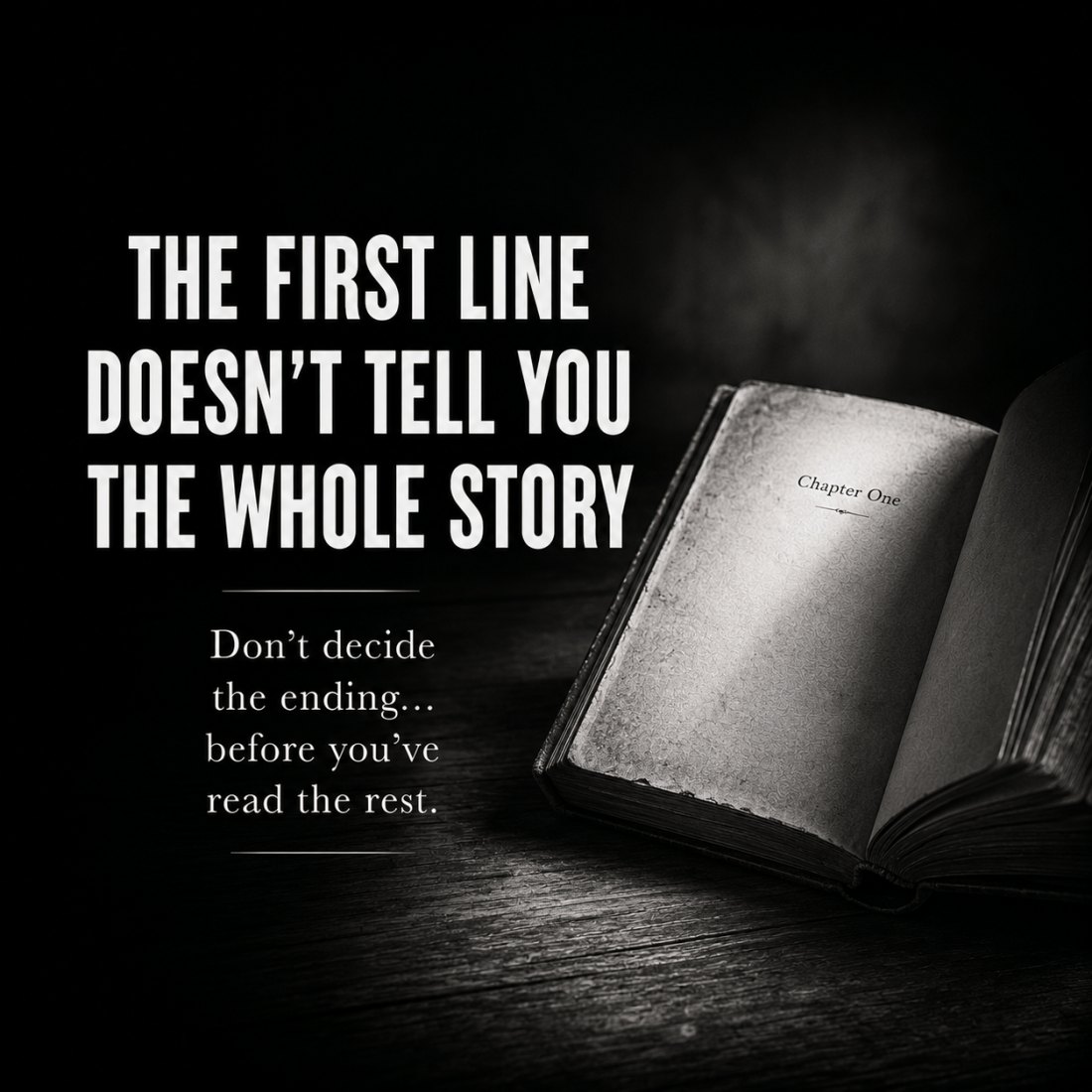
…and suddenly we’ve decided how the whole book ends.

But then something interesting happens.

Later that evening, we look back on the day and realize it wasn’t the disaster we imagined.

The unexpected email became an opportunity.

The meeting ended early and gave us time we didn’t expect.

The disagreement turned into a conversation that brought us closer.

The workout happened later that night instead of first thing in the morning.

The broken toy was fixed, and maybe the lesson learned was worth more than the thing itself.

The dark ending we had already written somehow gave way to brighter skies.

Not because life always goes our way.

But because we aren’t nearly as good at predicting the ending as we think we are.

Too often, we decide the day is going to be bad before it has even had the chance to become good.

We let one conversation become a roadblock in a relationship.

We let one mistake define our ability.

We let one setback convince us we’ve lost all our progress.

We presume to let one chapter—or sometimes even one sentence—dictate the ending of the entire book.

But one event isn’t enough to determine the outcome.

Life keeps unfolding after that first disappointment.

The story keeps moving after that first setback.

And too often…

…we stop reading while life is still writing.

Yesterday morning, the scale gave me one sentence.

By the end of the day, I had visited with extended family, spent unexpected time with Jillian over coffee, published another article, kept my commitment to work out, tucked my boys into bed, and ended the evening with some quiet reflective time.

That first number wasn’t wrong.

It just wasn’t the whole story.

Neither is the unexpected email.

Neither is the difficult conversation.

Neither is the missed workout.

Neither is the bad meeting.

The first thing that happens to you today isn’t qualified to tell you how the story ends.

Because tomorrow’s chapter hasn’t been written yet.

And today’s story is still being told.

Continue the Journey

If this article resonated with you, here are a few more reflections that explore how the stories we tell ourselves shape the lives we live:

  • The Story Behind Tomorrow — Every visible beginning is built on invisible preparation long before anyone else notices.
  • Winning the Wrong Argument — The internal conversations that keep us from taking the first step.
  • The Reset Never Came — Why waiting for the perfect moment often keeps us from making progress at all.
  • Day One — Every meaningful journey begins with the decision to start, even before you’re ready.

His Words Were Soft And Few

Today would have been my grandfather’s birthday.

Papa Mac passed away 25 years ago when I was 17 years old and a senior in high school. I still remember my dad sitting my sister and me down in the living room to tell us. It might have been the first time I had ever seen him cry.

It doesn’t seem possible that it was that long ago. Twenty-five years is long enough to forget a lot of things, but it’s also long enough to realize which memories never fade.

Memories like going camping, where my dad and Papa Mac would load my sister and me into that old green truck with the camper on the back. We’d drive up to the lake, get our campsite set up, sit around the campfire, fish along the shoreline, and tell stories while we waited for the fish to bite.

Other times we’d be at my grandparents’ house, sitting on the back patio as Papa Mac taught us to play checkers. His famous phrase was always, “Touch man, move man.”

One of my favorite memories is of Papa Mac coming to watch me play baseball. He had emphysema and was on oxygen, so he couldn’t walk over to the fields. Instead, he’d park on the street overlooking them and watch through his binoculars. Standing at second base, I’d turn around between pitches and see him sitting there.

The one thing all of these memories have in common is his presence—but also the quiet.

Papa Mac wasn’t a man of many words. He wore hearing aids, and because they amplified all the sounds around him, he would often turn them off.

Instead of talking, I got to watch him.

I watched him meticulously sort through his fishing gear, explaining what everything was for. I watched him count out the pills he needed each day while letting me put them into his pill organizer. He watched me copy comic strips from the newspaper, helped me assemble school projects, and patiently listened while I babbled on about whatever happened to be on my mind.

He may not be with us anymore, and he never got the chance to meet his great-grandchildren, but the lessons he taught, the stories he told, and the pocket knives he passed down have all become part of the story I now share with my boys—the lore of Papa Mac.

Just a few weeks ago, we were hiking when I came across a plaque explaining that the trails had been built by the California Conservation Corps, a group my grandfather joined after moving to California. It was one of those unexpected reminders that his influence still surrounds me.

His memory lives on through me—and all around me.

We don’t realize it when we’re kids.

We don’t realize our grandparents won’t always be there.

We think of them as eternal. We think they’ll be there for graduations, birthdays, weddings, and holidays. In reality, we’re fortunate if they get to experience even a few of those moments with us. Some people never get to share any of them with their grandparents at all.

Today would have been his birthday.

He would have been 112 years old.

When I was a kid, I was certain he’d live that long.

As an adult, I know what’s really important.

I want Brooks and Joseph to get as much time with my dad as I got with my grandfathers, because one day those ordinary moments will become the stories they tell their own children.

In honor of Papa Mac’s birthday, I wanted to share a song I wrote about him.

Happy Birthday, Papa Mac.

I Still Carry Him With Me

Verse 1

Sitting on the shore, casting into the air
Lines in the water, memories made there
Telling stories as the campfire burned
Passed down that knife, a history learned

Verse 2

Out on the patio, checkers on the board
He watched in silence as my hands moved forward
Before my turn he’d say, “touch man, move man”
Then let me choose and helped me understand

Verse 3

Playing second base, waiting on the next pitch
Turned towards the street cause that’s where he’d sit
In the car, he had his binoculars framed
Watching every inning of my game

Chorus

His words were soft and few
He quietly showed me the way
Learning what I was meant to do
I still carry him with me today

Bridge

Never knew how much I’d miss those moments
The time we spent and the stories we told
I still think of him when I’m sitting alone
And cherish those memories as treasures I hold

Final Chorus

His words were soft and few
He quietly showed me the way
Learning what I was meant to do
I still carry him with me today

It Was Just Tuesday

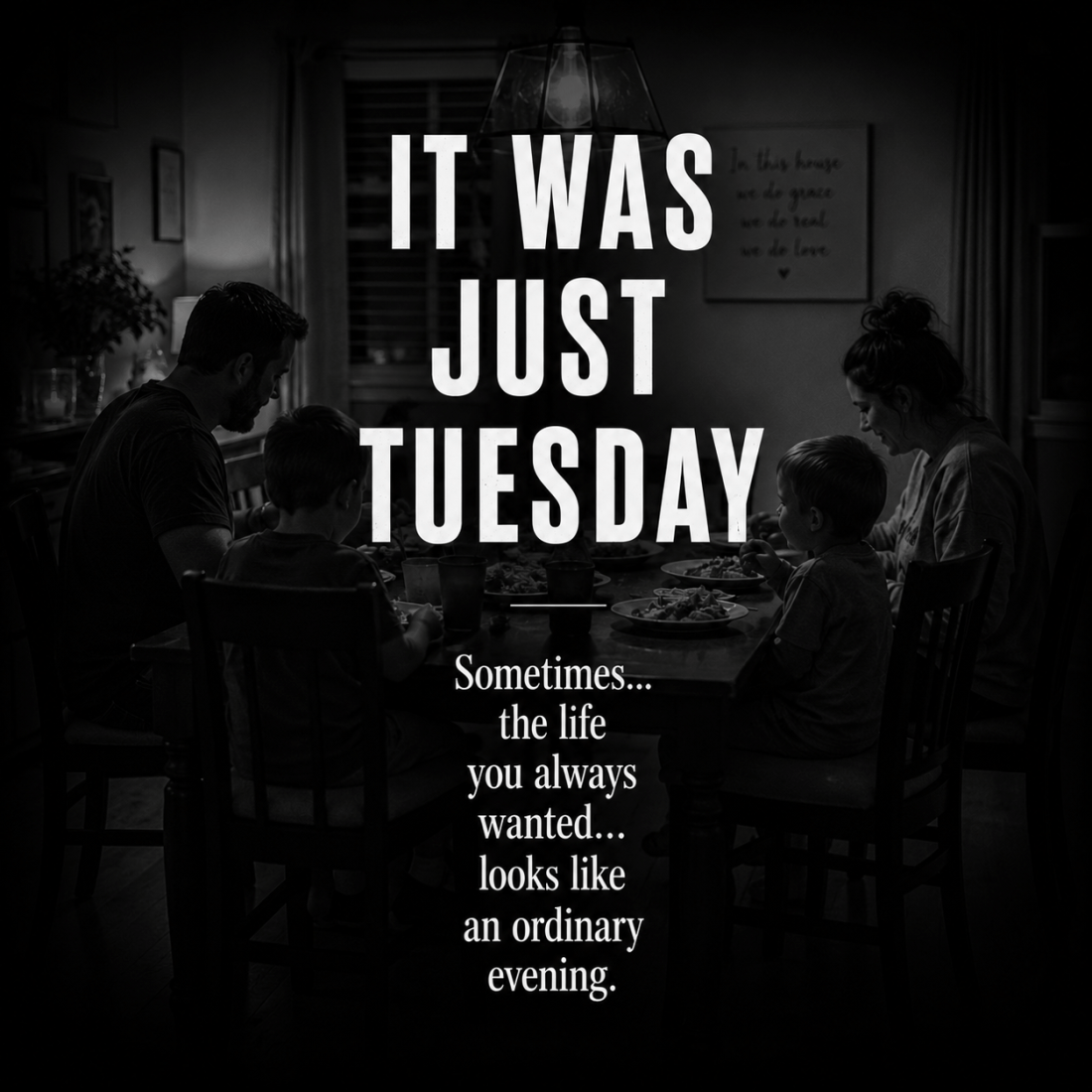
Yesterday I headed home from work, got changed, and spent some time with the boys while Jillian made dinner. We sat around the table together, and afterward I took the boys for a walk around the neighborhood and through the baseball fields. We ran into some friends, stopped to visit for a while, and then headed home to get the kids ready for bed. After they were asleep, Jillian and I laid down together for a while before getting up to finish a few things around the house, watch a show together, and call it a night.

It was Tuesday.

No special occasion.

No big event on the calendar.

Just a normal evening at home with my family.

Today I found myself thinking about the version of me that existed before I got married and had kids.

What did he think life would look like?

What was he chasing?

If I’m honest, I don’t think he could have imagined this.

Back then I probably pictured coming home from work, grabbing something to eat on the way, sitting on the couch watching a Padres game with friends, and calling it a good night. I don’t think I could have imagined being married to a woman I could only have dreamed about, raising two incredible boys, eating dinner around the family table, taking evening walks through the neighborhood I grew up in, building the blog I had always wanted to write, or working every day toward becoming healthier.

If someone had described that life to me back then, I’m not sure I would have believed it was possible.

We spend so much time dreaming about promotions, bigger houses, vacations, accomplishments, and the future that we overlook another kind of dream entirely.

The quiet ones.

The dreams that don’t arrive with some grand announcement.

They simply become normal.

Family dinners.

Bedtime stories.

Evening walks.

A spouse asking how your day was.

One day you wake up and realize those moments have become so routine that you barely notice them anymore.

But years earlier…

They were the life you were hoping to build.

We spend so much of our lives looking ahead, chasing the next goal, the next milestone, the next achievement—things we can celebrate and tell people about.

Meanwhile, the dreams that matter most are sitting across the dinner table telling you about their day.

This blog was always a dream of mine.

For years I imagined writing about adventures, milestones, and extraordinary moments.

I never imagined I’d be writing about an uneventful Tuesday.

But maybe that’s because I finally understand what I was really chasing.

It wasn’t excitement.

It wasn’t recognition.

It wasn’t some picture-perfect future.

It was this.

Dinner around the table.

A walk with my boys.

Talking with neighbors.

Watching a show with my wife before bed.

Years ago I spent a lot of time wondering what my life might look like someday.

Today I know.

It looks a lot like Tuesday.

Continue the Journey:

If you enjoyed this article, you may also like:

The Gift of Being Nearby

Some of the most meaningful moments with the people we love don’t happen because we planned them. They happen because we’re close enough to simply be there when life unfolds.

Why Ordinary Days Matter More Than Big Moments

Life is rarely defined by vacations, birthdays, or major milestones. More often, it’s shaped by the quiet routines and everyday moments that slowly become our most treasured memories.

A Life, Not a Collection of Parts

The most fulfilling life isn’t one where work, family, health, and personal goals compete for attention. It’s one where those parts begin working together to create something greater than any one of them could alone.

Every Opportunity Begins With Risk

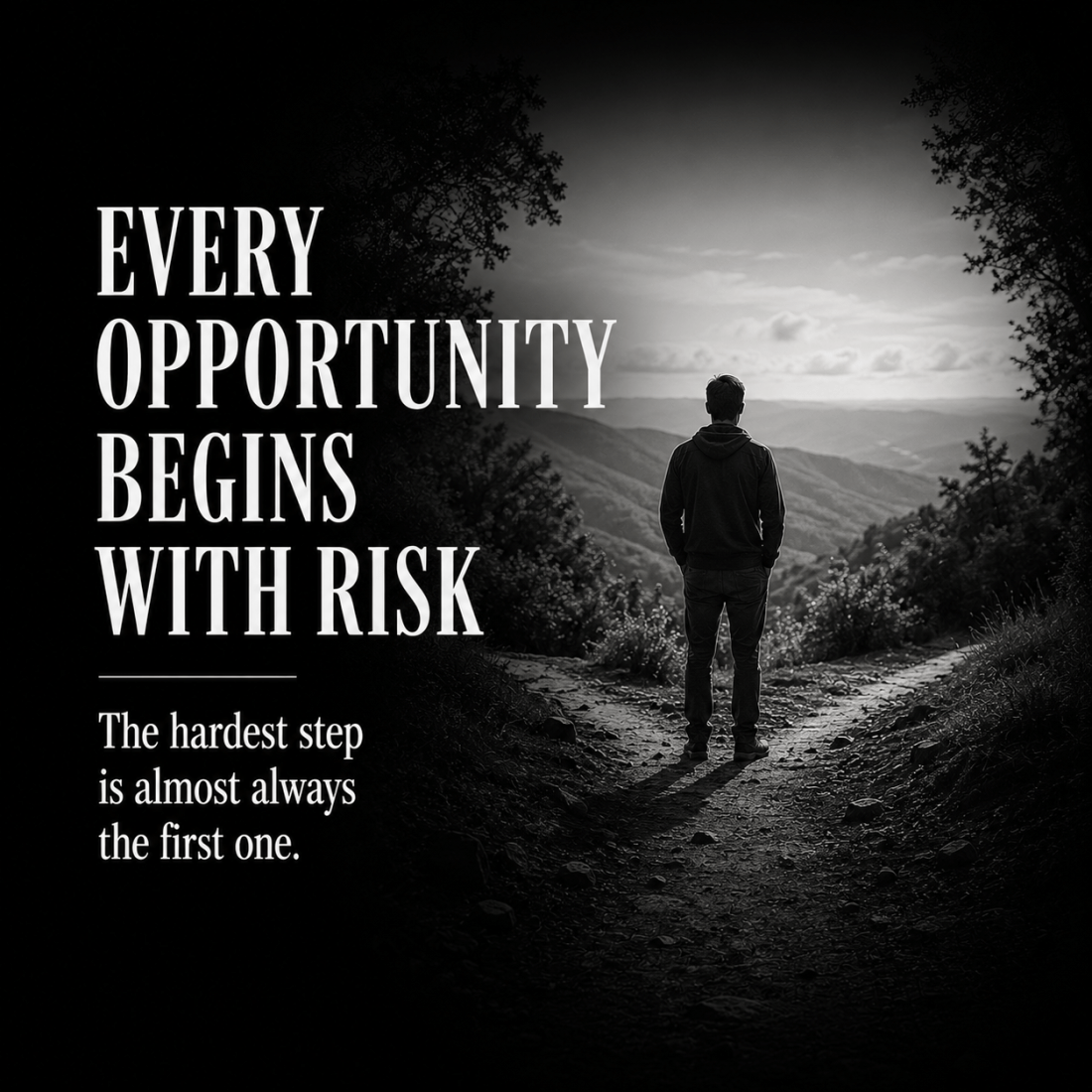
This week I took a risk and put myself out there. I saw an opportunity worth pursuing, and despite my nervousness and anxiety, I sent the message. I asked the question, and I was rewarded for taking that chance. It wasn’t luck. It was action in the face of uncertainty.

We’ve all faced uncomfortable moments. Moments where something worth having sat directly across from our own insecurities and doubts. We imagine being ignored, turned down, or told no. We worry that we’re imposing on someone else or putting them in an uncomfortable position. In those moments, the opportunity may exist, but it isn’t real because we haven’t yet made the decision to pursue it.

Then comes the decision. You put yourself out there. You make yourself vulnerable. You expose yourself to rejection or awkwardness. Sometimes you’re rewarded with acceptance, and afterward you wonder why you waited so long. It wasn’t nearly as big of a deal as you had made it out to be. Then another thought creeps in: how many other opportunities have you missed simply because you weren’t willing to accept a few moments of discomfort while waiting to see what might happen?

I think about my kids. They don’t see the risk; they only see the reward. When Brooks walked into his first karate class, he didn’t know if he would like it. He was nervous. He didn’t know anyone. But if he had never walked through those doors, he never would have discovered something he genuinely enjoys. Children are often willing to try first and worry later. As I wrote in Brooks’s First Tae Kwon Do Class, the hardest part wasn’t earning the belt—it was walking through the door for the very first time. As we get older—even by the time we’re Brooks’ age—that begins to change. Doubt slowly creeps in. Our confidence starts giving way to thoughts about what other people might think if we fail or embarrass ourselves. The older we get and the more rejection we experience, the easier it becomes to focus on the opportunities we’ve missed instead of the ones we’ve seized.

As I thought about it, I realized how many of the best parts of my life began with accepting that same risk. Going back to school for my bachelor’s degree, and later my master’s, while working full-time and starting a family. Coaching Brooks’ baseball team. Walking into my first Papa Pandas meeting. Starting this blog one more time after nearly a decade of false starts. None of those moments felt comfortable beforehand. Every one of them was worth it afterward.

Every opportunity asks us to take a risk before we can enjoy the reward. The hardest part isn’t saying yes to the opportunity—it’s saying yes to the uncertainty that comes before it. As I shared in I Finally Stopped Waiting to Feel Motivated, waiting until we feel ready often means waiting forever. Growth rarely begins with confidence; it begins with the decision to act anyway.

Looking back, I’m far more grateful for the opportunities I experienced because I was willing to accept the risk than I am bothered by the times I was rejected. Because you can’t reap the reward without first accepting the risk.

Continue the Journey:

If you enjoyed this article, you may also like:

Overthink The Good Stuff

Guess what?

I overthink things.

I know… you’re shocked.

If you read my post about Why The Young Napoleon Project then you know I share a trait with General George B. McClellan: we were both overthinkers and overplanners.

My anxiety?

Well… that doesn’t exactly help either.

I can get lost overthinking the smallest things.

Did I say the wrong thing?

Should I have sent that text?

Did I make the right decision?

Then I can spend hours thinking about everything that might be waiting for me tomorrow.

I imagine I’m not alone.

Like so many people, I tend to obsess over tiny moments that probably don’t mean nearly as much as I convince myself they do.

You know what’s sad, though?

We rarely overthink the good stuff.

I don’t have Brooks’ and Joseph’s laughter replaying on a loop in my head.

I don’t constantly revisit the quiet moments Jillian and I share together.

I don’t spend hours remembering the funny things Joseph says or the way he says them.

Those moments come into my life…

And then they’re gone.

Meanwhile, anxiety, fear, and worry seem to live in my head rent-free.

Some of that is chemistry.

Some of it is simply the way our brains are wired.

While researching this, I came across an article in Psychology Today explaining why our brains naturally gravitate toward negative thinking. It pointed out that our minds are wired to pay more attention to potential threats than positive experiences—a survival instinct that made a lot of sense thousands of years ago, but one that can easily leave us replaying our worst moments while overlooking our best ones.

Our minds are trying to protect us.

They’re scanning for danger.

Preparing us for tomorrow’s meeting.

The unexpected bill.

The difficult conversation.

Sometimes they’re trying to teach us something.

“Remember that mistake you made yesterday? Think about it for the next three hours so you never make it again.”

And honestly…

There’s some value in that.

We should learn from our mistakes.

We should approach unfamiliar situations with healthy caution.

Sometimes there really is a good reason to worry about something on tomorrow’s calendar.

But left unchecked, our minds can convince us that our worst moments deserve the most attention.

What if we trained our minds a little differently?

What if we intentionally spent time replaying the good moments instead?

Not to ignore our problems.

Not to pretend life is perfect.

But because those moments deserve our attention too.

In my reading, I came across another article from Verywell Mind about learning to savor positive moments. One of the things that stood out to me was the reminder that joy often doesn’t require bigger experiences—it requires paying closer attention to the ones we’re already having. The more intentional we are about noticing and lingering in those moments, the more likely we are to remember them later.

They deserve to be appreciated.

They deserve to be remembered.

What if you spent just five minutes every day thinking about your kids laughing?

The love you share with your spouse.

Good news you recently received.

The ordinary moments when, for just a little while, nothing was wrong.

What would happen?

Would your outlook change?

Would you feel a little lighter?

Would your day be just a little better?

I think it might.

The moments we replay become the stories we tell ourselves about our lives.

If we come home from work and only replay everything that frustrated us, how can we expect the rest of our evening not to be colored by that frustration? It’s also why I wrote Don’t Let Your Storm Get Your Kids Wet. The stories we replay don’t always stay inside our own heads—they often shape how we show up for the people we love.

If we replay only our failures, eventually we’ll begin believing we’re failures.

If we spend all night overthinking tomorrow’s problems, we’ll wake up already convinced it’s going to be a bad day.

And in doing so, we’ll miss the moments that could have made it a good one.

But what if we intentionally replayed moments of joy instead?

What if we celebrated the small wins?

What if we got excited about what still lies ahead?

What if we filled our minds with the memories that remind us life is good, even when it isn’t perfect?

When I look back on this project, I realize I’ve spent a lot of time writing about ordinary moments instead of extraordinary ones. It’s something I’ve explored before in Why Ordinary Days Matter More Than Big Moments. The memories that shape our lives usually aren’t the spectacular ones—they’re the ordinary moments we almost overlook.

Walks around the neighborhood.

Playing catch.

Reading bedtime stories.

Quiet evenings with Jillian.

Those moments are my life.

Some days are harder than others.

Some stories are painful.

But if I only focused on those moments, I’d completely miss the ones that make this life so beautiful.

So yes…

Tomorrow I’ll probably wake up and still be an overthinker.

That isn’t changing overnight.

I’m forty-one years old.

If it were that easy, it probably would have happened by now.

I’ll probably replay some small mistake I made today.

I’ll probably worry about something waiting for me tomorrow.

But I’m also going to try to be more intentional about replaying the good stuff.

The laughter.

The walks with my boys.

The quiet moments with Jillian.

The conversations I’ll someday wish I could have one more time.

Because those moments are the best part of my life.

And if I’m going to overthink anything…

I’d rather it be the good stuff.

Continue the Journey:

Further Reading:

Psychology Today — “3 Reasons Why Your Brain Loves Negative Thinking”

https://www.psychologytoday.com/us/blog/social-instincts/202512/3-reasons-why-your-brain-loves-negative-thinking/amp

Verywell Mind — “How to Savor the Moment”

https://www.verywellmind.com/how-to-savor-the-moment-3144633