A Life, Not A Collection Of Parts

Yesterday I got home from work and it was obvious that Brooks was tired. He had spent the day swimming with his cousins and didn’t have much left in the tank. I got changed, we sat down to dinner, and afterward, instead of diving into my usual evening routine, we decided to have a family movie night.

The work was still there.

The dishes.

The writing.

The project.

The chores.

They could all wait for two hours.

Instead, it was Trolls 3 and taking turns with kids in my lap as we watched, danced, and sang along with the movie.

To say that I wasn’t thinking about this project during the movie would be a lie. I’m always thinking about what I could be doing next. But for the first time in a long time, I didn’t feel like I should have been doing something else. I didn’t feel guilty for sitting there. I didn’t feel like I was falling behind.

That’s different than it has been in the past.

During previous attempts to launch this project, every minute I wasn’t moving it forward felt like a minute I had wasted. The project slowly began to consume my life.

This time, I’ve realized something different.

The project needs to be integrated into my life, not consume my life.

In researching the idea of integration, I came across a Forbes article about how work-life integration being different than work-life balance. Rather than trying to divide life into perfectly equal compartments, the article argued for building a life where the different parts support one another. That stuck with me because I am not trying to choose between this project and my family—I am learning that the goal of this project is to make me better for my family. 

A few days ago I wrote There Is Always One More Thing, where I realized that the work is never really finished. Looking back, I think this is the next step in that lesson. If the work is never going to end, then I have to learn how to live while it’s still unfinished.

Because the purpose of this project was never to become someone who only works on the project.

The purpose is to become a healthier, happier, and more present husband, father, writer, and man.

Sometimes that means sitting on the couch with my boys, laughing through Trolls 3.

I’ve always tried to separate my life into categories: Family. Health. Marriage. Career. Writing. And I still think there’s value in that. Work should stay at work. Family time should be protected. You and your spouse need time together. It’s even how I built The Young Napoleon Project, dividing it into different departments that reflect the major areas of my life.

But that doesn’t mean those parts exist in isolation.

They overlap.

They influence one another.

Becoming healthier gives me more energy to be present with my family. Writing helps me think more clearly. A strong marriage makes me a better father. Spending time with my boys reminds me why I’m working so hard in the first place.

They’re not competing priorities.

They’re different pieces of the same life I’m trying to build.

That realization also reminded me of Adventure Is Closer Than You Think. The goal of that day wasn’t simply to visit Cabrillo National Monument. It was to spend meaningful time together as a family. The adventure wasn’t separate from the project—it was part of it all along.

My writing matters.

My health matters.

My marriage matters.

My boys matter.

None of those priorities are competing for my attention.

They’re all reasons I started this project in the first place.

While thinking about that, I also read an article from Becoming Minimalist about living intentionally. One of the ideas that stood out to me was that intentional living isn’t about doing more—it’s about making sure the things that matter most actually receive our attention. That felt like a good reminder that building a better life isn’t about perfectly balancing every responsibility each day. It’s about choosing to invest your time in the people and pursuits that align with the life you’re trying to create.

We only get twenty-four hours in a day, so naturally some days will lean more heavily toward work. Other days might be focused on family, health, or writing. The goal isn’t to give every part of your life equal time every single day. The goal is to make sure none of the parts that matter most are neglected for too long.

That doesn’t mean every day will feel perfectly balanced. As I wrote in I Finally Stopped Waiting to Feel Motivated, some days require discipline simply to keep moving forward. Other days require the discipline to recognize that your family deserves your full attention. Both are important.

Life isn’t lived in perfectly balanced twenty-four-hour blocks.

It’s lived in seasons.

Sometimes those seasons last a day.

Sometimes they last much longer.

When the movie ended, I still got my work done around the house. I put Brooks to bed. While Jillian went for a walk, I got ready for today. Then I sat down and worked on Beneath The Silt before finishing the night watching a show with Jillian.

Everything that mattered got some of my time.

Not equally.

But intentionally.

And that’s enough.

Because sometimes the most important work isn’t sitting at your desk.

Sometimes it’s sitting on the couch with your kids, laughing at Trolls 3 for the twelfth time.

That’s something I hope Brooks and Joseph remember long after they forget which movie we watched, just like I wrote in Why Ordinary Days Matter More Than Big Moments. The ordinary evenings are often the ones that quietly become the memories that last.

The Young Napoleon Project isn’t about building a better project.

It’s about building a better life.

Continue the Journey:

Further Reading:

Forbes — “Work-Life Integration Could Soon Replace Work-Life Balance”


https://www.forbes.com/sites/forbesbooksauthors/2023/11/27/worklife-integration-could-soon-replace-worklife-balance/

Becoming Minimalist — “Living Intentionally”
https://www.becomingminimalist.com/living-intentionally/

Your Body Of Work Is Bigger Than One Bad Day

Yesterday I left work a little early, went home, changed clothes, and planted myself in front of the television to watch the United States take on Belgium in the World Cup.

People are always surprised to find out how much I love soccer. They know about my passion for baseball, but soccer usually catches them off guard. I didn’t really fall in love with the sport until my twenties. I played a little as a kid, but it never stuck. Years later I joined an indoor team with some friends, started following the U.S. Men’s National Team, traveled to matches around the country, and eventually became a season ticket holder for the San Diego Loyal.

Needless to say, I had been looking forward to this game for weeks.

Unfortunately, it unraveled almost as quickly as it began.

The United States fell behind early, briefly gave me hope when they equalized, and then watched that hope disappear almost immediately. Before I knew it, the final whistle had blown and the tournament was over.

As a fan, my mind immediately went where it always does.

What changes need to be made?

Will the coach stay?

Which players will still be around four years from now?

Who should have played differently?

It was disappointment.

It was frustration.

It was judgment.

When in reality…

It was one bad game.

While reflecting on that feeling, I came across an article in TIME titled “What to Say When Someone’s Team Loses, According to Sports Fans.” It reminded me that disappointment is part of caring. When we invest ourselves in something—a team, a goal, a project, or a dream—losses are going to hurt. The challenge isn’t avoiding that feeling. It’s refusing to let one disappointing result become the entire story.

A couple of hours later I found myself standing on a softball field with a group of friends I’ve been playing with for years.

We won 20–6.

I went 3-for-4 with an RBI.

It felt great.

But if I’m being honest…

It was just one good game.

Over the last decade we’ve probably played close to thirty different seasons together. We’ve had great teams, terrible teams, winning streaks, losing streaks, and only one championship.

Nobody on our team walked off the field last night believing we’d suddenly become champions because of one good game.

Sports understand something we often forget about life.

One game doesn’t define a season.

Championship teams lose games.

Hall of Fame baseball players fail seven out of every ten times they step into the batter’s box.

The greatest basketball players in history still miss thousands of shots.

One result is simply one result.

A few days ago I wrote The Scale Isn’t the Scoreboard, realizing that one number on a scale doesn’t define my progress. Yesterday reminded me that one result doesn’t define my journey either.

Somewhere along the way, though, we stop giving ourselves that same grace.

One bad weigh-in and we convince ourselves we’re failing.

One difficult day with our kids and we question whether we’re good parents.

One rough chapter and we wonder if we’re really writers.

One poor financial decision and we tell ourselves we’ll never get ahead.

One awkward conversation at work and suddenly we think our entire career is falling apart.

That’s the same lesson I learned in I Finally Stopped Waiting to Feel Motivated. Progress doesn’t come from never having bad days—it comes from refusing to let those bad days convince you to quit.

One mistake begins to outweigh years of faithful effort.

That’s not how we judge sports.

And it shouldn’t be how we judge ourselves.

A few weeks ago I promised myself that The Reset Never Came. Looking back, I realize that’s only possible when you stop letting one disappointing day erase everything you’ve already built.

A pristine professional career shouldn’t be defined by one mistake.

A great speech shouldn’t be remembered only for one misplaced word.

A loving marriage shouldn’t be measured by one difficult conversation.

A life spent intentionally shouldn’t be reduced to one disappointing day.

Our body of work matters more than our latest result.

As I reflected on that idea, I also read an article from The Let Go titled “Failure Won’t Define Us, How We Respond to It Will.” That message stayed with me because it shifts the focus away from the setback itself. Every season includes losses. Every meaningful goal includes mistakes. The defining moment isn’t the failure—it’s the decision to get back up and continue building your body of work.

That realization has changed the way I look at this project.

As I write this, I’ve published a blog post every day since launching The Young Napoleon Project.

If I failed to publish tomorrow, I’d probably feel like I’d failed.

But that wouldn’t be true.

It would simply mean I published thirty-four consecutive articles before missing one.

That’s still a body of work I can be proud of.

The same is true of my health.

One bad weigh-in doesn’t erase the walks I’ve taken.

One cheat meal doesn’t erase the healthier choices I’ve made.

One missed workout doesn’t erase the habits I’m building.

None of those moments define the season.

It’s no different than the lesson I learned in The Belt Isn’t Earned on Test Day. Success isn’t determined by one performance—it’s earned through the work you continue to put in long before anyone is keeping score.

Tomorrow the United States will begin preparing for the next World Cup.

Our softball team will eventually lose another game.

I’ll step on the scale again.

I’ll go to work.

I’ll write another article.

I’ll keep building this project.

Because one loss doesn’t erase everything that came before it.

One bad day doesn’t erase the person you’re becoming.

Your body of work is always bigger than one bad day.

The season isn’t over.

It’s just time to play the next game.

Continue the Journey:

If today’s article resonated with you, you might also enjoy:

Further Reading:

TIME – “What to Say When Someone’s Team Loses, According to Sports Fans”

https://time.com/article/2026/06/18/what-to-say-when-someones-team-loses-sports-fans/

The Let Go – “Failure Won’t Define Us, How We Respond to It Will”

https://www.theletgo.com/failure-wont-define-us-how-we-respond-to-it-will/

I Finally Stopped Waiting To Feel Motivated

If I’m being honest with you, I go to bed most nights feeling like I should give up.

That I haven’t done enough.

That things aren’t progressing as quickly as I dreamed they would.

That I could somehow be more perfect in my approach to this project.

By the time I close my eyes each night, the motivation that carried me through the morning has usually disappeared, and I’m left wondering what tomorrow will bring.

Yesterday was the perfect example.

I woke up and the scale had jumped five pounds overnight.

Brooks and I went to the baseball fields for a hitting session, but after staying up late to watch fireworks the night before, he just wasn’t in the mood.

While we were gone, Joseph somehow managed to lock himself and Jillian inside the playroom.

Instead of working on this project during the afternoon, I accidentally fell asleep in my chair and lost nearly two hours of the day.

By the time I finally sat down to write, it was already late in the evening and I found myself rushing just to accomplish the bare minimum.

By bedtime…

The motivation was gone.

I found myself wondering if I could really keep doing this tomorrow.

The problem is, I used to think motivation was supposed to last.

Whenever it disappeared, I assumed something was wrong.

I thought I had lost momentum.

I thought I had failed.

So I started over.

Again.

And again.

And again.

When I first started trying to lose weight years ago…

When I first dreamed about becoming an author…

When I first imagined building a better life…

I relied almost entirely on motivation.

I watched inspirational videos.

Read motivational quotes.

Waited for the perfect Monday.

The perfect month.

The perfect opportunity.

Eventually the excitement faded.

Life got busy.

I had a bad day.

And I convinced myself it was time to start over.

Looking back, I realize the problem was never my lack of motivation.

It was my belief that motivation was supposed to carry me forever.

Discipline doesn’t feel exciting.

It isn’t supposed to.

Discipline packs my breakfast and lunch the night before, even when I’d rather grab something from the cafeteria.

It gets me out walking during my breaks instead of sitting at my desk.

It opens a blank page after the boys have gone to bed.

It keeps me writing even when nobody is waiting for another blog post.

It doesn’t promise that I’ll enjoy every minute.

It simply reminds me to keep going.

While writing this article, I reread an essay by James Clear titled “Plan for Failure: Being Consistent Is Not the Same as Being Perfect.” One idea especially resonated with me: consistency isn’t about never having bad days—it’s about expecting them and continuing anyway. Looking back, I realize I spent years believing every imperfect day meant I needed to start over. This project has taught me the opposite. Progress isn’t built by perfection. It’s built by refusing to quit.

I also came across a thoughtful post from The Love Sophia Project about choosing consistency over motivation. One idea stood out to me: motivation is wonderful when it’s there, but it isn’t reliable enough to build a life around. Reading it reminded me that the people who make lasting progress aren’t the ones who always feel inspired—they’re the ones who keep showing up after the inspiration fades.

That’s exactly what this project has become for me.

The reason I haven’t hit the reset button this time isn’t because I’m more motivated than I was before.

It’s because I finally stopped expecting motivation to save me.

A few weeks ago I wrote The Reset Never Came, promising myself that this would be different. Since then I’ve learned that The Scale Isn’t the Scoreboard, that Some Days Ask More of Us Than We Expected, and that The Belt Isn’t Earned on Test Day.

Every one of those lessons points to the same truth.

You don’t become a different person because of one great day.

You become a different person because you keep showing up after the hard ones.

Tonight I’ll watch a World Cup match.

I’ll spend time with my family.

Play softball.

Do some work around the house.

Get ready for tomorrow.

And by the time I climb into bed, I’ll probably wonder if I did enough.

I’ll probably think about the things I could have done better.

I’ll probably still wish I had accomplished more.

But tomorrow morning I’ll get out of bed.

I’ll step on the scale.

I’ll do my stretches.

I’ll make breakfast.

And I’ll begin again.

Not because I’ll necessarily feel motivated.

But because somewhere between going to sleep tonight and waking up tomorrow, I’ve already made the decision to continue.

I’ve spent years believing that starting over was the answer.

Now I’m beginning to believe that simply continuing is.

Because motivation may get you started.

But discipline is what keeps you moving long after motivation has quietly slipped away.

Continue the Journey

If today’s article resonated with you, you might also enjoy:

Further Reading:

James Clear – “Plan for Failure: Being Consistent Is Not the Same as Being Perfect”

https://jamesclear.com/plan-failure

The Love Sophia Project – “Consistency Over Motivation”

https://www.lovesophiaproject.com/blog/blog-post-title-one-2gp9t-p99a3-wfbsh-9jh7p

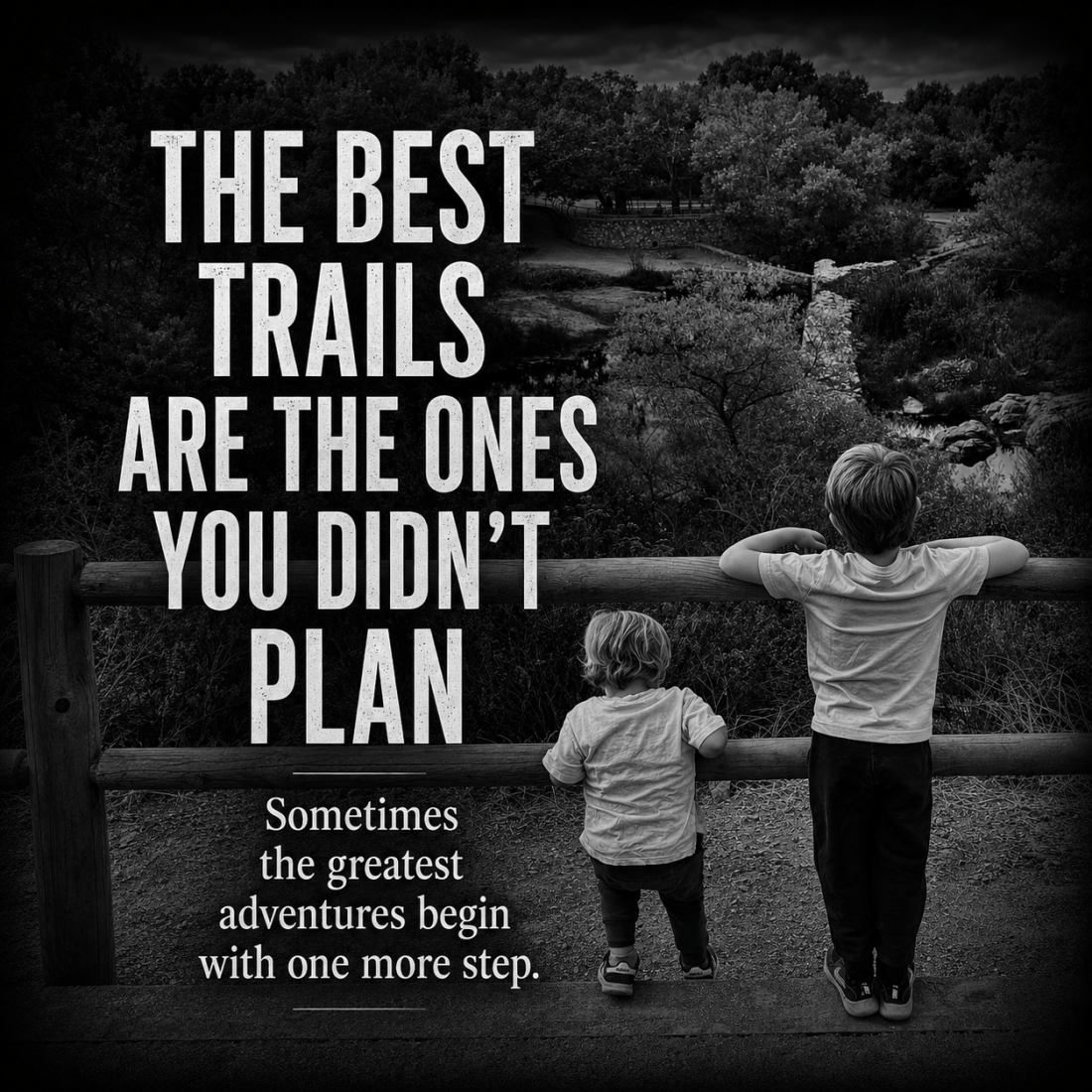
The Best Trails Are The Ones You Didn’t Plan

Yesterday we went for a family hike at Mission Trails, choosing a trail we had never explored before.

Standing in one particular rocky section of the trail, I suddenly wasn’t a forty-one-year-old dad anymore.

I was a little kid again.

I was back at Lake Jennings and Lake Cuyamaca, camping with my dad and grandpa. My sister and I would wander along the shoreline, climb over giant rocks, cut through the brush, and explore whatever happened to be around the next bend. We rarely knew exactly where we were going, and that was part of the adventure.

Yesterday, hiking with Brooks and Joseph, I had that feeling again.

We had planned to hike the Grasslands Trail. Starting from the dam, we were supposed to climb the stairs, complete the one-mile loop, and head back.

Instead…

We missed the turn.

Or maybe we ignored it.

Either way, we just kept walking.

The trail led us across wooden bridges, through clusters of trees, and eventually to a section where the path disappeared beneath the rocks. Brooks hopped from rock to rock while Joseph tackled them as if each one were Mount Everest. Before long we found ourselves looking down at the dam from the Grasslands Trail before making our way back toward the main path and eventually to the car.

It wasn’t the hike we planned.

It was better.

What struck me most wasn’t the scenery.

It was the difference between how the boys approached the trail and how Jillian and I did.

Brooks and Joseph were perfectly content to keep walking.

Sometimes they ran ahead.

Sometimes they stopped to examine a stick, a rock, or a patch of dirt.

Sometimes they wandered off the trail because something looked interesting.

Not once did they ask where we were going.

Meanwhile, Jillian and I had our phones out studying the trail map, trying to figure out where the path led. We even stopped to ask other hikers if they knew what was ahead.

Somewhere along the way, adults become uncomfortable with not knowing.

Maybe that’s just my anxiety talking.

Or maybe it’s something many of us slowly learn.

Before trying a new restaurant, we read reviews.

Before leaving the house, we check the weather.

Before taking a road trip, we map out gas stations and rest stops.

Before buying something, we compare prices.

We spend so much time trying to eliminate uncertainty that we sometimes remove the mystery from the experience itself.

Children don’t do that.

They see a trail.

And they start walking.

While writing this article, I came across an essay by Tim Mathis titled “Why Do People Go on Adventures? It’s So Simple That Even a Child Could Understand.” One idea especially resonated with me: children don’t need elaborate reasons to explore—they’re naturally curious. Somewhere along the way many of us trade that curiosity for certainty. Yesterday reminded me that maybe we’ve got it backwards.

That unfamiliar trail gave us something no map ever could.

Wonder.

Every turn raised another question.

Would there be another bridge?

Another climb?

Another overlook?

Where does this trail actually go?

The adventure wasn’t waiting at the destination.

It was living in the unanswered questions.

While thinking about that, I also came across a wonderful article from Local Passport Family about raising curious and creative kids. One of their ideas was that curiosity grows when children are given opportunities to explore, imagine, and discover things for themselves. Watching Brooks and Joseph yesterday reminded me that they weren’t looking for the destination—they were completely captivated by the journey.

As I thought about it later that evening, I realized I approach much more than hiking this way.

I want to know how the book ends before I write the first chapter.

I want to know exactly how much weight I’m going to lose before I commit to healthier habits.

I want to know whether an idea will succeed before I invest my time in it.

I want certainty before I begin.

But life rarely works that way.

A few days ago I wrote The Belt Isn’t Earned on Test Day, about trusting the process instead of focusing only on the outcome. Yesterday I wrote Adventure Is Closer Than You Think, reminding myself that meaningful adventures don’t require traveling across the country. This hike added another lesson to that list.

Sometimes you have to start walking before you can see where the trail leads.

That’s how writing works.

That’s how marriage works.

That’s how raising children works.

That’s how building a healthier life works.

That’s how building a better life works.

You don’t get the whole map.

You get the next step.

Yesterday I was hiking with my boys.

Thirty years ago I was hiking on camping trips with my Dad.

Maybe thirty years from now Brooks and Joseph will be out on a trail with children of their own.

I hope they leave room for a little uncertainty.

I hope they don’t always feel the need to know what’s around the next bend.

Because sometimes the best memories begin with a simple decision to keep walking.

And sometimes…

The best trails are the ones you never planned to take.


Continue the Journey

If today’s story resonated with you, you might also enjoy:


Further Reading:

Tim Mathis – “Why Do People Go on Adventures? It’s So Simple That Even a Child Could Understand.”

https://www.timmathiswrites.com/post/why-do-people-go-on-adventures-it-s-so-simple-that-even-a-child-could-understand


Local Passport Family – “Inspiring Imagination: 5 Tips for Raising Creative, Curious Kids”

https://www.localpassportfamily.com/2019/05/inspiring-imagination-5-tips-for-raising-creative-curious-kids.html

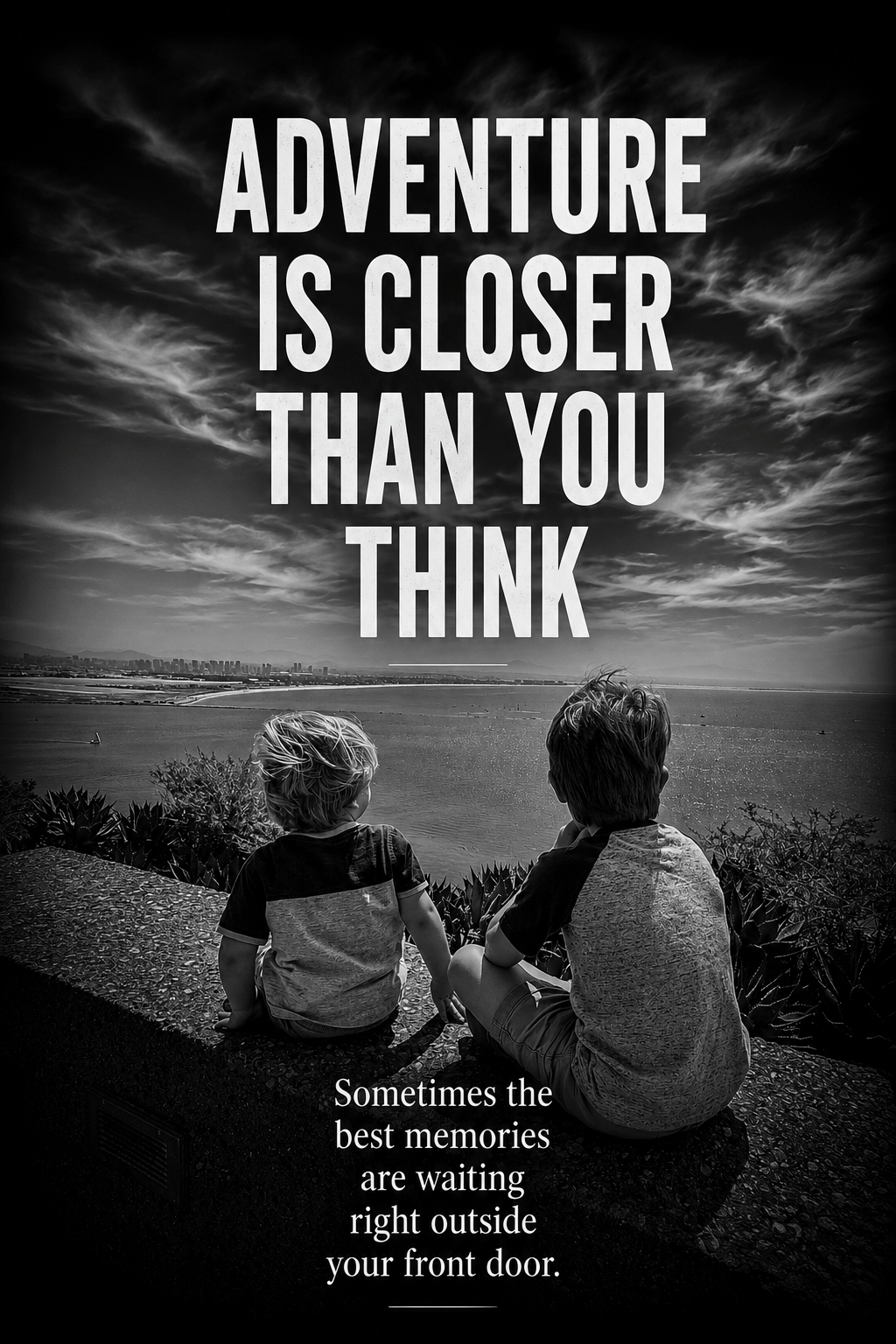
Adventure Is Closer Than You Think

If you’ve been following along for a while, you probably know about our Saturday Morning Matchas tradition. Our family loves exploring coffee shops together, and lately I’ve been searching for a gluten-free coffee shop where I could actually enjoy the pastries with everyone else.

Yesterday we found one.

A little place in Point Loma called Phattie’s.

Parking was a bit of a mess, but we eventually found a spot a couple of blocks away and walked over to the coffee shop. We ordered a gluten-free scone, a brookie, and a strawberry donut, along with a couple of matchas for Jillian and me while Brooks and Joseph shared an electric lemonade.

It may not sound like much, but after a long time of watching everyone else enjoy pastries while I sat them out because of my gluten allergy, it felt pretty special to simply join in.

From there we headed over to Cabrillo National Monument.

We wandered through the visitor center, stopped by the monument itself, climbed to the old lighthouse, looked out over the kelp beds, and took our time enjoying the ocean views. There was no rush to get anywhere else. It was just our family spending the morning together in one of the most beautiful places in San Diego.

Sometimes we forget that people travel from all over the world to visit places that are only a short drive from our front door.

Driving home, I realized how easy it is to overlook the place we call home.

We don’t need to board a plane to visit the beach, the mountains, the desert, or even a national park. It’s all right here.

We have the opportunity to give our boys incredible experiences without booking flights, reserving hotels, or spending months planning a vacation.

Yesterday wasn’t a vacation.

It wasn’t even a special occasion.

It was simply a Friday morning that Jillian and I both happened to have off from work.

While thinking about that, I came across an article from Food, Wine & Travel Magazineb about exploring your own backyard instead of always chasing the next faraway destination. It reminded me that adventure isn’t measured by how many miles you’ve traveled. Sometimes it’s simply about seeing familiar places with fresh eyes. Yesterday wasn’t memorable because we went far. It was memorable because we slowed down long enough to appreciate what was already around us.

Somewhere along the way, we start believing adventure has to be big.

Hawaii.

Disneyland.

Europe.

The next big vacation.

And while I hope our boys get to experience those places someday, there are incredible places they’ve never explored that are less than an hour from our driveway.

A few days ago I wrote Why Ordinary Days Matter More Than Big Moments, and I think yesterday became another reminder of that lesson. We spend so much time waiting for the next extraordinary experience that we sometimes overlook the extraordinary places already surrounding us.

So I started wondering…

When Brooks is older, will Cabrillo National Monument mean any less to him than another national park he visits someday?

Will Joseph feel like he missed out because we chose a staycation over a cross-country vacation?

Probably not.

Because climbing the lighthouse yesterday was exciting.

Walking along the cliffs and looking down at the waves crashing below was exciting.

Searching for whales.

Discovering old military bunkers.

Looking through the eye of a torpedo.

Running down the trails.

It was all an adventure.

Children don’t measure adventures by distance.

They measure them by wonder.

While writing this article, I also came across a piece from Banner Health encouraging parents to prioritize experiences over possessions. One idea especially resonated with me: children often remember the time we spend with them far longer than the things we buy them. Yesterday wasn’t memorable because we spent a lot of money or traveled very far. It was memorable because we explored together.

When we got home, Joseph went down for his nap.

The tile guy was still working on our bathroom.

Brooks and I went outside and played soccer.

We had dinner.

Put the boys to bed.

And I sat down to work on this project.

In many ways, the day ended like any other weekend day.

But somehow it was also filled with adventure.

Adventure isn’t measured in miles.

It’s measured in curiosity.

It’s measured in saying yes to opportunity.

It’s measured in leaving the house, exploring somewhere new, and being fully present while you’re there.

A few days ago I wrote The Scale Isn’t the Scoreboard, reminding myself that life can’t be measured by a single number. Yesterday reminded me of something similar: memorable days can’t be measured by how far we traveled or how much money we spent.

The boys probably won’t remember the name of the coffee shop.

They won’t remember how many steps we took.

They won’t remember how long we stayed.

But they’ll remember climbing the lighthouse.

They’ll remember looking out over the Pacific Ocean.

They’ll remember running down the trails.

They’ll remember discovering something new with Mom and Dad.

Because children don’t remember itineraries.

They remember adventures.

And sometimes the best adventures are the ones waiting just a few miles from home.

Continue the Journey

If today’s story resonated with you, you might also enjoy:

Further Reading:

Food, Wine & Travel Magazine – “Travel Locally: Why You Should Explore Your Own Backyard”
https://fwtmagazine.com/travel-locally-why-you-should-explore-your-own-backyard/

Banner Health – “Give Your Child Experiences, Not Material Things”
https://www.bannerhealth.com/healthcareblog/advise-me/give-your-child-experiences-not-material-things

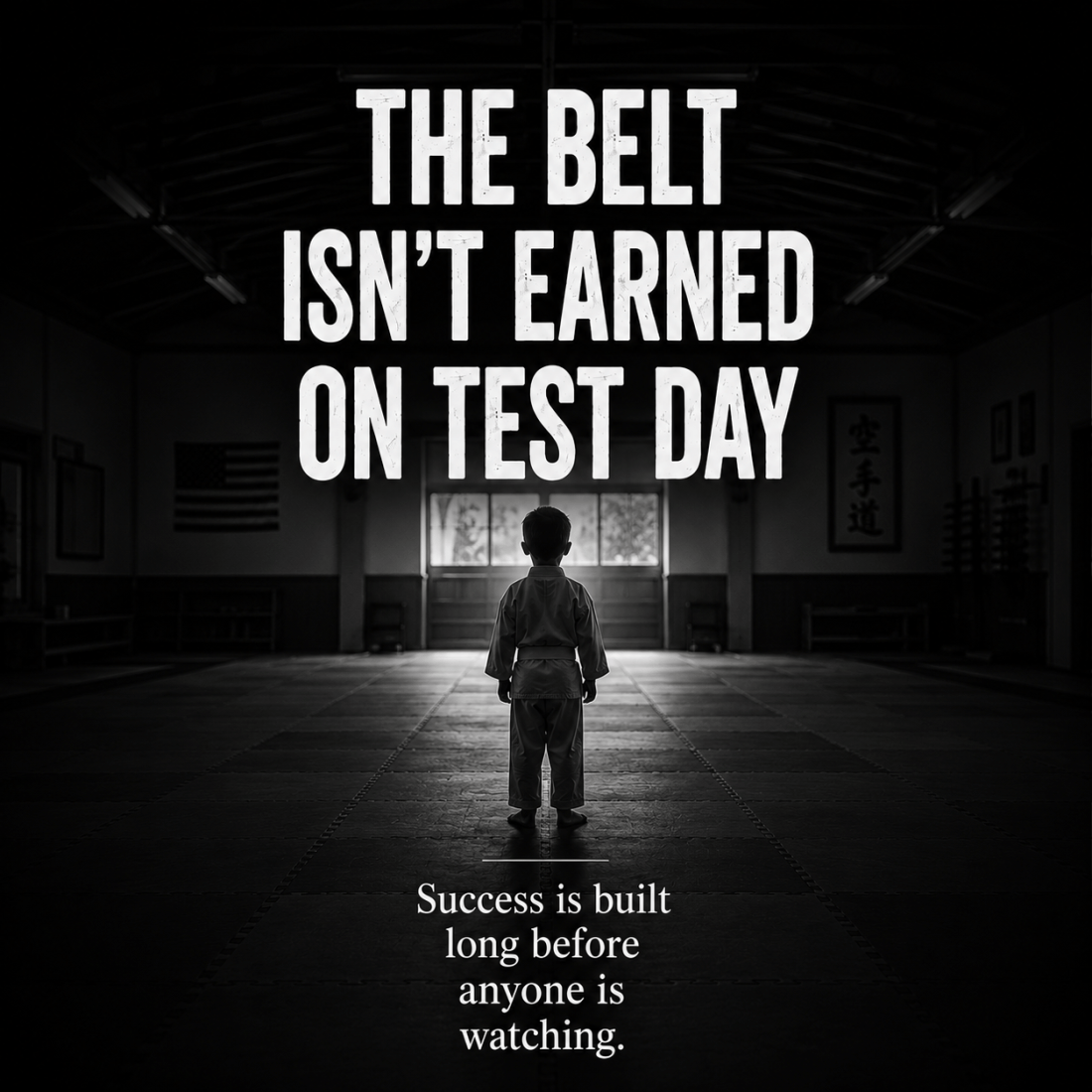
The Belt Isn’t Earned On Test Day

Brooks had karate class last night. Jillian brought him while I met them there after work so she could take Joseph home and get dinner started. My mom also came to watch for the first time.

Class started like it always does—with a discussion about stranger danger, some warm-ups, and then into their regular drills.

Brooks has really been enjoying karate this summer. A couple of his friends have been taking the class with him, and every week he looks forward to going. He was definitely having fun last night, but as class went on it became more and more apparent that he wasn’t remembering the moves or how to perform them correctly.

He kept looking over at me sitting on the benches, and I did my best to help by awkwardly miming the punches, kicks, and blocks from my seat.

It wasn’t working.

He finished class with a smile, we said goodbye to his friends and Grandma, and then headed to the car. On the drive home I knew we needed to have a conversation about practicing at home.

For some reason, karate isn’t like baseball to him.

If I ask Brooks if he wants to play catch or swing the bat, the answer is almost always yes.

Ask him if he wants to practice karate…

Not so much.

I told him his belt test was coming up in a few weeks and was honest with him.

Without practicing, I didn’t think he was going to pass.

I didn’t want to be too harsh. He’s only six years old, and I’m incredibly proud of him for showing up every week, trying something new, and most importantly, having fun. I still believe that enjoying what you’re doing is the most important part of youth sports.

But I also want him to experience the satisfaction that comes from working toward something and earning it.

While writing this article, I came across a thoughtful piece from The Simple Dad about encouraging kids to embrace failure through a growth mindset. One idea really stood out to me: our job isn’t to protect our kids from struggle, but to help them see that improvement comes through effort. That’s exactly what I hope Brooks learns from karate. Whether he passes this belt test or not, the real lesson is discovering that getting better almost always starts with practicing something you’re not very good at yet.

Unfortunately, he was still resistant to the idea.

So, being the dad, I had to make a rule.

Before tablet time each day, he has to go through each of his karate moves once.

Safe to say…

I wasn’t his favorite person in that moment.

While writing this article, I also came across a piece from Invicta Karate about the importance of practicing outside the dojo. Their point was simple: class is where you’re introduced to the techniques, but real improvement happens through the repetition between classes. Reading that made me smile because that’s exactly the conversation Brooks and I were having in the car. The belt test happens in front of an instructor, but the confidence to pass it is built at home.

As we drove home, I couldn’t help but think about my own life.

My mom laughed and reminded me that I was the same way when I took karate as a kid.

Apparently, not much has changed.

How many times have I expected to get better at something without really practicing?

How many times have I wanted the result more than I wanted the work?

I’m not going to become a better writer if I don’t keep writing.

I’m not going to become a healthier person if I don’t continue taking care of myself.

I’m not going to become a better husband or father if I don’t intentionally work at those relationships every day.

A few days ago I wrote The Scale Isn’t the Scoreboard, reminding myself that success is bigger than one number. Yesterday I wrote Some Days Ask More of Us Than We Expected, a reminder that life will occasionally interrupt our plans. Both of those lessons point to the same truth:

Progress still requires practice.

We all have a belt we’re chasing.

Maybe it’s a promotion.

A finished novel.

A healthier body.

A stronger marriage.

A closer relationship with our kids.

Whatever it is, we all want the belt.

What we don’t always want is the practice.

We want success without the work.

Instant gratification without the repetition.

Recognition without the discipline.

Life just doesn’t work that way.

That’s one of the reasons I started The Young Napoleon Project in the first place.

Over the last month I’ve written every day.

Read every day.

Walked every day.

Done my push-ups, sit-ups, and squats every day.

None of those things are particularly exciting on their own.

They’re practice.

And slowly, almost without noticing it, the practice is changing me.

Earlier this month I wrote The Reset Never Came, promising myself that I wouldn’t start over every time life got hard. Since then I’ve learned that progress isn’t built by dramatic moments of motivation. It’s built by ordinary days of consistent effort, something I explored in Why Ordinary Days Matter More Than Big Moments.

Brooks may only take karate for one summer.

If that’s the case, then maybe one day he won’t remember all of his kicks, blocks, or forms.

But that’s okay.

Because karate isn’t the lesson.

The lesson is.

Every sport he plays.

Every hobby he picks up.

Every dream he decides to chase.

Will ask the same thing of him.

Put in the work.

Practice consistently.

Keep showing up.

Improvement comes from repetition long before it comes from recognition.

The belt isn’t earned on test day.

It’s earned on all the ordinary days before it.

One day Brooks is going to earn that belt.

I don’t really have any doubt about that.

And when he does, I’ll be sitting on the bench cheering louder than anyone else.

Not simply because he passed the test.

But because of all the work no one else saw.

Because that’s what I’ll really be celebrating.

And maybe that’s a lesson all of us need to be reminded of from time to time.

Continue the Journey

If this story resonated with you, you might also enjoy:

Further Reading:

The Simple Dad – “Encouraging Kids to Embrace Failure: A Dad’s Guide to Growth Mindset”
https://thesimpledad.com/encouraging-kids-to-embrace-failure-dads-growth-mindset/

Invicta Karate – “Unlocking Excellence: The Advantages of Self-Practice in Karate Beyond the Dojo”
https://invictakarate.co.uk/unlocking-excellence-the-advantages-of-self-practice-in-karate-beyond-dojo/

Some Days Ask More Of Us Than Expected

Yesterday started like almost every other day.

I didn’t want to get out of bed, but eventually I pulled myself up. I stepped on the scale, did my stretches, push-ups, sit-ups, and squats, got ready for work, dropped Brooks off at my sister-in-law’s house, and headed to the office for my usual protein shake and matcha.

There was nothing to suggest the day would be any different.

But when I got to work something just felt off.

I didn’t feel like myself.

I was anxious and restless. I tried to convince myself it was just nerves about USA’s World Cup match later that evening, so I walked down to the cafeteria for some scrambled eggs in an effort to get my mind off things.

That didn’t work.

Throughout the morning, even while walking during my breaks, I couldn’t shake the feeling.

I know this feeling well. I’ve dealt with anxiety since I was a kid. Over the years I’ve gone to therapy and I take medication to help manage it, and thankfully it’s something I’ve had under control for quite a while.

After my lunchtime walk I came back inside, ate my yogurt and string cheese, and cleaned up my desk.

Then I felt it coming.

A panic attack.

My chest tightened.

My arms tingled.

It felt like a fog had settled over my brain.

This wasn’t my first panic attack. I had several in succession a couple of years ago, but I hadn’t experienced one in over a year.

My mind immediately raced to thoughts of going to the emergency room.

Instead, I stayed where I was.

I kept breathing.

I picked one spot on the wall and focused on it.

Slowly the symptoms began to fade, but when they did I was left feeling anything but normal.

When I woke up yesterday morning, I thought I knew exactly what kind of day I was going to have.

Work.

Family dinner.

Watch the soccer game.

Get ready for tomorrow.

Work on things here while watching television with Jillian before bed.

We make plans.

Sometimes life has other ideas.

We wake up assuming we know what’s waiting for us.

More often than not, we’re wrong.

Some days bring unexpected celebrations.

Others bring heartbreaking news.

Some become stories we’ll tell for years, while others become days we simply try to survive. Earlier this month I wrote Some Days You Just Survive, and yesterday reminded me that those days don’t disappear just because we wish they would.

Yesterday I had my first panic attack in over a year.

But the day wasn’t over.

I still had work to finish.

I still had to meet with the contractor working on our bathroom.

I still had to celebrate my nephew’s birthday.

I still wanted to cheer on the United States during the World Cup match.

I still had two little boys who needed to get ready for bed.

Life rarely pauses while we’re trying to catch our breath.

As much as the panic attack disrupted my day, it couldn’t stop the rest of life from happening around it.

And maybe that’s the lesson.

We don’t get to dictate what happens to us throughout the day. Unexpected phone calls, bad news, injuries, panic attacks—life has a way of reminding us that we’re not in control of every chapter.

As much as we may start the day feeling fearless, motivated, strong, and confident, there’s no guarantee we’ll end the day feeling that way.

And that’s okay.

We should expect that life will occasionally ask more of us than we planned to give.

What we should expect from ourselves is that we keep showing up.

Not because we feel okay.

Not because we don’t need time to process what happened—because we absolutely should take that time when we need it.

But because there are people depending on us.

Our kids need us.

Our partners need us.

And ultimately, we need ourselves to keep showing up so we can work through whatever life has placed in front of us.

While writing this article, I came across a piece from Her View From Home titled “Here’s to the Dads Who Show Up.” It celebrates the who quietly continue showing up for their families day after day, often without recognition. Reading it reminded me that fatherhood isn’t about having perfect days. It’s about continuing to be present, especially when the day has been anything but perfect.

I also found an article from Mindful called “How to Be a Resilient Parent.” One of the things I appreciated most was that it wasn’t about pretending difficult emotions don’t exist. It was about acknowledging them, taking care of yourself, and continuing to move forward with intention. That’s a philosophy I hope to keep learning throughout this project.

Yesterday I wrote Why Ordinary Days Matter More Than Big Moments, and I still believe that.

Yesterday was an ordinary day.

It just happened to go sideways.

I wasn’t the best version of myself for the rest of that day.

But I was the best version of myself that I could be given the circumstances.

Sometimes that’s enough.

Earlier in this project I wrote The Scale Isn’t the Scoreboard, reminding myself that one number doesn’t define success. Before that, I wrote The Reset Never Came, a promise that one difficult day wouldn’t erase all the progress that came before it.

Yesterday tested both of those lessons.

Ordinary days matter.

That doesn’t mean they’re always easy.

Today I woke up again.

Jillian laid with me for a few minutes before I got up.

I stepped on the scale.

Did my stretches.

My push-ups.

My sit-ups.

Ate breakfast.

Dropped Brooks off at my mom’s house.

And headed back to work for another ordinary day.

Not because yesterday was easy.

Not because I wasn’t nervous another panic attack could happen.

But because every day is worth the effort, even when you don’t know what’s coming.

Every day has the potential to ask something unexpected of you.

Yesterday certainly did.

Tomorrow will have the chance to as well.

So take a moment to dust yourself off.

Ask for help if you need it.

Take care of yourself.

Then get up and show up again.

Because some days ask more of us than we expected.

And tomorrow might ask again.

Continue the Journey

If this story resonated with you, you might also enjoy:

Further Reading

Why Ordinary Days Matter More Than Big Moments

When I look back on my life and the memories I’ve made, you might assume I remember the big moments.

And to an extent, you’d be right.

The trip to Hawaii when I was a senior in high school.

The many RV trips through the Southwest with my aunt and uncle.

The weddings I’ve attended.

The funerals.

Christmas mornings.

Birthdays.

Those moments deserve to be remembered.

But when I think about the memories that bring me the most joy, those aren’t the first ones that come to mind.

Instead, I think about drinking coffee with my grandparents around their dining room table.

Playing checkers with my grandpa on the back patio.

Making cookies with my grandma.

My uncle teaching me to body surf.

My dad coaching my baseball teams.

Going to work with my mom and getting to eat lunch in the cafeteria.

The ordinary moments that maybe weren’t so ordinary after all.

Because while the big moments deserve to be remembered, that’s not where life actually happens.

Over the last four weeks of writing these articles, I haven’t written much about extraordinary days.

I’ve written about looking for the robot at Lowe’s.

Walking the boys to the baseball fields.

Swimming lessons.

Coffee shop dates.

Playing cribbage with my dad.

Family hikes.

Papa Pandas.

Monday night softball.

None of those days started with the intention of creating a lifelong memory.

I was simply living my life.

Maybe that’s exactly why they’ll be remembered.

As parents, we’re constantly trying to create magical moments.

Family vacations.

Trips to the zoo.

Christmas mornings.

Birthday parties.

We spend months planning experiences that we hope our kids will remember forever.

But what if that’s not what they’ll remember most?

What if, years from now, they remember holding your hand on a walk?

Throwing rocks into a stream.

Getting ice cream after running errands, something I wrote about in When Errands Turn Into an Adventure.

Playing Catch at the neighborhood ball fields.

Reading one extra chapter before bed.

Doing push-ups with Dad before the cartoons came on, like I shared in Little Eyes Are Always Watching.

What if we’re working so hard to create extraordinary memories that we overlook the ordinary moments that are quietly becoming extraordinary to them?

While writing this post, I came across a wonderful article from The Artful Parent called “8 Everyday Moments Children Remember More Than Parents Realize.” It reminded me that children often attach meaning to the moments we barely notice—the conversations around the dinner table, bedtime stories, neighborhood walks, and all the little routines that quietly become part of their childhood.

That idea is also supported by research from Harvard’s Center on the Developing Child. Their work on “Serve and Return” explains that children grow through thousands of small, responsive interactions with the adults who care for them. Healthy relationships aren’t built during one incredible vacation. They’re built one ordinary moment at a time.

Honestly…

Wouldn’t that be great?

Because most of our lives aren’t extraordinary.

They’re busy.

We go to work while our kids go to school.

We come home to homework and housework.

Practices.

Games.

Laundry.

Dishes.

Bedtime.

And because life feels so busy, we convince ourselves that we need to escape it every once in a while to make memories.

But maybe we’ve been looking in the wrong place.

Maybe memories are made around the dinner table.

On walks around the neighborhood.

By reading one more story before bed.

By letting them stay at the creek five minutes longer.

By giving them a hug before school.

By buying a small treat while you’re already out running errands.

If that’s true, then we don’t have to wait for vacation to build a childhood they’ll remember.

We can do it today.

Tomorrow morning I’ll wake up, go through my morning routine, have breakfast, take Brooks to my mom’s house, and head to work.

After work we’ll probably have dinner.

I’ll do a few things around the house while a soccer game plays in the background.

Then I’ll help put Brooks to bed while Jillian puts Joseph down.

On paper…

That sounds like a completely ordinary day.

But what if Brooks decides to do push-ups with me again?

What if something funny happens over breakfast?

What if we spend dinner laughing about our day?

What if Brooks and I celebrate the same goal during the soccer game?

What if he reads more of the bedtime story to me than I read to him?

What if what began as an ordinary Tuesday quietly becomes one of the days he’ll remember years from now?

I’m done waiting for extraordinary moments.

Instead, I’m going to pay better attention to the ordinary ones.

Because life isn’t lived between vacations.

It’s lived on Tuesday nights.

And I have a feeling that’s where the memories are made.

Continue the Journey

If this story resonated with you, you might also enjoy:

From My Reading List

Every once in a while I come across an article, book, or podcast that makes me stop and think. If today’s post resonated with you, you might enjoy these as well.

The Scale Isn’t The Scoreboard

Yesterday I stepped on the scale and it had gone up again.

I launched The Young Napoleon Project twenty-eight days ago and had only managed to lose one pound.

But instead of getting frustrated, I got honest with myself about what had actually been happening over the last four weeks.

When I think about it, my diet really hasn’t been all that great.

There have been family barbecues, birthday parties, Papa Pandas events, Father’s Day, ice cream date with the family, milkshakes after a rough day, and takeout when making dinner just wasn’t going to happen. If I’m being completely honest, I’m not surprised that I’ve only lost a pound.

What does surprise me is everything else that has happened over those same twenty-eight days.

I’ve written and published twenty-eight blog posts.

I’ve averaged more than 11,000 steps a day, reaching my 10,000-step goal on all but four days.

I’ve completed more than 400 push-ups, sit-ups, and squats simply by adding one repetition every day.

I’ve read nearly 800 pages by committing to just twenty-five pages a day.

I’ve built systems that help hold me accountable instead of relying on motivation alone.

I’ve taken the boys on walks, to the baseball fields, to the zoo, on family hikes, and on coffee shop dates.

I’ve built habits that I’m consistently tracking, and maybe the biggest accomplishment of all is that this project has now lasted longer than any previous attempt because The Reset Never Came.

The scale can only measure one aspect of my life.

That’s why it isn’t the scoreboard for this project—or for the man I’m trying to become.

Imagine if I had lost forty pounds this month…

…but I hadn’t done any writing.

I hadn’t read a single page.

I hadn’t built this project.

I hadn’t played catch with Brooks, gone swimming with Joseph, or spent evenings walking with my family because I was consumed with calories, macronutrients, workouts, and the next number on the scale.

Would that really have been a successful month?

I don’t think so.

Because I’ve lived that version of success before.

Years ago, I lost the weight.

I reached my goal.

But I did it in a way that wasn’t healthy for me physically or mentally. I restricted myself so much that life stopped being enjoyable. I exercised so intensely that I hurt almost every hour of every day.

The number on the scale went down.

But so did the quality of my life.

When I restarted this journey, I promised myself it would be different.

This time I wasn’t just trying to lose weight.

I was trying to build a sustainable life.

A way of eating that allows me to enjoy birthdays and family dinners without giving up on my goals.

An exercise routine that gives me the energy to coach my boys’ baseball teams instead of leaving me too exhausted to play catch in the backyard, something I wrote about recently in Playing Catch.

A lifestyle that lets me write every morning, read every day, be present with Jillian and the boys, and still become healthier over time.

That’s what victory looks like now.

Not just the number on the scale.

I’m not saying losing weight isn’t important.

It is.

I need to lose the weight.

I’m not saying I don’t need to be more accountable with my diet.

I do.

And I’m certainly not saying the scale doesn’t matter.

Because it does.

It just isn’t the only thing that matters.

If you think about sports, baseball has a scoreboard.

But the scoreboard doesn’t tell you everything.

The best hitters in baseball fail seven out of every ten at-bats.

Teams that make the playoffs still lose dozens of games every season.

Yet those players still step into the batter’s box.

They still show up after losses.

They still give maximum effort.

The scoreboard doesn’t measure hustle.

It doesn’t measure the extra work that happens before anyone ever walks onto the field.

It simply records one part of a much bigger story.

The bathroom scale is exactly the same.

It measures my weight.

It doesn’t measure whether I’m becoming the husband I want to be.

It doesn’t measure whether I’m becoming the father I want to be.

It doesn’t measure whether I’m keeping promises to myself.

It doesn’t measure whether I’m building habits that my boys are watching every morning, something I reflected on in Little Eyes Are Always Watching.

It doesn’t measure whether I’m building a life I’m proud of.

So I’m going to keep stepping on the scale every morning.

I’ll celebrate when the number goes down.

I’ll honestly evaluate why it went up.

Then I’ll put it back under the bathroom sink and go live my life.

Because the scale isn’t the scoreboard I’m using anymore.

When this project is over, success won’t be determined by one number.

It will be determined by the life I built along the way.

Continue the Journey

If this story resonated with you, you might also enjoy:

Further Reading/Listening:

Why Fathers Need Friends

As a kid I had a lot of friends. There were friends from baseball, church, classmates that I got together with for birthdays, pool parties, and play dates. But as I got older some of those friendships disappeared. I became introverted and shy, had trouble talking to people I didn’t know, and that probably only got worse through high school. By the time I entered adulthood, I didn’t have many friendships I could fall back on.

Then in college I reconnected with some people I had known when I was younger, joined an already established group of friends, and created some strong bonds that would eventually be tested once we started getting married and having kids of our own. Suddenly, Friday nights out, random baseball games, and last-minute rounds of golf became much harder to come by. We had to become intentional about making plans. Friendships became more group-text based and less face-to-face.

Since then I’ve missed those friendships—not because they’ve gone away, but because the connections aren’t as frequent. I turn down more invitations than I accept because of family commitments, something already on the calendar, or sometimes because I’d simply rather be home with Jillian and the boys. That’s a choice I’m making, and I don’t regret it. But I do recognize the tradeoff.

Thankfully, I have a few recurring events on my calendar that give me the opportunity to reconnect with friends. They get me out of the house, give me a chance to talk with other dads, catch up on life, vent about work, celebrate our kids, and occasionally enjoy an adult beverage together. I’ve written before about Papa Pandas and about my Monday Night Softball team. Looking back, I realize those weren’t really stories about a volunteer group or a softball team. They were stories about friendship.

Yesterday Brooks and I went to a birthday party for one of his buddies—the son of one of my closest friends. Most of the adults there were people I used to spend countless hours with, and now I only see them on special occasions. Driving home, I found myself wondering:

What happened?

Why do friendships become so much harder to maintain as we get older?

Why is it so difficult to make new friends as adults?

As it turns out, this isn’t just my experience. Over the last several years, researchers have begun talking about what some call the “male friendship recession.” One widely discussed survey found that the percentage of men reporting six or more close friends has dropped dramatically over the past few decades, while the number of men reporting no close friends has steadily increased. (fatherhoodframework.substack.com)

I think the answer is actually pretty simple.

Time.

And opportunity.

As kids, we’re surrounded by potential friends every day. We spend six hours sitting next to classmates, run around together at recess, head to baseball practice after school, go to church on Sundays, attend youth groups, karate classes, Scouts, birthday parties, and play dates. We’re constantly placed in environments where friendships naturally develop, and our biggest concern is usually just having fun.

As adults, we’re the ones taking our kids to school before heading to work. We spend eight hours behind a desk or on a job site, then rush to daycare pickup, make dinner, shuttle kids to practices, help with homework, get everyone to bed, and collapse under the weight of the day. Weekends are filled with games, tournaments, grocery shopping, yard work, paying bills, and trying to carve out a little time with our spouse before Monday rolls around again.

There simply isn’t much room left.

Friendships have to become more intentional as adults. They rarely happen by accident anymore. If we want to maintain the relationships we’ve built—or create new ones—we have to make space for them on the calendar just like we do doctor’s appointments, baseball practice, or date night.

And that intentionality matters.

Research has found that fathers who maintain close friendships tend to feel less isolated and are better equipped to handle the stresses of raising young children. One large survey found that nearly a quarter of fathers reported feeling isolated after becoming dads, while fathers with close friendships experienced lower stress and better overall well-being. (Ipsos)

That’s why I don’t see friendships as a distraction from being a good father.

I see them as part of becoming one.

Spending time with friends gives me the opportunity to vent a little, laugh a little, and realize I’m not the only dad navigating tantrums, sleepless nights, youth sports schedules, and all the uncertainty that comes with raising kids. It reminds me that other dads have the same fears, the same hopes, and many of the same questions that I do.

When I come home after those nights, I’m usually more patient.

A better listener.

A better husband.

A better father.

Papa Pandas isn’t just an excuse to get out of the house for dinner and drinks.

Softball isn’t just a way to get some exercise.

They’re communities.

They’re support systems.

They’re reminders that I don’t have to figure this whole fatherhood thing out by myself.

When I wrote Every Season Comes to an End, I reflected on the friendships I’ve built through Papa Pandas and how one day my season there will eventually end. That only reinforced something I’ve been learning over the last year: friendships don’t survive because we care about them. They survive because we continue showing up.

One day my kids will be older, and hopefully life will slow down a little. Maybe my friendships will begin to look more like my dad’s old Minute Men softball team—a group of guys who still get together for lunch decades after they stopped playing. I hope so.

Until then, I’m going to keep being intentional about maintaining the friendships I already have while remaining open to new ones.

Because in the end…

It isn’t really about the meetings.

Or Monday night’s batting average.

Or the dinners.

It’s about showing up for the people who make my life richer, challenge me to become a better man, and remind me that I don’t have to navigate fatherhood alone.

When I come home after those dinners, meetings, or Monday night games, I’m not just a guy who got out of the house for a little while.

I’m a better husband.

A better father.

And, I hope, a better friend.

Continue the Journey

If this story resonated with you, you might also enjoy:

Further Reading

If you’d like to explore this topic further, these are excellent resources: