The other night I came home from work. It had been a long day at the office and I was already spent. Then my youngest son decided he had also had a rough day, and it was about to get rougher.
He had something going on, maybe a cold or something with his ears, but he wanted his mom and she was busy trying to make dinner. My father-in-law and his girlfriend had come over to eat with us, and Jillian had worked later than normal. It was a bit of a perfect storm, and Joseph was the thunder and the lightning.
I tried holding him while we watched TV, but he wasn’t having that. He was tossing and turning and clearly not having a good time, so eventually I decided that he and I would go sit in his room for a while.
I thought maybe we could read a book, play with some toys, or just sit together in his rocking chair, but those weren’t viable options for him. Unfortunately, he just didn’t want me, and I was his only option.
I tried to be there for him. I tried to figure out what was wrong. I tried laying on the floor with him. None of it worked.
So I sat in the chair and gave him some space until it was time for dinner.
That was not the plan for the evening.
My plan was to come home, have dinner with the family, do my evening chores, get myself ready for the next day, help get the kids to bed, complete a weight training session, take a shower, and watch some TV with Jillian while I worked on this project.
But those plans disappeared.
Instead, I was frustrated, felt helpless, and by the end of the night was emotionally and physically drained.
We tend to measure a good day by the progress we make. The tasks completed, the steps taken, the calories burned, the goals accomplished. We look at the scoreboard at the end of the day and decide whether we succeeded or failed.
At least that’s how I tend to measure my days.
The problem with that is that, by those standards, not every day is going to be a good day.
Some of the most important things we do throughout the day can’t be quantified. They aren’t on a checklist. They aren’t tracked on our smart watches or phones. They aren’t measured by the number of emails we sent or blog posts we wrote.
They are sitting with your son when he’s having a hard time.
They are being present with family around the dining room table.
They are making the choice to stop worrying about being productive for a moment and simply be present instead.
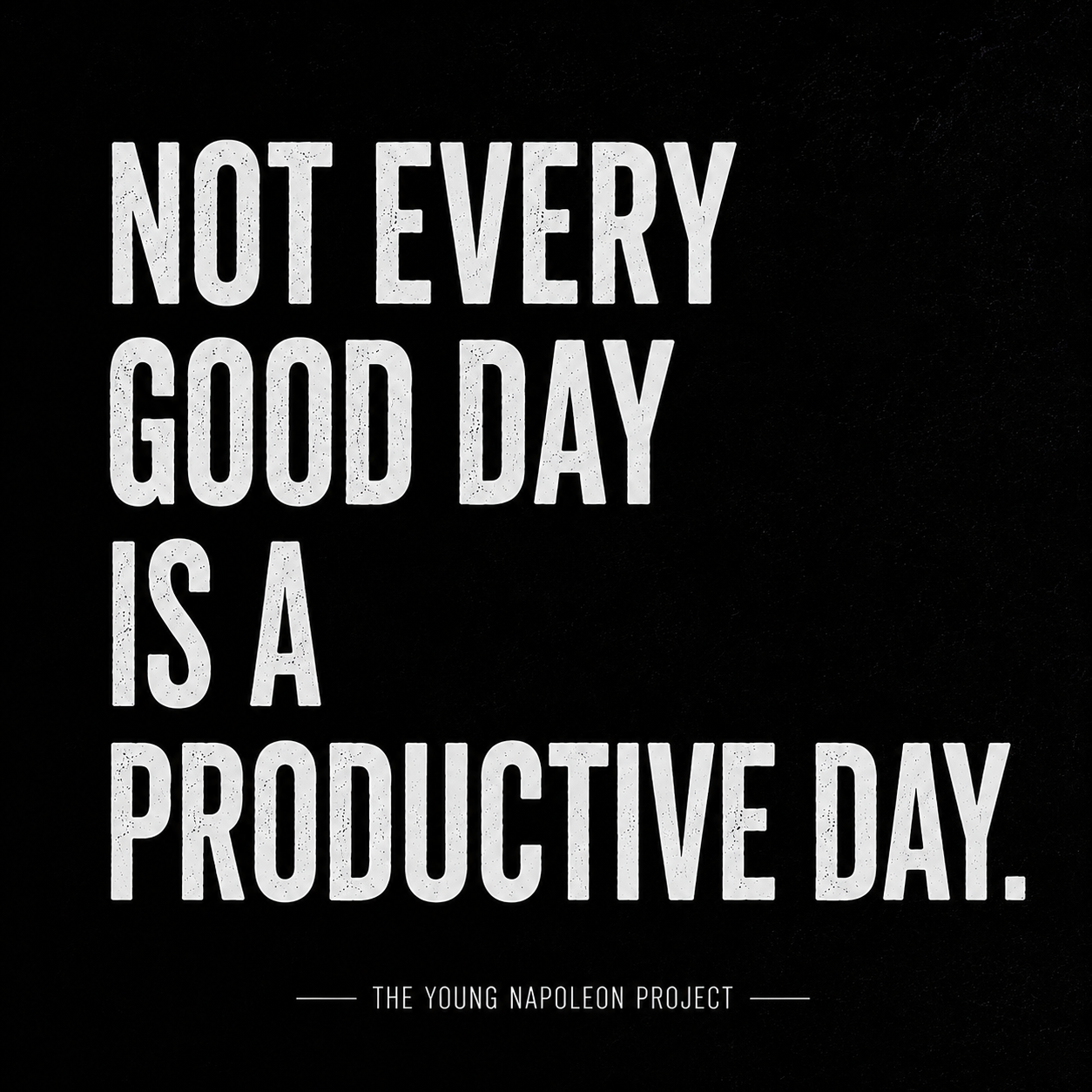
Not every good day is a productive day.
And not every productive day is a good day.
They aren’t mutually exclusive, and they don’t always overlap.
Some of the best days are the ones where very little gets accomplished because you were too busy making memories, helping someone who needed you, or simply enjoying the people around you.
This project is built around tracking all sorts of statistics. I’m tracking my weight, my steps, my food intake, my actions, my pages read, my habits, and the time I put into the project. All of those things matter for the success of this project.
But there are things that matter more.
Things that can’t be seen on a scoreboard or spreadsheet.
Success doesn’t always mean getting things done.
Sometimes success means being the person you want to be.
It means being present.
Showing up.
Listening.
Showing affection.
Being there in the moment.
Because those things can make for a great day, even if it isn’t a productive one.


