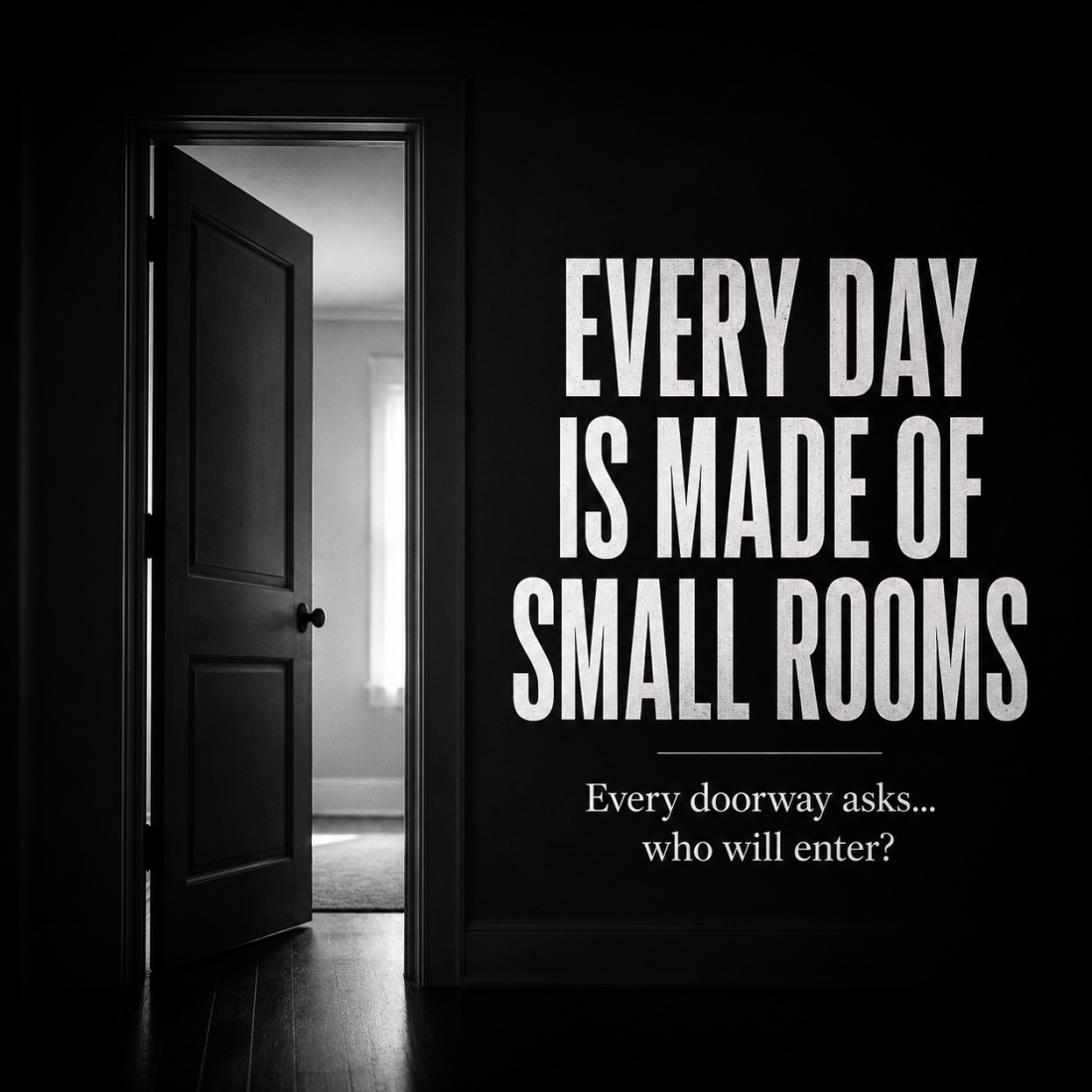
Every Day Is Made Of Small Rooms

Let’s start off with a question.

I want you to go back to yesterday and think about what you did. Not what you accomplished. Not what happened to you. Not who you talked to.

No, I want you to think about how many rooms you walked in and out of.

How many doors did you open and close?

The bedroom. The bathroom. The living room. The kitchen. The garage. Your car. The office. A conference room. Your kid’s classroom. The gym.

You were in a lot of rooms yesterday.

You probably had to stop and really think about them to remember them all.

We move through countless rooms every day and rarely notice them.

When you look back on your life, you probably think of the places where everything changed. The wedding altar. The graduation stage. The hospital room where your children were born. Those places matter because life-changing events happened there.

But you’ve only visited those places a handful of times—sometimes only once.

Most of our lives happen somewhere much less remarkable.

They happen in the ordinary rooms we enter every day.

The dining room isn’t just where you eat. It’s where your family gathers to talk about the day.

The office isn’t just where you work. It’s where you serve so you can provide for the people you love.

The classroom isn’t just where you learn. It’s where curiosity grows.

The gym isn’t just where the weights are kept. It’s where you keep promises to yourself and stay healthy for the people counting on you.

Every room we enter has a purpose.

But every room also asks something of us.

We talked before about how hallways aren’t meant to be homes—that eventually you have to turn the doorknob and step into the room if you want to experience life.

But before you cross that threshold, something else happens.

The room quietly asks a question.

Who are you while you’re in here?

Who are you when you’re sitting at the dining room table with your kids?

Who are you when you’re coaching their baseball team or taking them to the doctor?

Who are you when your boss needs something from you and you already have a mountain of paperwork sitting on your desk?

Who are you when you finally sit down next to your spouse after a long day?

It’s still you in every one of those rooms.

But each room asks for a different part of you.

Here’s where we run into trouble.

Sometimes we leave one room without ever really leaving it.

We bring work home with us—not physically, but emotionally.

We bring the frustration from work to the dinner table.

We bring the exhaustion from parenting into the office.

We bring the regret from binge eating into the gym and wonder why we can’t give our best effort.

The room changed.

We didn’t.

We failed to become the version of ourselves that the new room needed.

And because of that, we become unbalanced. Frustrated. Disconnected.

Our identity—and the way other people experience us—isn’t defined by life’s biggest decisions.

It’s defined by how we show up in the room.

How we walk into the office.

How we walk through the front door after work.

How we speak to our spouse.

How we listen to our children.

How we train when nobody is watching.

Every room becomes another opportunity to decide who we’re going to be.

Tomorrow you’ll probably walk through many of the same doors you walked through today.

The bedroom.

The kitchen.

The office.

The garage.

The living room.

The gym.

The rooms won’t be different.

But you can be.

Because a meaningful life isn’t built only in extraordinary places or extraordinary moments.

It’s built one ordinary room at a time.

Continue the Journey

If this article resonated with you, here are a few more reflections that explore the same ideas from different perspectives:

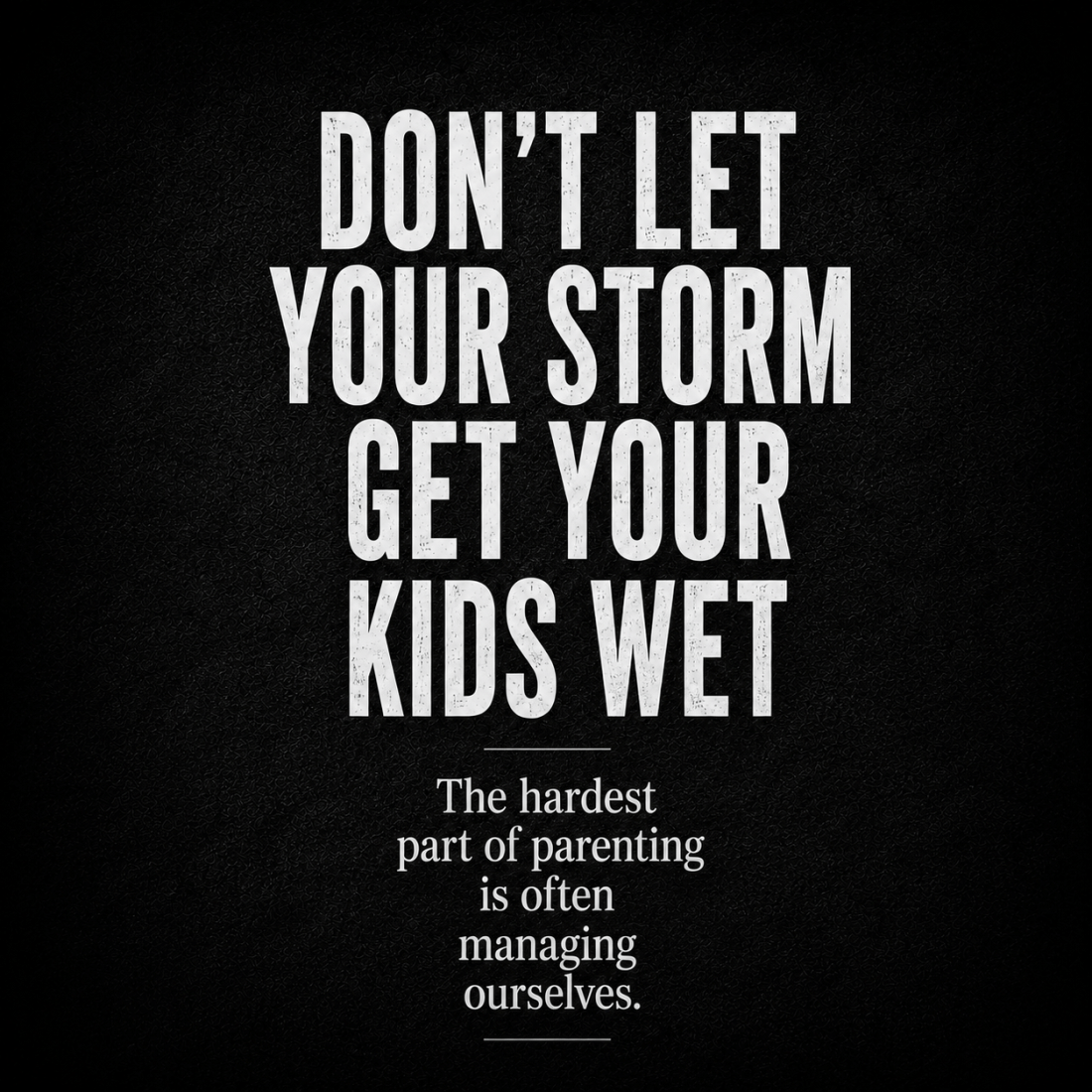
Don’t Let Your Storm Get Your Kids Wet

I was scrolling through social media the other night when I came across a quote that stopped me in my tracks:

“Don’t let your storm get your kids wet.”

I found that to be profound because it’s something I struggle with more often than I’d like to admit. After reading it, I sat with it for a while and decided that I needed to be more intentional about who I was showing up as in front of my boys.

Yesterday put that to the test.

I don’t talk about work much here because it’s not really relevant to what I’m trying to build, but yesterday was a frustrating day. Without going into detail, I just felt like I was destined for something more, and that feeling weighed on me heavily as the day went on. I ended up leaving work late and getting to Brooks’s karate class just in time.

He did great.

He has been practicing all week, and it showed. He was more confident, more focused, and had clearly improved.

But with where I was mentally, I found myself focusing on the things he could still be doing better instead of celebrating how far he’d already come.

On the drive home, I started talking about those things before I caught myself.

I was letting my storm get him wet.

I made the conscious decision to stop and instead praise the improvement, because that’s what he needed to hear.

When doing research for this post, I came across an article from Lead You First about praising effort instead of innate ability. It argued that recognizing persistence, improvement, and hard work encourages people to keep growing rather than fearing mistakes. That is what Brooks needed from me in that moment. He didn’t need another list of things to do better just because that what I had chosen to focus on. He needed to know that the work he’d already put in mattered. It reminded me of something I wrote in The Belt Isn’t Earned on Test Day. Progress isn’t measured by perfection—it’s measured by growth.

After dinner, my mind immediately shifted back to everything that still needed to be done. I was behind on my work for this project. I had skipped my daily reading during my breaks because of how frustrated I’d been at work. I hadn’t taken enough steps. The dishes still needed to be done. The trash cans needed to go out. I still had to get ready for tomorrow.

I could feel the storm clouds gathering.

The boys were in the living room, so I walked out and sat on the couch. Brooks climbed up beside me. I could tell he wasn’t there to cuddle.

He was there to create chaos.

And in that moment I had a decision to make.

Do I brush him off and leave him standing out in the rain, letting him get soaked too?

Or do I open an umbrella and keep us both dry for a little while?

For the next thirty minutes we wrestled across the couch as he tried to escape through fits of breathless laughter. Joseph eventually joined the fray until Jillian whisked him away for his bath.

The work was still waiting for me.

But so were my boys.

That moment reminded me of A Life, Not a Collection of Parts. Spending time with my boys wasn’t taking me away from the project—it was part of the life this project is supposed to help me build.

Later that evening, after the kids were in bed and the chores around the house were finished, I sat down to work on things here and came back to that quote.

“Don’t let your storm get your kids wet.”

My kids shouldn’t become collateral damage because I had a rough day.

That’s not fair to them.

I’m not saying that as dads—or moms—we should bottle up our emotions, because that isn’t healthy either. Our children should know that adults have hard days. They should see that it’s okay to be honest about how we’re feeling.

In doing some further reading I found an article from ReachLink about what it calls “dad rage.” One point that stood out to me was that anger is often a secondary emotion, masking things like stress, exhaustion, disappointment, or feeling overwhelmed. That resonated with me because, if I’m honest, the frustration I carry home usually isn’t about my kids at all. It’s about everything that happened before I walked through the front door. Recognizing that doesn’t excuse my reactions, but it does help me understand them—and gives me the opportunity to respond differently.

Our emotional responses to things outside our homes aren’t burdens our children should have to carry.

If I’m being honest, this isn’t something I’m naturally good at.

I wear frustration on my face.

When I’ve had a bad day, people can usually tell.

Whether it’s stress from work, my back hurting, frustration while coaching, or simply running out of patience as a dad, my storms have a way of becoming everyone else’s weather.

And that’s something I want to change.

We all have storms in our lives.

The question is…

Who are we allowing to get soaked by them?

It also made me think back to There Is Always One More Thing. The work is always waiting. The responsibilities never disappear. But that’s exactly why we have to be intentional about the people standing in front of us instead of carrying the weight of everything still left to do.

My boys are going to grow up, and one day they’ll understand just how difficult life can be. They’ll experience disappointment, stress, heartbreak, and frustration for themselves.

I want them to know it’s okay to be emotional.

I want them to know it’s okay to be honest.

I want them to know it’s okay to cry, to struggle, and to have hard days.

But I also want them to know that we can choose how much of those storms we allow to fall on the people we love.

I know I’ll get frustrated again.

I know there will be more difficult days.

That’s life.

But I hope I become better at recognizing the storm clouds over my own head and opening the umbrella before the rain reaches my boys.

Because my bad day doesn’t have to become theirs.

And maybe one day, when they’re fathers themselves, they’ll remember not that I never had difficult days, but that I tried my best not to let those days define our time together. In many ways, that’s the same lesson I hoped to pass along in Little Eyes Are Always Watching—our children are learning from far more than the words we say.

Continue the Journey:

Further Reading:

Lead You First — “How to Praise Your Kids and Team to Increase Effort, Persistence and Motivation”

https://leadyoufirst.com/how-to-praise-your-kids-and-team-to-increase-effort-persistence-and-motivation/

ReachLink — “Dad Rage: Understanding and Managing Anger as a Father”

https://www.reachlink.com/advice/anger/dad-rage/